Pittsfield Talks Hazard Mitigation
PITTSFIELD, Mass. — The city's updated Hazard Mitigation Plan is headed towards final review.
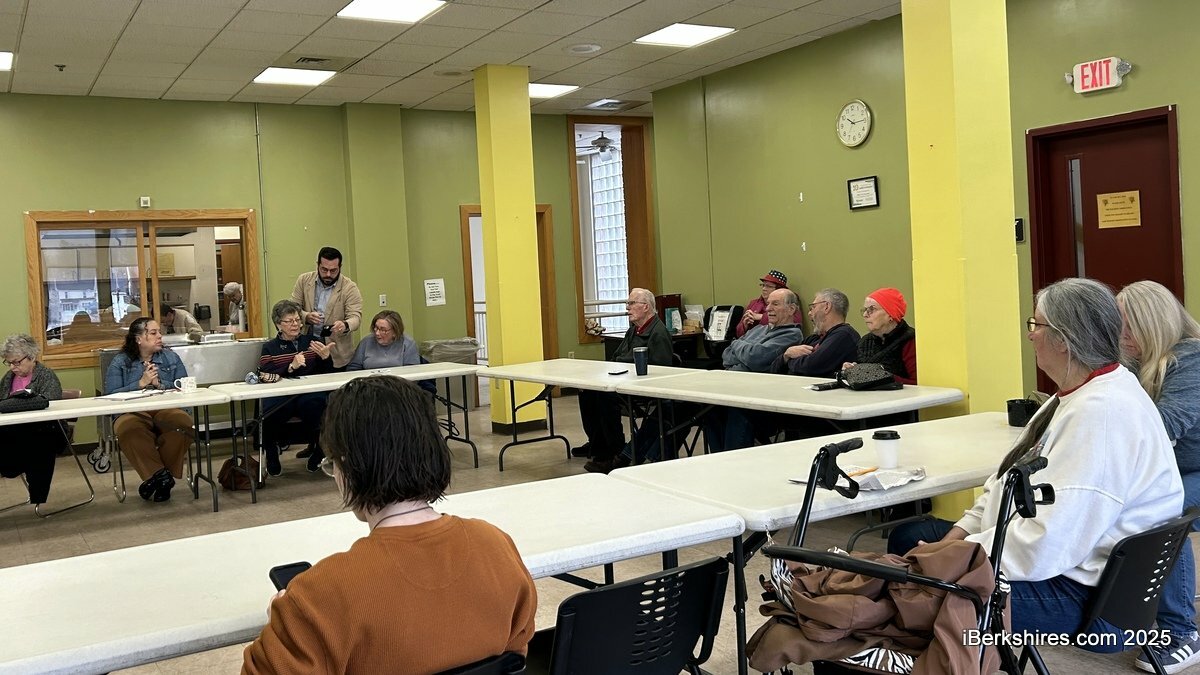
On Monday, community members and public officials mulled disaster preparedness at the Ralph J. Froio Senior Center. Pittsfield's 2019 plan is due for an update so the city stays eligible for grant funding and, of course, prepared.
"Mitigation planning is the foundation for establishing where the city would like to direct its risk reduction efforts, how it would like to build community resilience through the whole breadth of natural hazard events that it is at risk to. It brings people together and organizations to develop strategies, to build ideas for projects, to do things through, say, plans or regulations, outreach activities, and so on," said Darrin Punchard of Jamie Caplan Consulting.
"These hazard mitigation plans, 25 years ago, became a requirement for cities and towns across the United States in order to be eligible for certain grant programs."
Pittsfield recently partnered with Berkshire Medical Center for a nearly $2 million Hazard Mitigation Grant toward backup generators at the hospital.
"These are key grant funding programs that have come through the federal government, but in order to access and be eligible for that type of funding, you have to prepare these plans and update them every five years," Punchard explained.
"So that's the purpose of this plan document is really to build community resilience, but also, very importantly, maintain grant funding eligibility for the city."
The Hazard Mitigation Plan, last updated in 2019, focuses the city's limited resources on areas of greatest risk, helps build partnerships with organizations outside of the city, and increases public awareness. Punchard added that the plan can also align with other city objectives, but "saving lives and money, that's the main focus, of course, of hazard mitigation."
Also in 2019, the city went through a Municipal Vulnerability Preparedness, or MVP, process that heavily focused on risks posed by climate change.
Pittsfield began working with the firm (which facilitated the existing plan) last fall, and Monday's public hearing was the second. In a few weeks, a draft plan will be posted for public input before a final plan goes to the state and Federal Emergency Management Agency for approval.
The plan's six goals relate to saving lives and property, high hazard potential dams, local plans and regulations, building and infrastructure projects, natural and cultural resources, and education. The risk assessment process and the hazard mitigation strategy are the meat and bones of the document.
Flooding from precipitation, severe winter storms, wildfires, and temperatures were identified as the city's highest risk hazards, while earthquakes and landslides are the lowest risk. This was mirrored in responses from attendees, who expressed concern about winter storms, flooding, and power outages.
"There's nothing we can really do to stop them from occurring or limit their intensity as a natural event but what we can do is limit the risk, its impacts on our community assets, on people, on our built in environment, our infrastructure and critical facilities, our natural environment, and the economy," Punchard said.
Risk is the potential for damage, losses, or other impacts created by the interaction of natural hazards such as hurricanes, earthquakes, and wildfires with community assets. The plan looks at 11 natural hazard categories and identifies critical facilities such as fire and police stations, utility lifelines, and schools that serve as emergency shelters.
"There's a whole chapter dedicated to risk assessment, so you'll find a profile for each of those 11 natural hazards identified in the plan, what potential impacts are, and again, how they were all prioritized against one another," Punchard explained.
"There's a capability assessment. This is an aspect of the plan I was heavily involved in, which was really looking at the city's existing plans and regulations, and looking across departments of all those great things that the city is already doing to help mitigate risk, and where there are opportunities to do perhaps more and build those capabilities and resources at the city level."
The presentation included information about individual preparedness and emergency planning "because it's not all up to the chief and emergency management and first responders, of course, to help us must be more reliant," he added.
"There's a lot we can do at the individual, home level, neighborhood level, as well as citywide."
Tags: hazard mitigation, mvp,