Dalton Nixes Police Budget, High School Site Change; Suspends Town Meeting
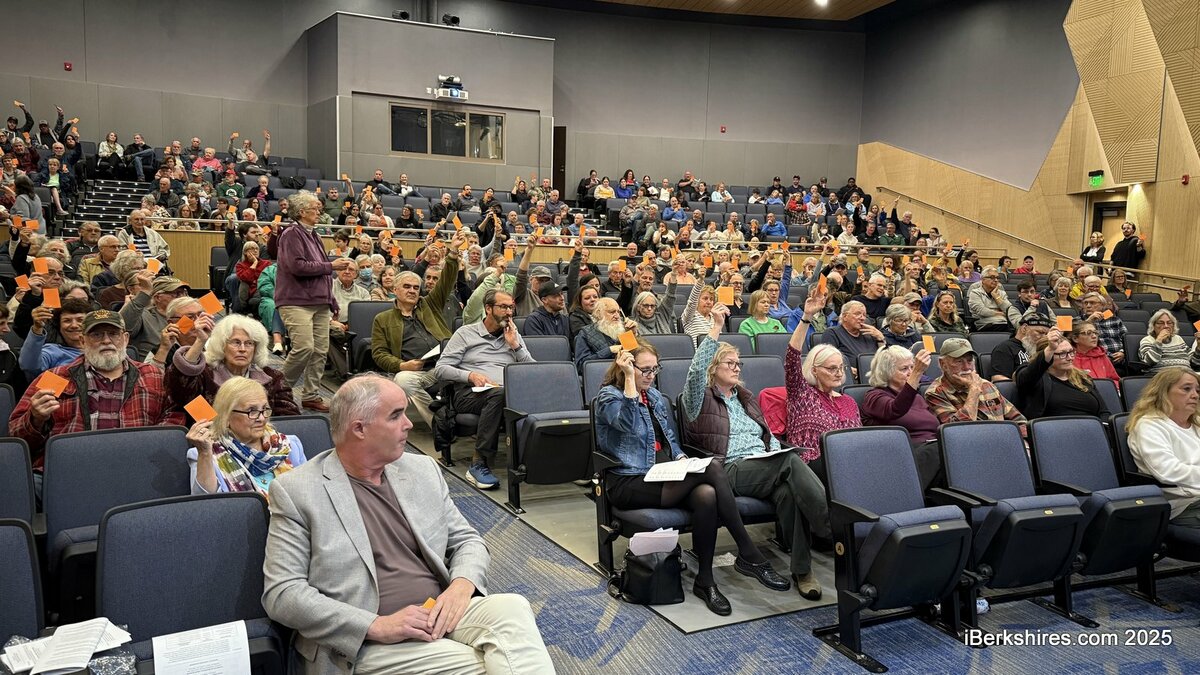
DALTON, Mass. — With another dozen articles still left, voters elected just before 11 p.m. to suspend the annual town meeting and reconvene on Wednesday at 6:30 p.m.
Some 277 registered voters got through 19 of 31 articles on the warrant over four hours of debate, rejecting both the police budget and a proposal to rescind a housing stipulation at the old high school site.
Voters spent more than an hour on Article 3, to raise and appropriate $11,048,759 for the fiscal 2026 operating budget.
Their main concerns stemmed from the Police Department budget of $1,665 million, up $129,668 over this year.
That line was pulled from the operating budget on a secret ballot and then failed to pass 162-117; a motion to level fund the police budget also failed.
A motion to hold a special town meeting on the police budget was approved after Town Moderator Anthony Doyle explained that the department would need a budget by July 1 to function.
Select Board Chair Robert Bishop said he did not feel comfortable throwing out a budget number on Monday without looking at the details. It was a sentiment voters seemed to agree with, given the approval for a special town meeting, a date of which has not yet been set.
Police Chief Deanna Strout previously emphasized that the increases within the budget are mostly contractual, as it is the first year of a three-year contract. Wages account for $1.4 million of the budget.
The chief said increases over the last few years are caused by the police reform law which has put a financial burden on the department in terms of hiring and training.
The department has 13 officers including herself and receives 15,000 calls and makes between 100 to 150 arrests per year.
Voter Christopher Furlong, a former Dalton police officer, argued that the number of calls is closer to 7,500 and the rest are night building checks or calls for vehicle maintenance activities, and that the majority of arrests are citations.
The operating budget, excluding the police budget, was passed following discussions surrounding the costs for health insurance and vocational education.
Group health insurance is $1,136,168, a $265,529 or 19 percent increase, and Town Manager Thomas Hutcheson said rates are going up substantially statewide. Dalton is at the high end, compared to other municipalities, he said, because of "several relatively large claims."
Finance Committee Chair William Drosehn suggested exploring more cost-effective insurance options, given the increase.
The vocational education budget was made up of $810,599, an increase of $237,359. The amount is calculated on enrollment but has to be projected because the actual number of student isn't known until fall.
If the number of students drops, the town may be able to reduce the budget during a special town meeting in September, before the tax rate is set in November or December, Drosehn said.
Over the last two years, the number of students opting for vocational education has increased substantially, Finance Committee member Thomas Irwin said.
Voters approved the appropriation of $347,869 for road repairs, to be reimbursed by state Chapter 90 road funds.
Following some clarification on this article, the discussion shifted to the dire conditions of town roads, with some residents requesting to utilize these funds to pave their roads.
Town meeting agreed to double the amounts of free cash being transferred into the general, capital, and sewer stabilization funds, raising the amounts from $100,000 each to $200,000.
Sandra Albano, the town accountant, motioned to amend the amounts, citing the town's "healthy free cash."
"For the past years, we've been at least putting $200,000 in those reserve funds," said Albano. "I wanted to make it be consistent as to what we've been doing."
She said the transfers had been reduced because of the anticipation for bonding for several purchases on the warrant that are now being paid out of free cash.
Drosehn agreed that "we were unclear where we were going to end up with the other articles that are further down this list. ...
"We're of the opinion now that we can beef up or build up our stabilizations."
There is currently $1,0075,436 in the general stabilization, $1,081,426 in the capital stabilization and $895,820 in the sewer stabilization. There is also $494,165 in the litigation stabilization account.
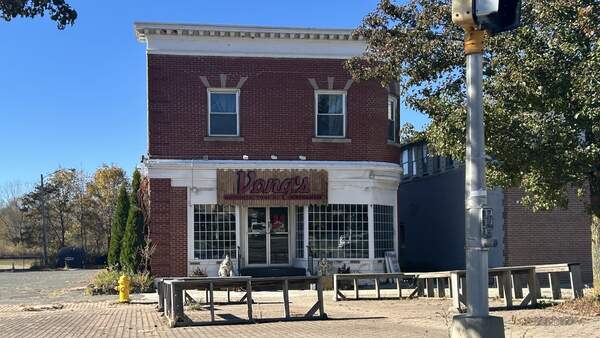
After a lengthy discussion, voters failed Article 13, which would have rescinded the vote taken on May 1, 2017, designating the old Dalton High School lot for housing.
The approval of this item would have allowed the town to use the lot for something other than housing, including considering the property for a municipal facility, including a new police facility.
After taking input from residents during a joint Select Board and Public Safety Facility Committee meeting, Bishop amended the article to include that if the town fails to include the lot for municipal use, the property remains reserved for housing redevelopment.
The discussion included Hutcheson cautioning that mitigating upstream flooding from Walker Brook could mean installing a new culvert at an estimated cost of $5 million. The town is looking into cleaning out some obstructions in the current culvert and evaluating its condition.
Another resident said there are complicated sewer connection challenges on the site.
A motion by Joseph Diver to amend the article that if the proposed police facility fails, the lot reverts to the 2017 purpose failed.
"We voted for this 2017. It's been eight years. Now we're saying we haven't sold any properties because there's an issue with the sewer in the water, but now we are OK with putting a municipal building on the site. I don't get it," said Kathleen Wronski, which resulted in applause from the audience.
Using the lot for municipal use would lose both the sale revenue a lots and a future potential tax income, another resident said.
Public Safety Facility Committee member Tony Pagliarulo gave the voters a snapshot of the committee's work and cautioned that the exploration for alternative sites would cost more money. He also advocated for tabling the article until further community outreach could be done.
Some residents expressed concerns about the impact a police station would have on the neighborhood.
Select Board member Robert Collins said he has spoken to many residents on First Street, Field Street, and the surrounding area about the proposed police station, and many emphasized that they do not want one near them.
"I cannot sit here in all good conscience when we are in a housing crisis in Berkshire County and not talk about the housing crisis, that's not an imaginary thing," said Carolyn Valli, a voter and the CEO of Central Berkshire Habitat for Humanity.
"It's reported every day. More than 50 percent of the people living in Berkshire County right now cannot afford a place to live, and we're talking about a police station where houses were promised to this community. ...
"I didn't live here back then, but I can tell you — I will work diligently to help make that happen, but we need to do the right thing by the people you already promised."
All other articles — up to Article 19 — passed.
Tags: Dalton_budget, fiscal 2026, town meeting 2025,