Problematic Pittsfield Intersection Gets Flashing Stop Signs

By Brittany PolitoiBerkshires Staff
Print Story | Email Story

PITTSFIELD, Mass. —  Flashing stop signs were added to the problematic Onota Street intersection as a cost-effective way to reduce crashes. 

The three-way stop is where Onota and Linden Streets intersect, and those traveling west on Linden Street are on an incline. The intersection is well-traveled and has two active businesses on it. 

"We've all wanted it for a long time. It's good news," Ward 6 Councilor Dina Lampiasi said at last week's City Council meeting. 

Commissioner of Public Services and Utilities Ricardo Morales told councilors that the upgraded signs were installed. They are similar to standard stop signs but have flashing lights and a solar panel. 

"I agree that improvements are needed at this intersection and have already begun the procurement process to upgrade the three existing stop signs with flashing LED stop signs," he wrote in a communication to the council on Aug. 12. 

"This measure directly addresses the concerns raised and represents a timely and cost-effective step toward enhancing safety at this intersection." 

In June, Lampiasi requested that the signs be "immediately" upgraded to flashing LED stop signs on all approaches. She was glad to see they were installed and feels it will improve travel for the community. 

"The residents who live there are excited. People who pass through the area are going to have a better commute," she said. 

A couple of years ago, former councilor Karen Kalinowsky petitioned to install a blinking red light or other traffic light configuration at the intersection, but it was tabled because the city already had plans to address the area. 


There was some reconfiguration of the stop bar and curbs to improve visibility. 

Lampiasi's request follows an accident at the intersection on June 7. The Berkshire Eagle reported that a person was transported to Berkshire Medical Center after a two-car collision at the intersection between a truck and a sedan. 

She explained that this underscores "long-standing issues with driver non-compliance and limited visibility" and that residents are directly affected by inaction. 

"The current signage does not adequately capture drivers' attention - creating unsafe conditions for motorists, pedestrians, and cyclists," Lampiasi wrote. 

"Those who live in this neighborhood and commute through it daily have repeatedly raised concerns about safety at this intersection while patiently waiting department lead intervention." 

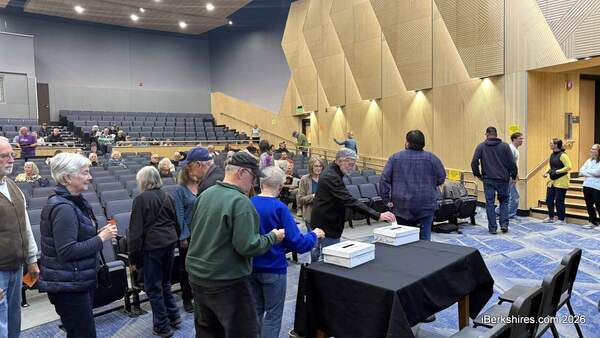
The council also approved the use of an upgraded voting machine in time for the upcoming municipal election. It is an Image Cast Precinct Tabulator 2 System that is 70 percent faster. 

Clerk Michele Benjamin assured voters that they won"t see a difference at the polls, explaining, "It's basically the same."  They have multi-factor identification, an audit trail, and a 3-5 second scan time. 

"I think it's long overdue," Councilor at Large Alisa Costa said. 

"We want our ballot system to be safe, secure, and in this case, I think the newer technology is going to make everybody's experience better." 


Tags: traffic signage,   
If you would like to contribute information on this article, contact us at info@iberkshires.com.

Youth For The Future: Adwita Arunkumar

By Breanna SteeleiBerkshires Staff

PITTSFIELD, Mass. — Williams Elementary School fourth-grader Adwita Arunkumar has been selected as our April Youth for the Future for her mentoring of a younger child.

Youth for the Future is a 12-month series that honors young individuals that have made an impact on their community. This year's sponsor is Patriot Car Wash. Nominate a youth here

Adwita has cortical visual impairment; she has been working with her teacher, Lynn Shortis, and her, paraprofessional Nadine Henner.

"My journey with CVI means that I learned in a different way. I work hard every day with Miss Henner and Miss Lynn, to show how smart I am," she said.

"Adwita is a remarkable student. She's a remarkable child. She has, as she shared, cortical visual impairment, which is a brain-based visual processing disorder, which means the information coming in through the eyes is interfered with somewhere along the pathways, and we never quite know what's being interpreted and how and how it's being seen," said Shortis.

"So she has a lot of accommodations and specialized instruction to help her learn."

Recently Adwita has chosen to mentor 4-year-old Cayden Ziemba, who is also visually impaired.

"I decided to be a mentor to Cayden so that she can learn some new things. I teach her how to walk with the cane, with the diagonal and tap technique, I am teaching her Braille," she said. "I enjoy spending time with Cayden, playing games and being a good role model."

Shortis said the mentoring opportunity came up when Cayden was entering preschool at Williams, and they introduced her to Adwita. 

"Adwita works really, really hard academically. She's very smart, but there are a lot of challenges in that, because of the way that it's so visual and she's a natural. She's just, it's automatic," Shortis said. "It's kind of like a switch is turned on and she becomes this extremely confident and proud person in this teacher role."

Adwita also has been helping Cayden on how to use her cane on the bus and became a mentor in a unexpected ways.

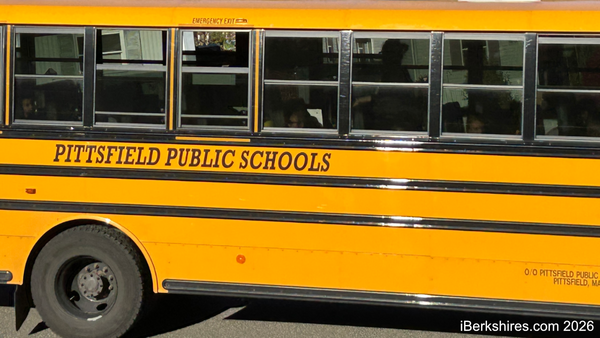
"Immediately at the start of this year, she would meet Cayden at the bus. She has taught Cayden how to use her cane to go down the bus stairs. Again, Adwita learned that skill, so it wasn't something I had to say to her, this is what you need to have Cayden do. She just automatically picked that up and transferred that information," said Shortis. "Cayden is now going down the bus step steps independently with her cane. And then she really works hard with Adwita in traveling through the hallways, Adwita leads her to her class every morning, helps her put her things away and get ready for her morning."

Adwita said she hopes Cayden can feel excited about school and that other students can feel good about themselves as well.

"I want them to know that Braille is cool to learn. You can feel the bumpiness with your fingers. I want people to know how you can still learn if your brain works differently sometimes. I need to have a lot of patience working with a 3-year-old. I need to be creative and energized," she said.

She hopes to one day take her mentoring skills to the head of the class as a teacher.

"I want to become a teacher and teach other students when I grow up. I might want to teach math, because I am great at it," she said. "I also want to teach others about CVI. CVI doesn't stop me from being able to do anything I want to. I want students to not feel stressed out and know that they can do anything they want by working hard and persevering."

Her one-to-one paraprofessional said she likes seeing the bond that has grown between the two girls, and can picture Adwita being a teacher one day.

"I do see her in the future being a teacher because of her patience, understanding and just natural-born instinctive skills on how to work with young children," Henner said.

Shortis also said their bond is quite special and their relationship has helped to bring out the confidence in each other.

"The beauty of it, there's just something about it their bond is, I don't even really have a word to describe the bond that the two of them have. I think they share something in common, that they're both visually impaired, and regardless of the fact that their visual impairment differs and the you know the cause of it differs," she said.

"They can relate. And they both have the cane. They're both learning some Braille. But there's something else that's there that just the two of them connected immediately, and you see it. You just you see it in their overall relationship."

 
View Full Story

More Pittsfield Stories