Berkshires Natural Resources Council Awarded Appalachian Grant
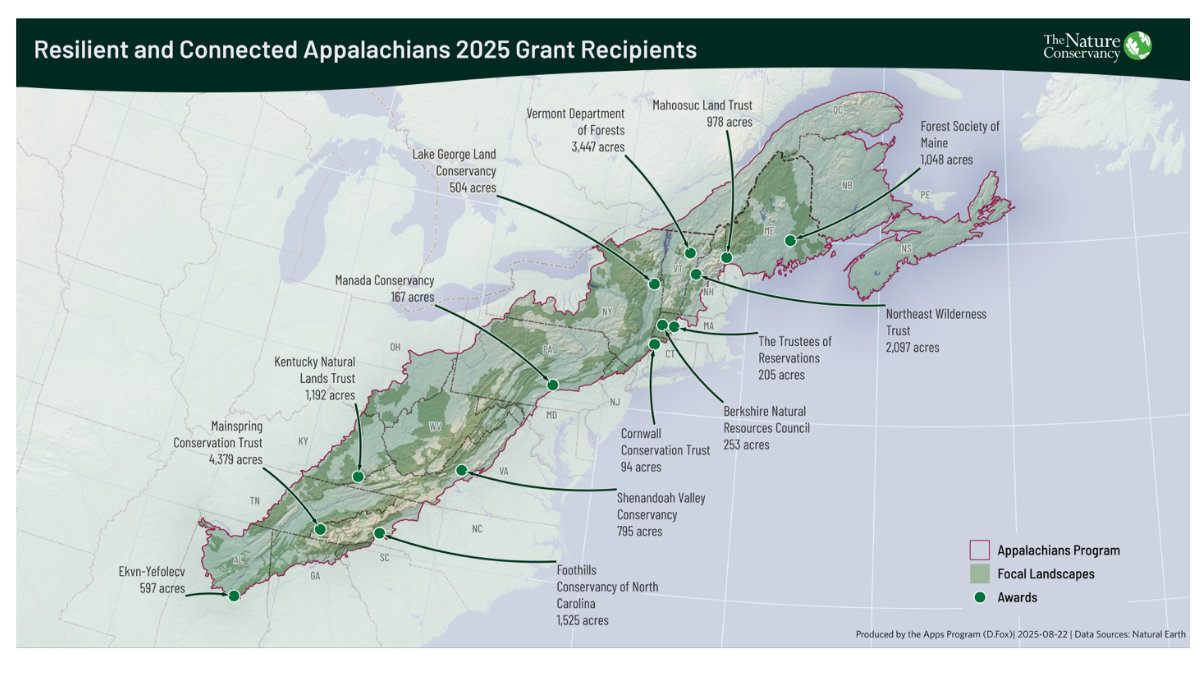
BOSTON — More than 17,000 acres of land will be protected this year after The Nature Conservancy’s Resilient and Connected Appalachian Grants Program provided up to $100,000 in grant funding to support projects that create a connected network of healthy lands and waters across 18 states in the Appalachians region from Maine to Alabama.
One of the projects that won funding is in Washington. There, the Berkshires Natural Resources Council is working on the Depot Brook Corridor Project, located within a half mile of the Appalachian Trail to add to wildlife and climate resiliency. Once permanently conserved, the land will be used by the community for passive recreation and eventually for the Council’s extensive Community Engagement outdoor education and recreation programs.
"We are thrilled to support projects that are making the Appalachians more vibrant by rewilding lands and waterways for the wildlife that roam across acres of land in the region," said Heather Furman, Appalachians Director for The Nature Conservancy. "Protecting connected lands is the key to this contiguous approach to climate resiliency with vast tracts of land, forests, waterways, mountains, and habitats where animals and humans can thrive, now and forever."
Projects supported by the Resilient and Connected Appalachians Grant Program deliver meaningful benefits to communities, including strengthened resilience to climate change and expanded access to natural spaces that promote overall well-being. These outcomes are especially vital for marginalized communities—such as those lacking quality green spaces or facing disproportionate climate-related challenges due to longstanding underinvestment and inadequate infrastructure.
This year, grants went to 14 organizations in 11 states to support the acquisition of over 17,000 acres, giving more than $1 million in privately-raised funds to communities, nonprofits, land trusts, Indigenous tribes and other partners working to protect forested land, waterways, mountains and natural habitats in the Appalachians region, a vital and vast corridor for wildlife migration, climate resilience and overall ecological protection.