State, Stockbridge Land Trust Conserves 300 Acres for Wildlife & Recreation
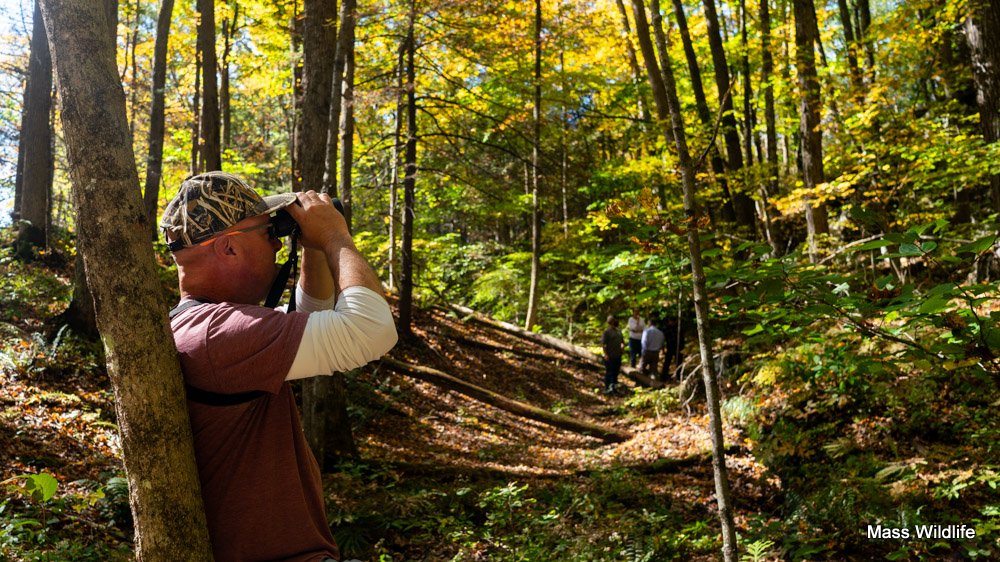
More than 300 acres of forestland and trails will be open to the public.
The new Rockdale Highlands Wildlife Management Area (WMA) protects biodiversity, boosts climate resilience and carbon sequestration, and creates new access to outdoor recreation for the community.
"Protecting nature is essential to our wildlife and way of life. The Healey-Driscoll Administration is proud to support land conservation projects like this that invest in nature as a solution to climate change, preserve clean water and vibrant ecosystems, and get more people outdoors and connected to each other," said DFG Commissioner Thomas O'Shea. "Projects like this don't happen overnight — they take tremendous partnership and collaboration. Together, we can deliver a future where people and wildlife thrive."
This demonstrates progress toward the state's goal to protect 30 percent of lands and waters by 2030 and 40 percent by 2050. Through the Biodiversity Goals for the Commonwealth, the state has committed to doubling the pace of land conservation to meet these ambitious targets, strategically focusing our efforts on 1.5 million acres identified through BioMap that are most important for biodiversity.
Through the Mass Ready Act, the Healey-Driscoll administration has proposed investments to accelerate progress towards these goals, including $304.5 million to support state land protection programs and $20 million dedicated to advancing the biodiversity conservation goals.
The new Rockdale Highlands WMA, which spans Stockbridge and West Stockbridge, is a large landscape that includes expansive forests, wetlands, unique geological features, and vernal pools. This provides habitat for rare plants and amphibians, including at least 10 species listed on the Massachusetts Endangered Species Act. Additionally, the property features half of Mohawk Lake and 3,000 feet of Mohawk Brook, a coldwater fisheries resource and tributary to the Housatonic River that supports eastern brook trout populations.
The property had been owned by the Stowe family, who are descendants of the famed author Harriet Beecher Stowe, and the Robinson Smith family of Tanglewood. Through a partnership with Stockbridge Land Trust, the state was able to acquire the property.
Now, the property will be open to the public and stewarded by MassWildlife as the Rockdale Highlands WMA. Preservation of these lands in perpetuity will increase climate resilience, reduce flooding risks, boost carbon storage, and expand access to the outdoors.
"The permanent protection of Rockdale Highlands is a tremendous win for Stockbridge and for the entire commonwealth," said state Sen. Paul Mark. "By conserving more than 300 acres of forest, wetlands, and waterways, we are safeguarding critical wildlife habitat, strengthening our resilience to climate change, and ensuring that residents and visitors alike can enjoy free access to this land for generations to come.
"I'm grateful to the Healey-Driscoll administration, MassWildlife, and the Stockbridge Land Trust for their leadership and partnership in making this achievement possible."
Emily Myron, assistant director of habitat and land conservation at MassWildlife, said conservation is a team effort and the project to secure this acreage was no exception.
"For years, this property has been a priority for MassWildlife to protect because of its tremendous ecological value and habitat for rare and endangered species," she said. "Without the generosity of the Stowe Family and the collaboration of Stockbridge Land Trust, preserving these lands for future generations simply would not have been possible. We hope this project serves as an inspiration for all and an example of what we can achieve when we come together for nature."
The Department of Fish & Game and MassWildlife strategically focus land protection efforts on the most important habitats for wildlife. Focus areas include priority habitats for rare and endangered species, large, connected landscapes to support wildlife migration and areas that both common and rare species depend upon. This work also provides new opportunities for outdoor recreation like fishing, hunting, wildlife viewing, and more. Across the state, MassWildlife cares for 237,000 acres of lands for wildlife and outdoor recreation. All Wildlife Management Areas are open to the public for hunting, fishing, trapping, and other outdoor recreation.
"Stockbridge is steeped in culture and history wrapped in the abundance and beauty of nature. The Stowe parcel epitomizes everything that represents Stockbridge. It has been a distinct pleasure for the Stockbridge Land Trust to collaborate with MassWildlife to ensure this land will be preserved and accessible for current and future generations," said Stockbridge Land Trust President Rich Bradway.
Tags: conserved land, MassWildlife,