UCP Marks White Cane Day in Pittsfield
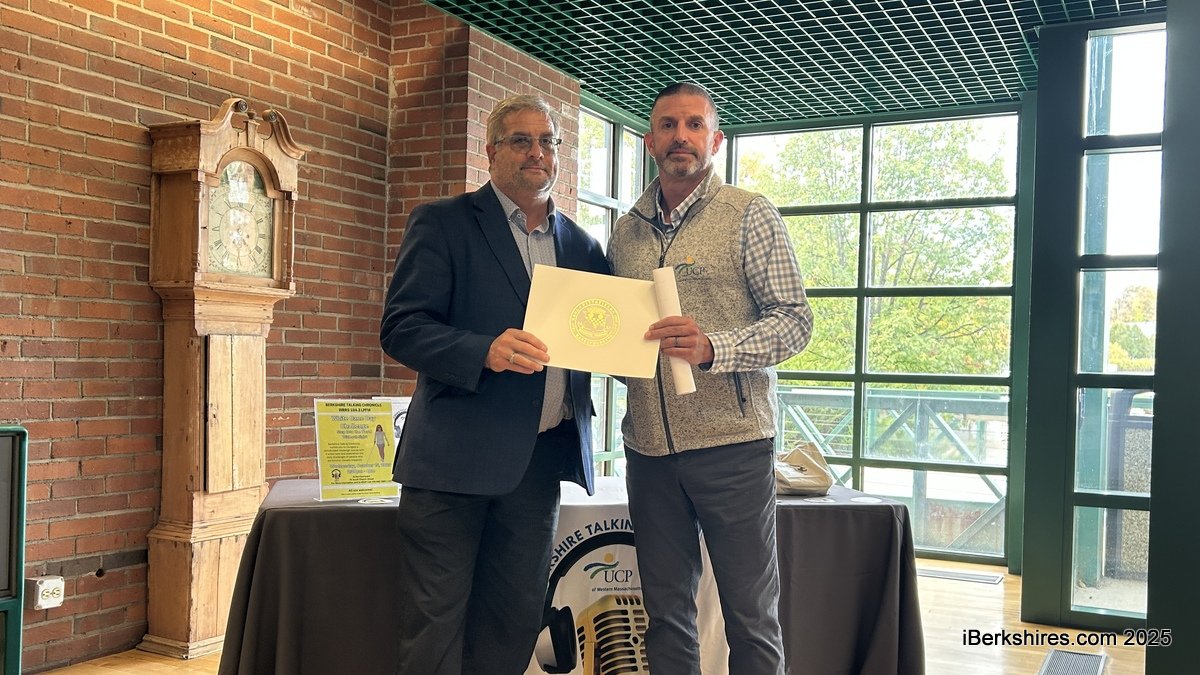
PITTSFIELD, Mass. — United Cerebral Palsy of Western Massachusetts marked National White Cane Day last week with demonstrations that show how community members with little or no eyesight navigate the world.
National White Cane Day, on Oct. 15, recognizes the assistive device as a symbol of independence for people who are blind or visually impaired, and raises awareness about accessibility, mobility, and inclusion.
"What does a white cane mean? Well, it means a couple of things, right? One, it means independence and safety, and it's a symbol for all that," explained Randy Kinnas, CEO of UCP.
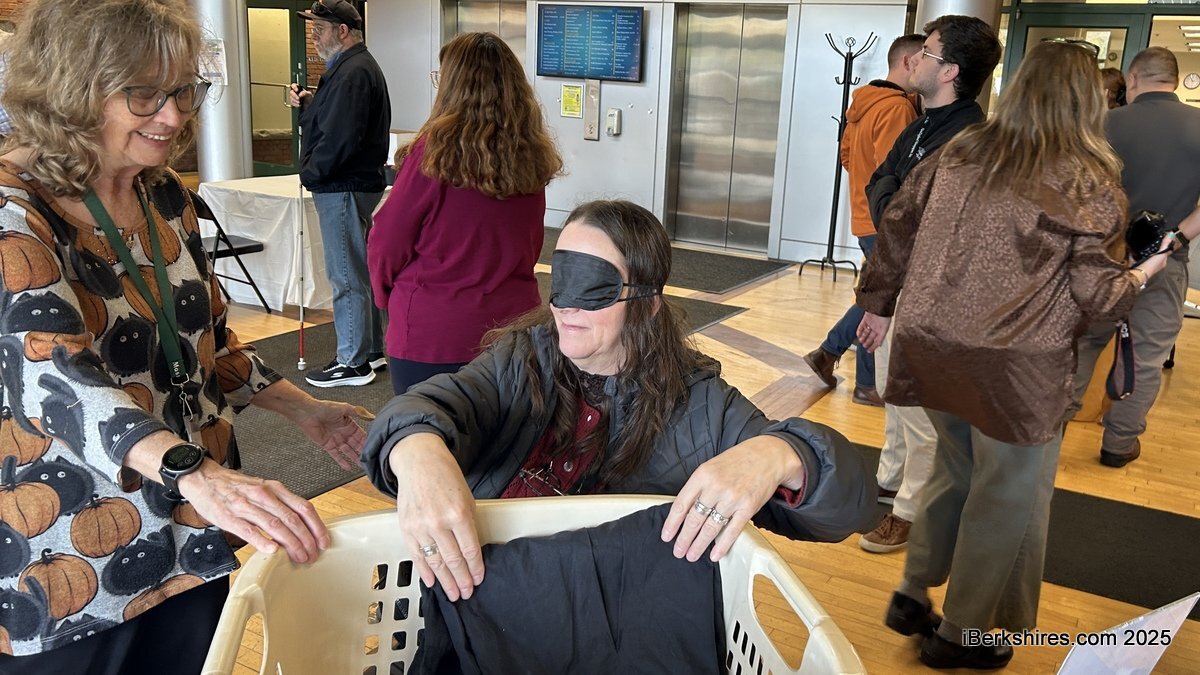
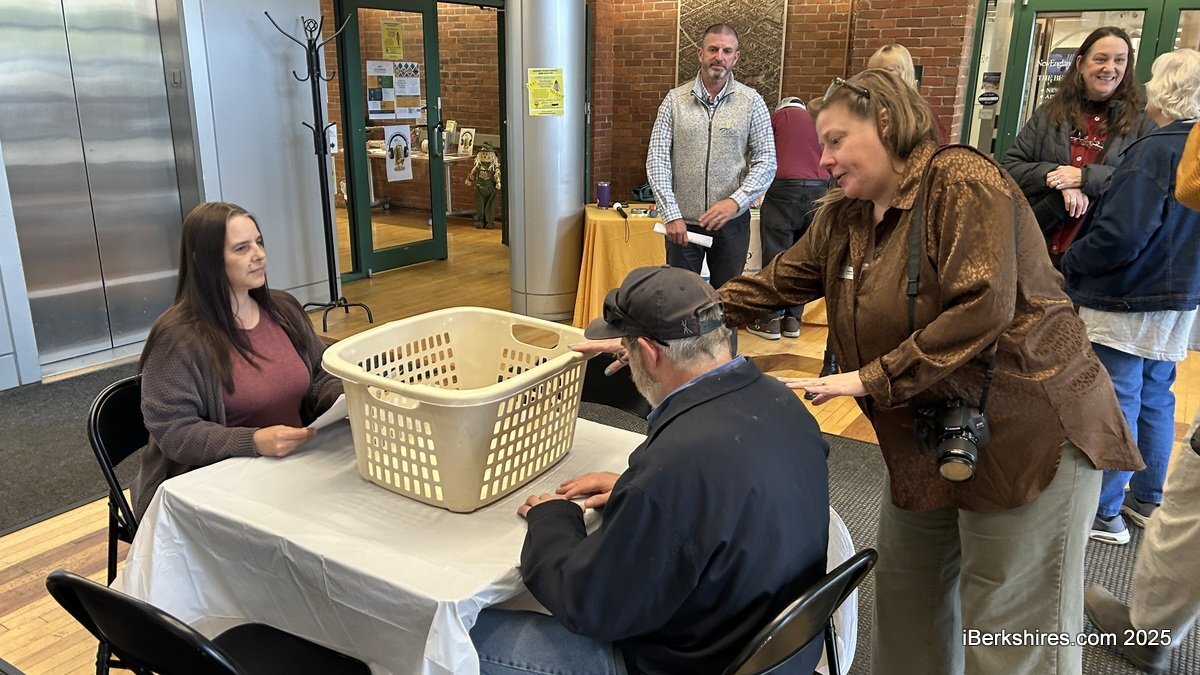
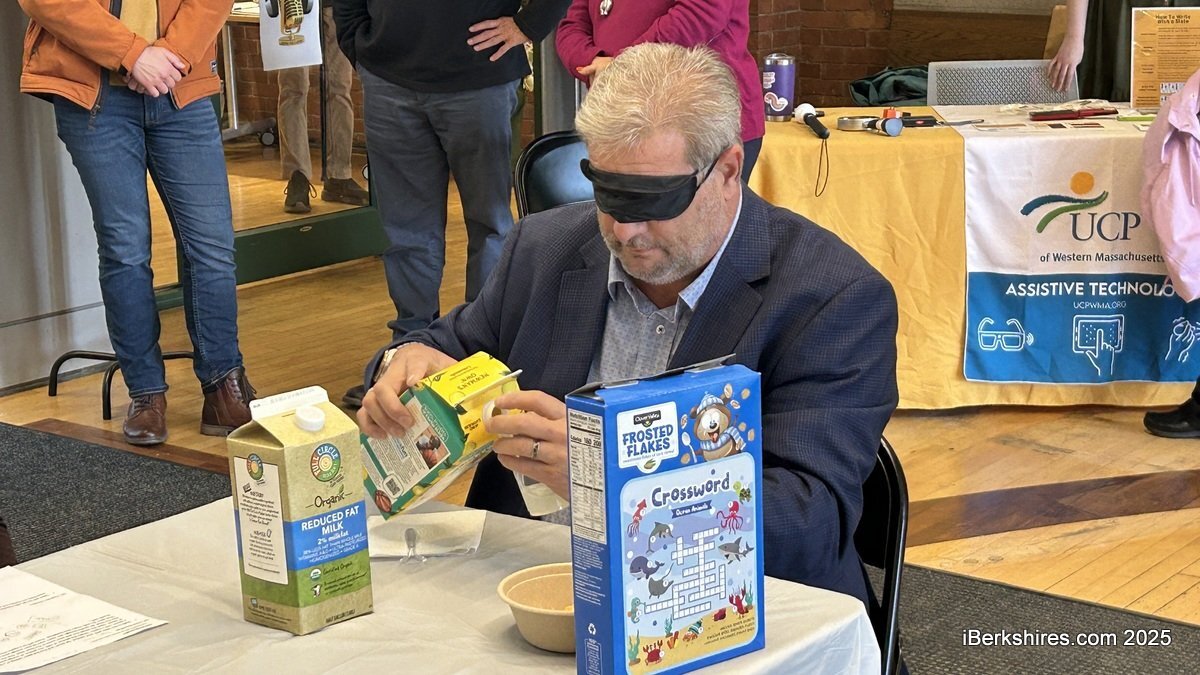
The event featured demonstrations from UCP's Assistive Technology Department and a white cane challenge course, in which sighted participants experienced everyday activities while blindfolded. It was held at the Clocktower Building's front entry because of Wednesday's rainy weather.
"It's really important." Kinnas said.
Mayor Peter Marchetti recalled a funeral service he attended earlier this year, where a blind family member told a story about his sibling describing the ocean to him. This gave Marchetti a new perspective on how privileged he is to have eyesight.
"I think anytime we can come together and honor something and remember something, it's an important piece, because we're all connected to it somehow, we just don't really think about it," he said.
The mayor read a White Cane Day proclamation stating that the City of Pittsfield "values the contributions of individuals with disabilities, and is committed to ensuring that all residents have the opportunity to reach their full potential."
"We all had these experiences in our lives with people who are legally blind or have some type of visual impairment," Kinnas added.
"And to bring it together in a day like today, to celebrate and honor people that have gone through this, is brilliant and truly exciting."
Tim Potter, of the Berkshire Benevolent Blind Association, showed how he did the various activities along with the sighted participants.
He pointed to Massachusetts' White Cane Law, which requires drivers to come to a full stop for any blind or visually impaired pedestrian crossing or attempting to cross the street, whether they are guided by a guide dog or a white cane. Violators can be fined between $100 and $500.
"It's of good nature, but the practicality is not wonderful," he said, explaining that a visually impaired person can't see the license plate of a person who doesn't yield, and often, it happens too fast to get your phone out.
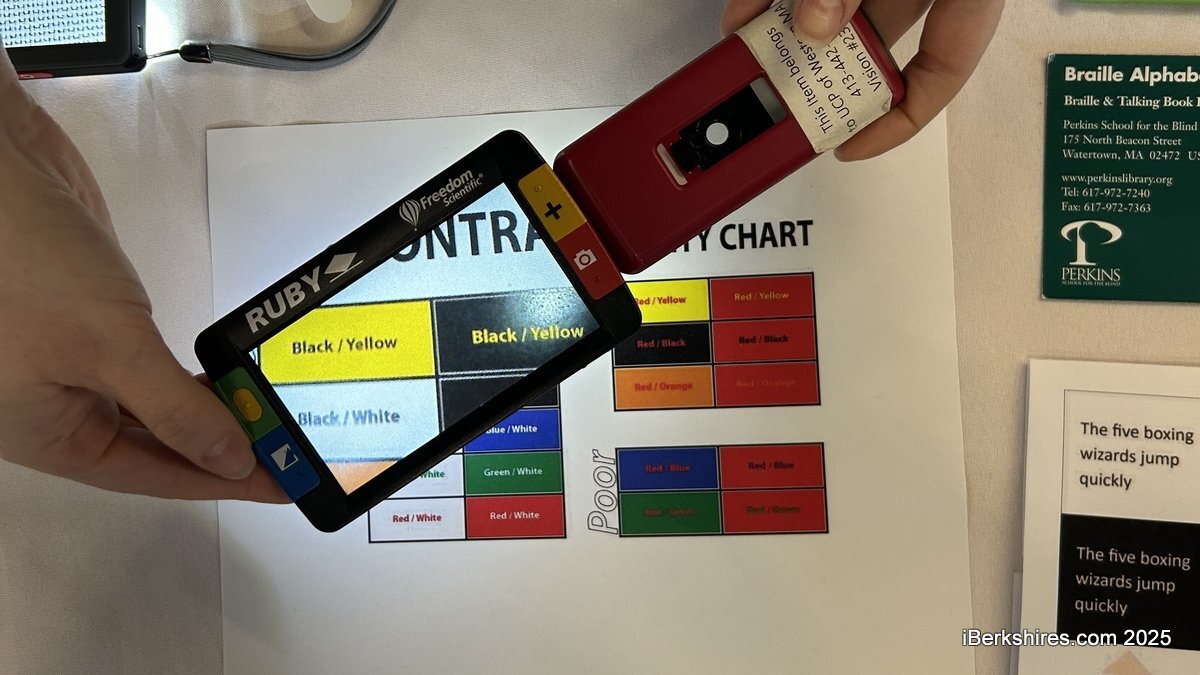
UCP helped Potter, who is legally blind, get an assistive computer and training, and he now works as a para-transit dispatcher for Berkshire Transit Management. He uses a specialized program that verbalizes the screen's content and uses keyboard commands.
"Basically, I had to relearn the computer so I knew what all the keys were and what they did, and once I was able to prove the Mass Commission for the Blind I could do a minimum of 25 words per minute with 80 percent accuracy, then they sent me to a place called the Carroll Center for the Blind in Newton, where I was there in their tech program for three weeks learning Microsoft Office and Outlook, Windows, Excel, Google searches, you name it," he said.
"When you're typing with it on the computer, the computer will speak every single character while you're talking, so you have to get used to that."
Tags: UCP,