Pittsfield Zoning Board OKs Bousquet Campground
PITTSFIELD, Mass. — The Zoning Board of Appeals has approved special permits for Bousquet's year-round micro cabin and RV lodging proposal.
It was OK'd on Wednesday with several conditions, including a phased installation starting with a few units, check-ins with the Community Development Board, and a two-year period to begin work before the permit lapses.
"The last five years, I've seen a robust revitalization of one of the most prominent properties in the city of Pittsfield. This is just a small part of making that an even better experience for not only those of us in the city, but also trying to welcome new people to this area as well," said engineer Brent White, representing Blue Chair Properties LLC.
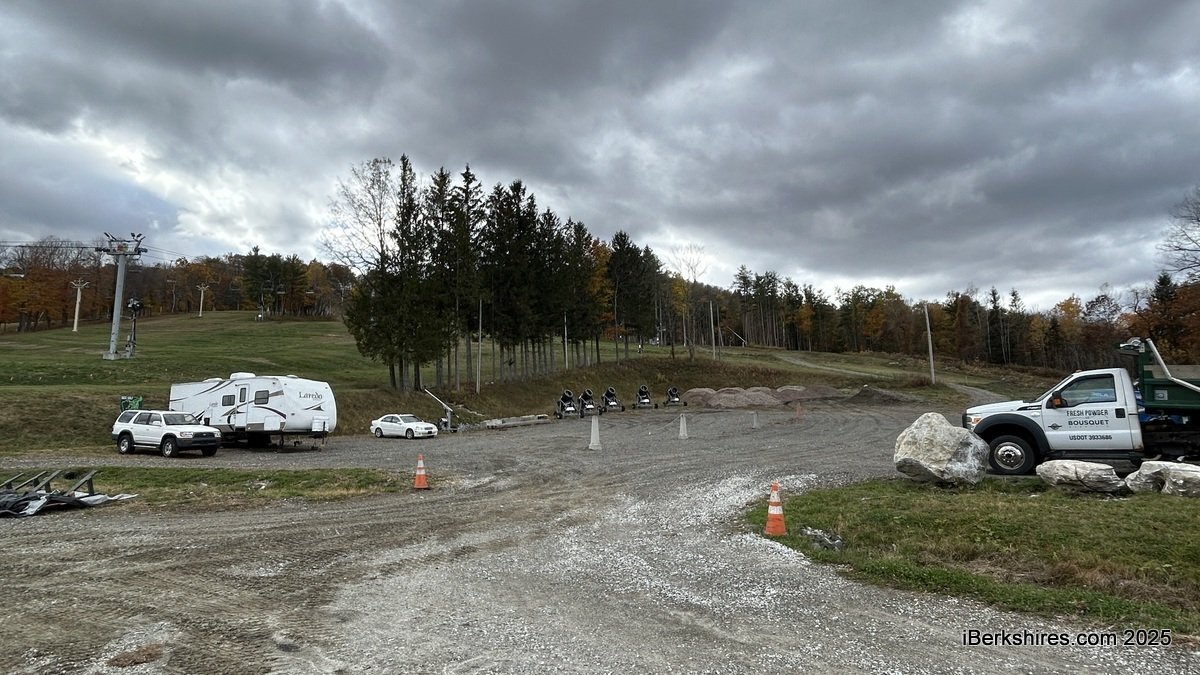
When the plan is fully implemented, a gravel parking lot on the western side of Bousquet's 90-acre property will have 12 micro cabins and four RVs on pads, accompanied by 16 parking spaces. A pedestrian path to the ski lodge is planned to allow foot traffic without entering the parking lot, and the units will be connected to municipal water and sewer.
Bousquet plans to start with a handful of units in 2026.
The goal is to provide additional accommodations that support the ski area's redevelopment and offer another type of overnight stay in Pittsfield. B&B Micro Manufacturing in Adams will produce the cabins, and booking will be handled similarly to that of a hotel or motel.
"This is a campground. This is not a mobile home community. I've appeared before this board identifying projects that were a mobile home community, and this is not that," White clarified.
"This is for short-term rentals only. Patrons will have to sign a user agreement before they're allowed to access the property, but this is not intended to be any sort of long-term housing or to that effect."
Chair Albert Ingegni III explained that lodging is typically a feature included in the city's ordinance for ski resorts, but Bousquet is a non-comforting ski resort. Built in the 1930s, it predates existing zoning regulations, and the lot is below the minimum size requirements for ski resorts.
Coupled with the fact that recreational vehicles are in the proposal, it requires additional layers of review and permitting. In 2021, a special permit was granted to allow the demolition and reconstruction of the pre-existing, non-conforming lodge after the property was purchased by Mill Town Capital.
Camping areas are regulated by the Health Department, and Bousquet will need annual campground inspections and permits once in operation.
A couple of nearby residents came forward to express their concerns. A resident of The Pines condominium development, which abuts Bousquet, asked if there would be any negative effect on his neighborhood.
White can't see how it would have any impact, as it doesn't introduce vehicular access that would come through or adjacent to their property and is as far away as it can be without disturbing the topography of the mountain.
Attorney Ryan Smith, speaking on behalf of a neighbor who lives across the street, asked that the board deny the permit. He alleged that the proposal would negatively affect the character of the community and brought up concerns with people spilling onto his client's property from the ski area in the present day.
They also didn't feel that Bousquet's plan for 24-hour surveillance with an off-site representative available was sufficient security and argued that an employee should be on site 24/7 to address guests.
"The ordinance itself is concerned about promoting the stability of existing areas, which reflect a healthful and safe environment, and this is exactly what we're concerned that this proposal is going to run afoul of. This is why we're objecting to this request," Smith said.
"The criteria that this panel is going to be considering is whether this plan will be substantially more detrimental than the existing non-conformity. It certainly will be, because right now, there's a ski mountain, and people can come during the day, but now people can be staying overnight, and this isn't in a traditional hotel. This is in these small cabins where people have nowhere to go, and they're going to be spilling out to the neighboring areas, which will substantially change the character of the neighborhood for those that live there in this existing zoning region."
Board member Tom Goggins said it is a large property and he doesn't believe that the micro cabins and RVs will be substantially more detrimental to the neighborhood, pointing out that it has been a ski area for more than 100 years.
"I think the city has done a good job analyzing this, and I think the seven proposed conditions are appropriate. They have a security plan, which I don't see where in the city ordinances it's required," he said.
"It would probably be beneficial for the applicant to be able to monitor any overnight guest, or at least have some monitoring systems in case things were to get out of hand for some reason, but there's thousands of people who pass through that facility on a winter weekend, and an additional 16 units, I don't think that is that impactful."
Tags: ZBA, bousquet, campground,