State Provisions Protects Federal Workers During Government Shutdowns

Print Story | Email Story

BOSTON — The Fiscal Year 2025 closeout supplemental budget includes a provision that protects federal workers in Massachusetts from evictions and foreclosures during a government shutdown.

This provision protects federal employees for at least 30 days after the end of a shutdown, unless the governor chooses to extend the pause to 75 days after the end of the shutdown. Gov. Maura Healey used this executive authority last fall to extend support for federal workers during the shutdown.  

This provision, advocated for by state Sen. Lydia Edwards, was signed Nov. 25, 2025, and continues to apply to any future government shutdowns.   

"Nobody who shows up to work every day to serve the people of Massachusetts should face the threat of losing their home because the federal government isn’t doing their job," said Healey. "This provision allows us to protect Massachusetts’ federal employees and provides them with relief during a federal shutdown. Thank you to Senator Edwards for her leadership advocating for this important bill." 

This provision creates a temporary pause on nonpayment evictions and residential foreclosures, and requires lenders to grant temporary mortgage forbearance, for Massachusetts workers involuntarily furloughed or forced to work without pay due to the federal shutdown. At least 25,000 federal employees were furloughed or forced to work without pay last fall.  

During the federal shutdown this fall, Healey called on the Trump administration to commit to back paying TSA agents and air traffic controllers, and demanded the administration release funds for programs like heating assistance and SNAP. When the Trump Administration laid off thousands of federal workers last year, Healey launched a new website that provided employment and job training resources for federal workers. 
 

If you would like to contribute information on this article, contact us at info@iberkshires.com.

Pittsfield Holds Second Master Plan Workshop

By Brittany PolitoiBerkshires Staff

Participants added notes to the sectors  such as transportation, open space and neighborhoods  being reviewed by the Master Plan Steering Committee. 

PITTSFIELD, Mass.— The city is about halfway through developing its new master plan, and held a second community workshop this past Thursday. 

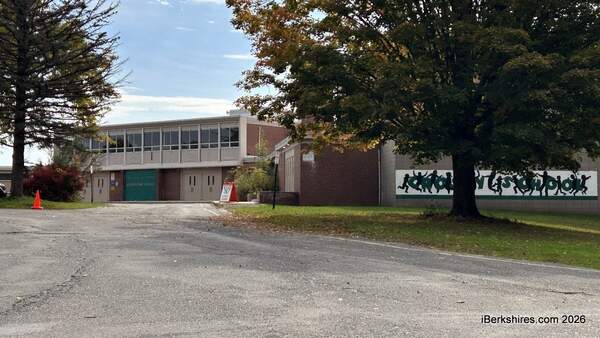
"Basically, we're talking to people from Pittsfield and trying to figure out, among a broad sector of issues that affect us, what is our goal and vision for the next 10 years, where we want Pittsfield to be in 10 years, and what changes do we want to see?" Director of Community Development Justine Dodds explained to about 20 community members and city staff at Conte Community School. 

"That will be broken down into some goals and objectives and then some measurable action items that we can all take as a community to move that forward."  

The Pittsfield Master Plan is the policy guide for future physical development, covering land use, infrastructure, sustainability, and more. The plan was last updated in 2009, and Pittsfield has engaged the VHB engineering firm and CommunityScale consultants to bring it through 2036. 

There have been two public listening sessions, a Master Plan Advisory Committee guiding the work, and small focus groups for each section. On poster boards, residents were able to see and mark the draft goals and actions under six themes: economic development, housing opportunities, transportation and infrastructure, environment and open space, neighborhoods and community, and governance and collaboration. 

In November 2025, community members participated in a similar exercise at City Hall. 

Transportation and infrastructure had several notes on them. Suggestions included using infrastructure to address the urban heat island effect, a light rail system, and continuing to implement Complete Streets standards for roadway construction projects. 

"I want to ride my bike to my friend's house safely," one respondent wrote. 

Under economic development, people suggested digital business infrastructure for the downtown, food hall opportunities, and nightlife opportunities. 

View Full Story

More Pittsfield Stories