Pittsfield Council Approves 'Green' Items

By Brittany PolitoiBerkshires Staff
Print Story | Email Story

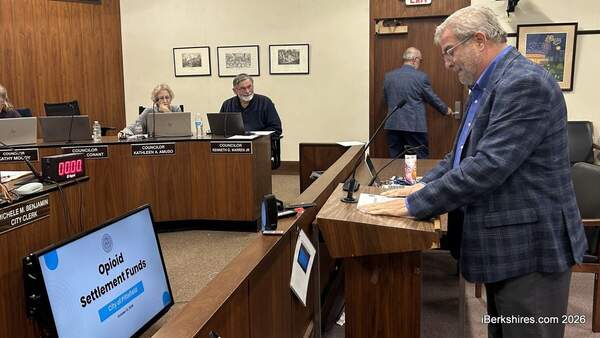
PITTSFIELD, Mass. — The City Council approved a couple of "green" items during its meeting last week. 

This includes more than $20,000 from the state for recycling initiatives, as well as cell phone recycling automated machines at Cumberland Farms on First Street and in Market 32 at 555 Hubbard Ave. 

Pittsfield received $21,000 from the Massachusetts Department of Environmental Protection’s Sustainable Materials Recovery Program, which reinvests a portion of Waste Energy Certificates into recycling programs. More than $4.2 million was distributed across the state this year. 

WECs are tradable, unit-specific certificates (1 per MWh) generated by qualified waste-to-energy facilities. 

"It's supposed to be this self-sustaining cycle of you bring money in, you can continue reducing trash, increasing recycling, increasing diversion from the landfill, and at the same time, you bring money in and support that effort," Commissioner of Public Services and Utilities Ricardo Morales explained. 

In the last two years, the city has seen a slight increase in funds because of its categorization as an environmental justice community, and Morales would like to increase that number even more.  Communities of Pittsfield’s size can see up to $50,000 based on a point system for recycling efforts. 

The city received points for bulky items, curbside recycling regulation, diversity, equity, and inclusion, organics, and waste prevention outreach and education. These funds are used to purchase products such as the composting bins that Pittsfield sells to residents for half the price. 


Morales reported that the city has been saving funds to start a recycling program staffed by a contractor, but that is not being presented "in any way" at this point. 

"We are making, behind the scenes, some legwork to create this type of effort to help promote more of our recycling programs out there, the ones we have and the ones we don't have yet, that can bring in more points, therefore more money," he said. 

The council also approved pawnbroker and secondhand dealer licenses for two self-automated device recycling kiosks located in Cumberland Farms and Market 32. The "ecoATMs" purchase used or broken electronic devices in exchange for money, and the phones are refurbished or used for parts. 

The California-based company has kiosks all over the country, and there is even one already in Pittsfield that has dispersed $191,000 to customers for more than 4,000 devices. 

A representative on behalf of the company explained that the machine generates a price for a device and prompts the user through clearing its data before a cash payout is given. 

"It is called EcoATM, because the point is that it takes these phones out of the waste stream," the representative explained. 

The company has a team that works with law enforcement to track down and return stolen phones.  The existing kiosk in Walmart has returned four stolen phones over the last five years. 


Tags: recycling,   

If you would like to contribute information on this article, contact us at info@iberkshires.com.

Healey Files Legislation to Suspend Gas Tax

BOSTON — Gov. Maura Healey on Wednesday filed legislation to lower costs at the gas pump, when buying concert and sports tickets, and on electric bills, while also making investments to strengthen health care, maternal health, food assistance and public safety.
 
The legislation includes Healey's proposal to suspend the state gas tax for two months. The war in Iran has driven up prices over 50 percent since February. It also includes her Great Divide Act, which caps ticket resale prices and fees and bans speculative tickets, as well as $2.25 million to strengthen postpartum care and mental health support for mothers and families across Massachusetts.
 
The bill includes changes to how utility companies purchase electricity for customers on basic service, which is estimated to save ratepayers $610 million, as well as $41.5 million for the Department of Transitional Assistance for caseworkers and technological upgrades to help people stay enrolled in the Supplemental Nutrition Assistance Program (SNAP) despite President Donald Trump's cuts.
 
The legislation also provides critical funding for MassHealth, public safety and other state services. In total, it will enable the state to close Fiscal Year 2026 (FY26) with a balanced budget by appropriating $2.24 billion in gross spending, at a net cost to the state of $1.46 billion after revenue offsets. 
 
"While President Trump is driving up costs with his war and tariffs, in Massachusetts, we're doing everything we can to make life more affordable for people and businesses," said Healey in a statement. "This budget will lower costs at the gas pump, when buying concert and sports tickets, and on energy bills, while also making sure families can continue to access the health care, food assistance and services they rely on."
 
If passed, the legislation would suspend the state's 24-cent-per-gallon gas tax for two months, providing immediate relief for residents and truckers. The law will require gas stations to lower prices to reflect the suspended tax and ensure that drivers see the savings at the pump. The estimated $120 million in revenue will be replaced with a portion of unbudgeted, surplus fiscal year 2027 Fair Share surtax collections. For reference, in FY26 there was nearly $1 billion in Fair Share surplus funds available. This means that no ongoing or planned transportation projects financed through the Commonwealth Transportation Fund will be impacted. The Commonwealth will also remain compliant with its CTF bond obligations. 
 
Great Divide Act
The Great Divide Act caps the resale price of concert tickets at 110 percent of the price of the face value of the original ticket. It also limits the service fees and charges that can be imposed by ticket resellers like StubHub and SeatGeek to no more than 10 percent of the total price of the ticket for resale. It prohibits the sale of speculative tickets, which are tickets that are not in the possession of the seller when they are listed for sale. Finally, it implements additional consumer protections measures, including prohibiting the use of deceptive websites by ticket resellers and misleading consumers about the availability of tickets.    
View Full Story

More Pittsfield Stories