Pittsfield Looks at 'Form-Based' Code for West Side Zoning
PITTSFIELD, Mass. — The Department of Community Development has been working on a zoning proposal that aims to encourage small businesses and lively, characteristic activity in the West Side.
City Planner Kevin Rayner has appeared before the Community Development Board and the Zoning Board of Appeals to provide updates on the process.
"I'm really trying to bring business back into the West Side with a soft touch," he told the ZBA in January.
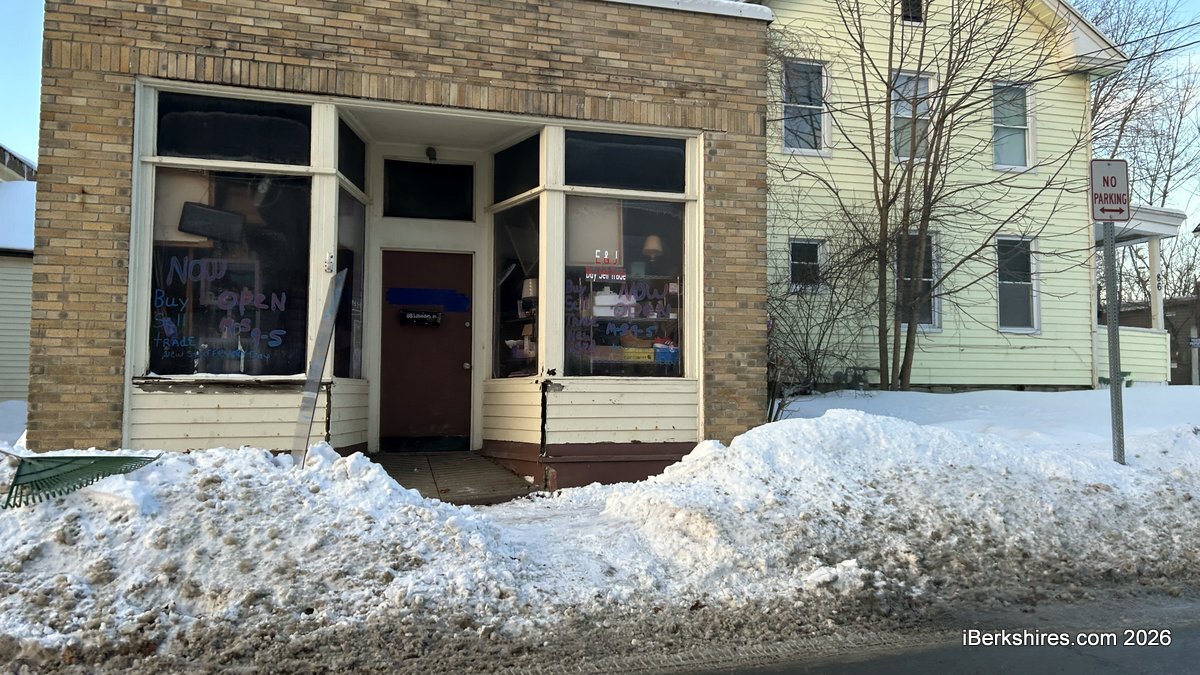
"So we don't want those big, big businesses going in there. We want to encourage the small family businesses to come back, because there's a lot of storefronts in the Westside that are boarded up, and you can't use it as a store anymore because it's all zoned RM out there."
This is done by limiting the size, location, or intensity of business use, and allowing accessory commercial units and "micro businesses" on the site of people's homes. The proposal also adds new street types that support these possibilities.
"It's something that a small family business is going to see an incentive to invest in," Rayner said.
"That's the intent."
The city planner has been discussing this proposal with the Community Development Board for about six months, and as the general permitting authority for properties, he wanted the ZBA in the conversation as well.
The Form-Based Code proposal is currently in draft form and subject to change.
It aims to expand the existing Downtown Creative District into the neighboring West Side, bringing the flexibility of FBC and encouraging uses currently prohibited by the zoning ordinance. The district has existed since 2021.
This includes commercial options to revitalize former, existing storefronts and bring small businesses back to the neighborhood. It also includes housing options for increased density without compromising character.
"The goal of West Side Form Based Code will be to lower permitting barriers to residents in the West Side and encourage a mixture of low-density commercial uses to return to the area," Rayner explained.
At the ZBA's February meeting, he emphasized that the city doesn't want to erode the residential character of the neighborhood, and instead, "We want to allow some commercial uses in there to a different degree, depending on how the street operates, and the kind of uses that exist along the street."
The code focuses on the form and performance of buildings, which means that different uses can be permitted based on the property, and possibly based on the floor or area of the building, allowing the zoning to prefer certain uses on certain floors. For example, primary streets such as North Street in the district are largely used for retail, and offices and housing are on the upper floors.
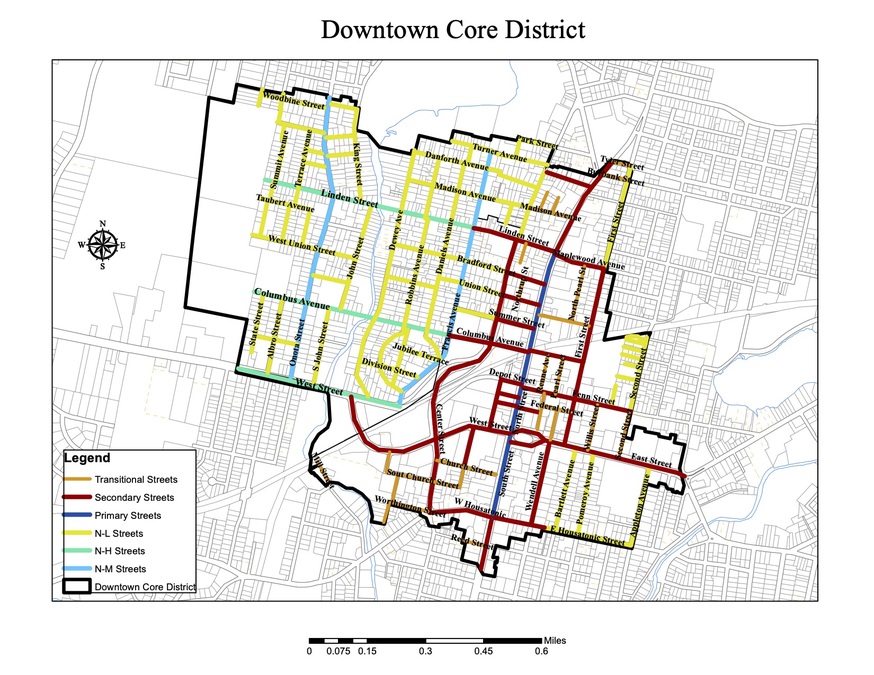
The DCD currently has four street types: Primary, Secondary, Transitional, and Residential. The West Side expansion of the district introduces three new street types: Neighborhood High, Medium, and Low.
The N-L street type would replace the existing one for the West Side, with the three tiers of neighborhood street types intended to permit new commercial and residential uses at varying levels of density and intensity based on the street type.
N-L streets have low setback and dimensional requirements with building heights consistent with residential development, with the possibility of low-density commercial activity among residential development. N-H streets have minimal setback requirements with the highest building height outside of the downtown, with an active ground floor.
New uses proposed for the district include accessory commercial units for businesses such as a barber shop or bakery, marketplaces in undersized lots, micro-businesses, neighborhood parking areas, urban gardens, and food trucks.
Rayner recognized that there are parking concerns in the Westside that he doesn't want to exacerbate, and said the neighborhood parking lot could take some cars off the street. The main issue would be who constructs and maintains the lots, as he doesn't see the city taking that on.
An accessory commercial unit is defined as a "low-intensity commercial" use as an accessory to a
residential use, for markets such as retail food-related items, arts and crafts, and personal services. It must be no less than 150 square feet in area, and no more than 40 percent of the gross floor area of the principal residential use or 1,000 square feet, whichever is smaller.
A micro business is also a low-intensity commercial use that is an accessory to residential use, but takes up less than 150 square feet.
In the memo to the ZBA, Rayner described it as a "major initiative" that will completely reshape zoning in the Westside, and said this neighborhood isn't the last intended focus for a Form-Based Code. The Morningside neighborhood is also eyed for this kind of zoning proposal.
Tags: commercial zoning,