Williams College Faculty Lecture Series: Brian Michael Murphy
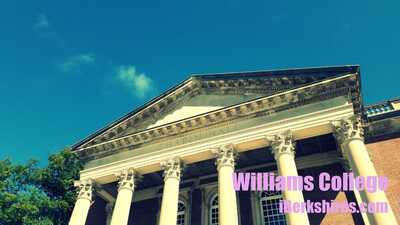 |
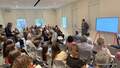
WILLIAMSTOWN, Mass. — Chair and Associate Professor of American Studies Brian Michael Murphy presents, "The Data Complex" as part of the Spring 2026 Faculty Lecture Series.
Lectures will begin at 4:15 p.m. and will take place in Bronfman Auditorium (Wachenheim B11). The free lecture is open to the public.
According to a press release:
In the late nineteenth century, the U.S. government and American corporations generated an unprecedented amount of paper records. The data complex emerged as a national network of repositories built to house all those documents. Over the next several decades, the data complex expanded from traditional archives and libraries to bombproof bunkers and securitized data banks. In the 21st century, some tech companies are working to build data centers in outer space, while others have figured out how to store backups of digital files in synthetic DNA. How did Americans become so obsessed with preserving data, and how is the data complex expanding and changing today? How is it changing us? As we increasingly think, communicate, and relate through digital technology, our nervous systems grow more entangled with fiber optics, further blurring the line between human life and the life of machines, between our everyday thoughts and the dreams of the data complex.
Brian Michael Murphy is Chair and Associate Professor of American Studies at Williams College and a Faculty Associate at the Berkman Klein Center for Internet & Society at Harvard University. His book "We the Dead: Preserving Data at the End of the World" (University of North Carolina Press) received the Anne Friedberg Innovative Scholarship Award from the Society for Cinema & Media Studies, and the Lois P. Rudnick Book Prize from the New England American Studies Association. His writings have appeared in the Kenyon Review, Wall Street Journal, Lapham's Quarterly, IGN, and McSweeney's Internet Tendency, among other places. A Fulbright Scholar, he holds a Ph.D. in Comparative Studies from The Ohio State University, where he was a Presidential Fellow.
This talk is presented as part of the Spring 2026 Faculty Lecture Series. The series was founded in 1911 by Catherine Mariotti Pratt, the spouse of a faculty member who wanted to "relieve the tedium of long New England winters with an opportunity to hear Williams professors talk about issues that really mattered to them." From these humble and lighthearted beginnings, the Faculty Lecture Series has grown to become an important forum for tenured professors to share their latest research with the larger intellectual community of the college.
The Faculty Lecture Series is organized by the faculty members of the Lecture Committee. The aim of the series is to present big ideas beyond disciplinary boundaries.
Tags: Williams College,