North Adams Schools Planning Better Communication With Families
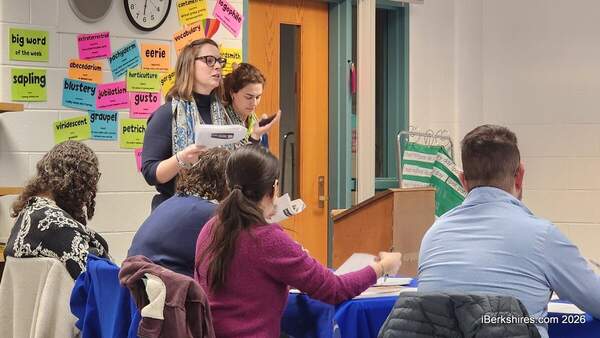
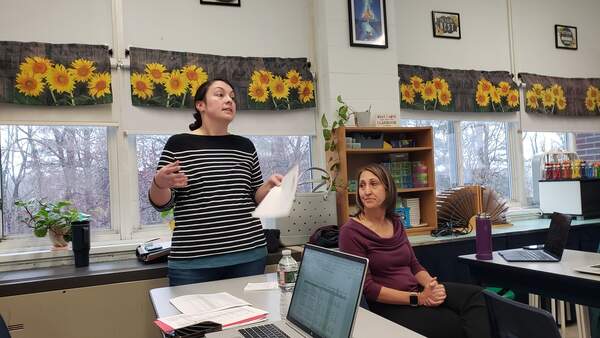
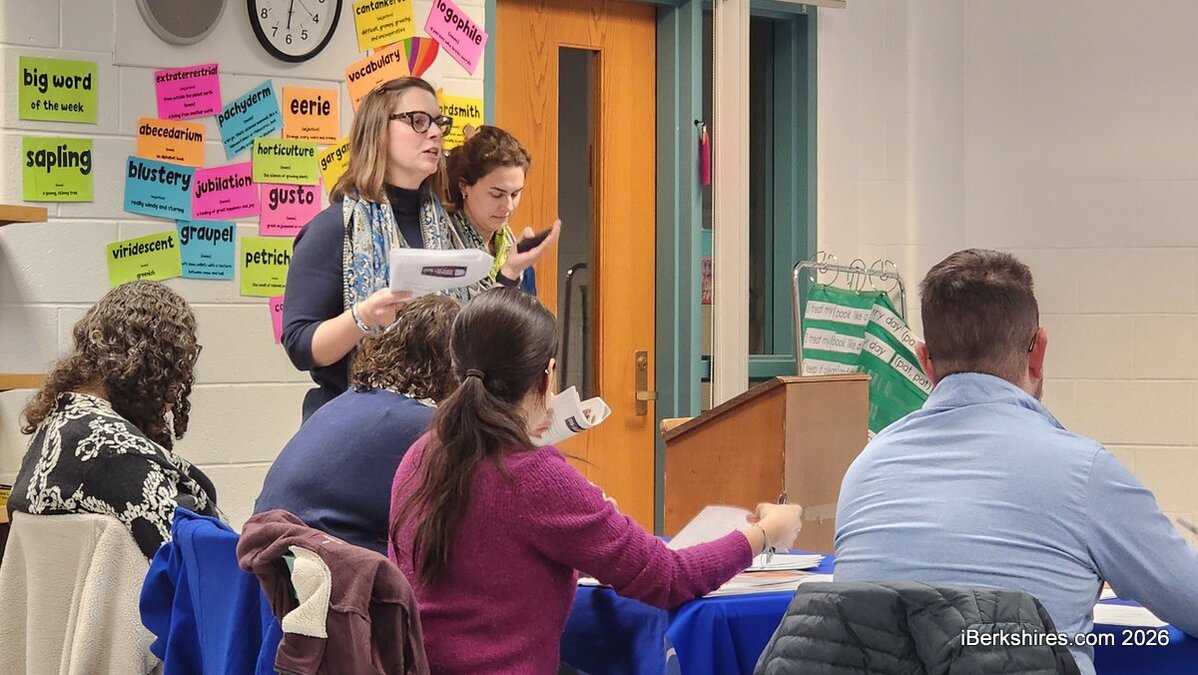
The School Committee heard an update Wednesday on communications with families by Emily Schiavoni, family and community outreach coordinator, and Leslie Appleget, arts and communications coordinator.
Superintendent Timothy Callahan said both work extensively with central office to ensure parent communication.
"This is an offshoot of their work, both for family outreach, but also general communication strategies," he said. "And they will advise the district leadership team."
Schiavoni reminded the committee they had spoken about family engagement efforts last year and had since gathered data through surveys and interviews.
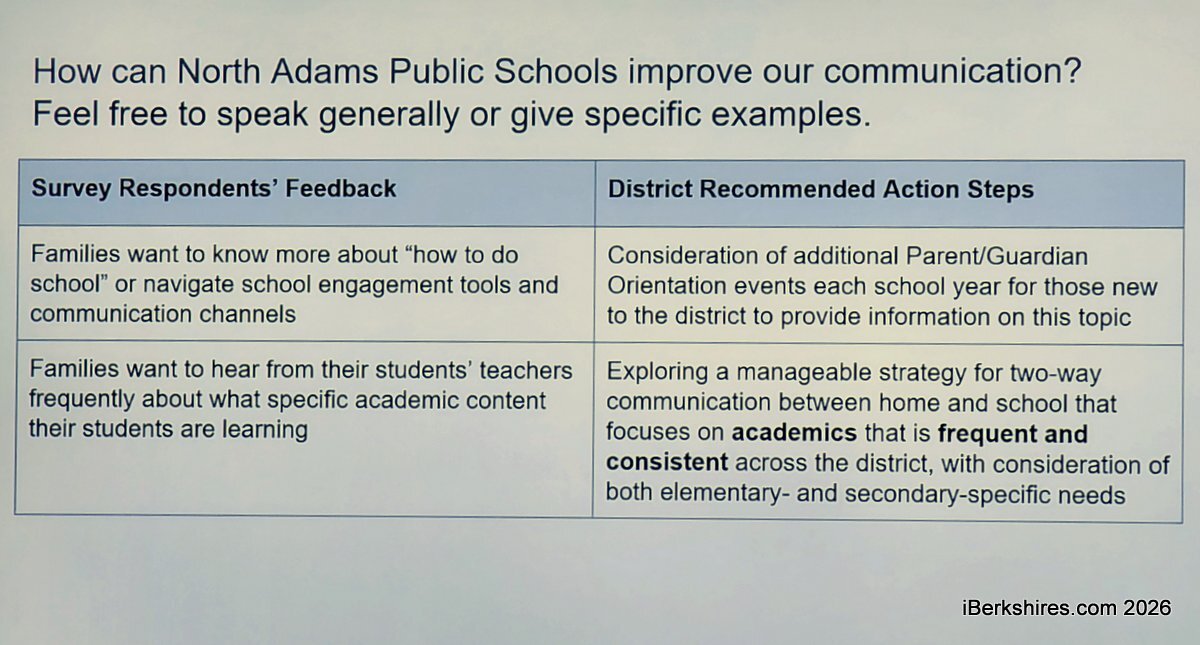
"We created an action plan to strengthen school family partnerships, and our top, No. 1 thing to dive into was enhancing communication channels," she said. "In order to build trusting relationships with parents, it must be through trust and two-way communication."
Last year's family survey was open for 14 days and received 135 responses, allowing administration to find family preferences in terms of communications.
"Families very clearly indicated, by 89 percent, that they prefer to receive non-urgent communications by direct message ... being an email, a text or staff member directly," said Appleget. "A smaller percentage ... was their preference for the Remind app, which is a districtwide technology."
Remind is a two-way app that can be used with ParentSquare. The district also uses Thrillshare, through which it can send systemwide alerts and information via phone, text and email.
Parents didn't have a preference for time of day but they didn't care for getting multiple alerts through different media.
"Receiving call, text and email about one piece of information felt like too much, and we definitely hear that," she said. "We use a specific communications matrix out of our office to determine what type of communication will be for each type of message. So the content really determines what we will do."
Some communications, such as for calling a snow day, mean that all three forms have be used because not all families have the same technology. She noted that this survey was for non-urgent communications but "58 percent of them indicated safety is a topic for direct non-urgent communication. That tells me that we have an opportunity going forward to better inform families about safety procedures and routines."
Parents had asked for a way to choose their communication preference but that is not currently available on PowerSchool. They also varied on saying they get too much or not enough non-emergency contacts.
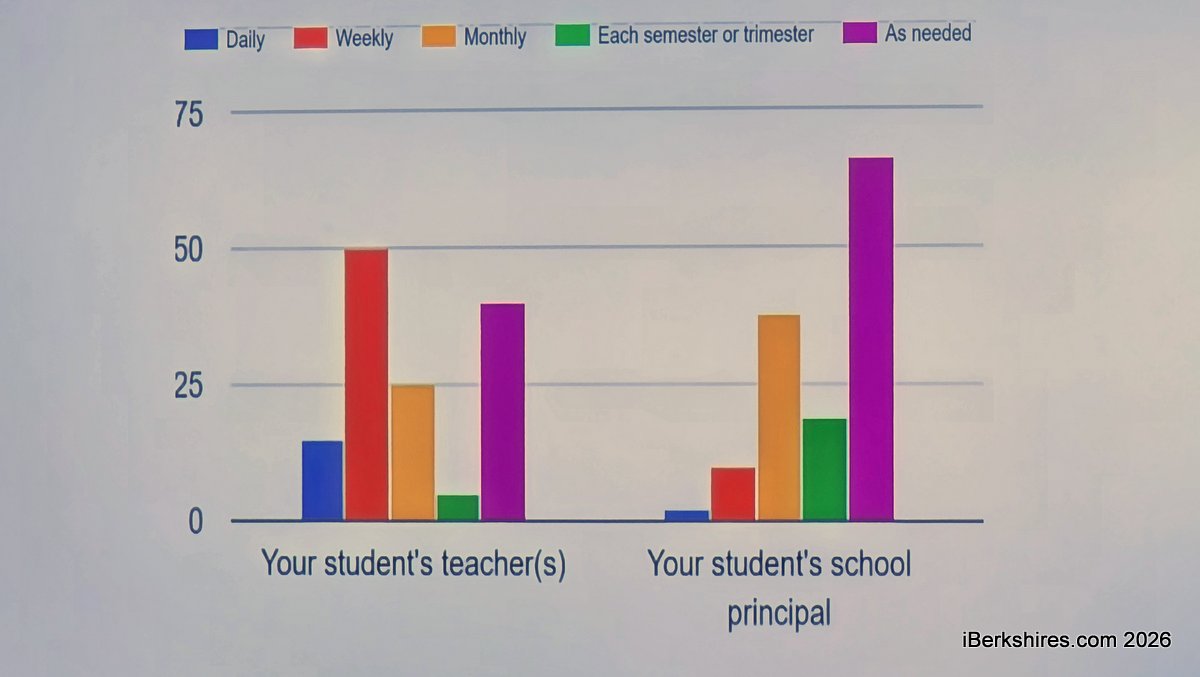
"We also had survey participants to review a variety of faculty and staff members at school and how frequently they'd like to like to hear from them," she said. "Overwhelmingly, 'as needed' is the favored response with two notable subjects, which are their students' teacher, and to a lesser but still significant extent, their principal."
The majority of respondents favored weekly teacher updates, even over "as needed" and secondarily, monthly principal updates.
What they most wanted to hear about was academic achievements, followed by school safety and curriculum. Facebook was the No. 1 used social media resource followed by the school website and then Instagram.
On the website, the calendar was the top visit followed by news, delays and activities and the lunch menu. The fifth spot was information about faculty.
About 65 percent of respondents could find what they need so the response is to create a tutorial video at the start of the school year to show how to access and fill absentee forms and other areas of the website.
Orientation events have been mostly centered on families with children entering kindergarten, but they're recommending extending that to any new students.
Schiavoni and Appleget traveled to New Orleans to attend the National Association of Family, School and Community Engagement conference.
"We had three major takeaways from this conference. That were relevant and feasible for our district to implement," she said. One was a framework for sustaining family/school partnerships and underrepresented groups, the second was a "welcome walkthrough tool" that includes such simple factors as parking, main office location, first impressions, displays and inclusion.
The third was parent learning walks which would align with the superintendent's entry plan of "collaborative ownership."
Schiavoni said it was a matter of "demystifying what's happening in the buildings."
She remembered a focus group that described the school as a fortress where they could only peer through the windows. The concept would be to give parents a guided tour of the school in session.
"Parent learning walks would provide families the opportunity to witness real lessons in real time. ... This is more about learning what high-level trends are they seeing in our buildings," she said, rather than observing their own child. "Research demonstrates that these exercises increase parents agency and feelings of inclusion in school environments and strengthens school family partnerships."
She said the district is also revamping volunteer opportunities and has re-established the Special Education Parent Advisory Council, which went dormant during the pandemic.
Callahan said the walkthroughs will become a major component because this data and the entry plan revealed "a disconnect between community members and parent perception of what goes on in schools versus what we see going on in schools and schools and saw what's going on in the classroom."
Tags: communications, NAPS,