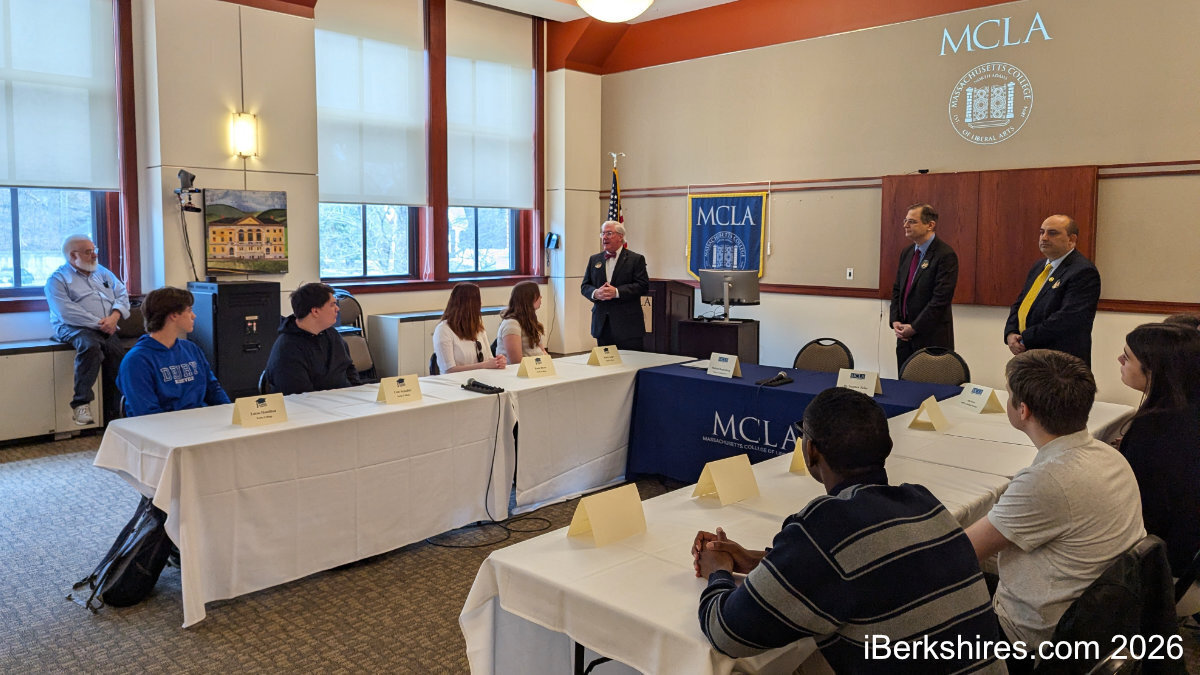
MCLA, Drury Students Vouch for Early College Programs
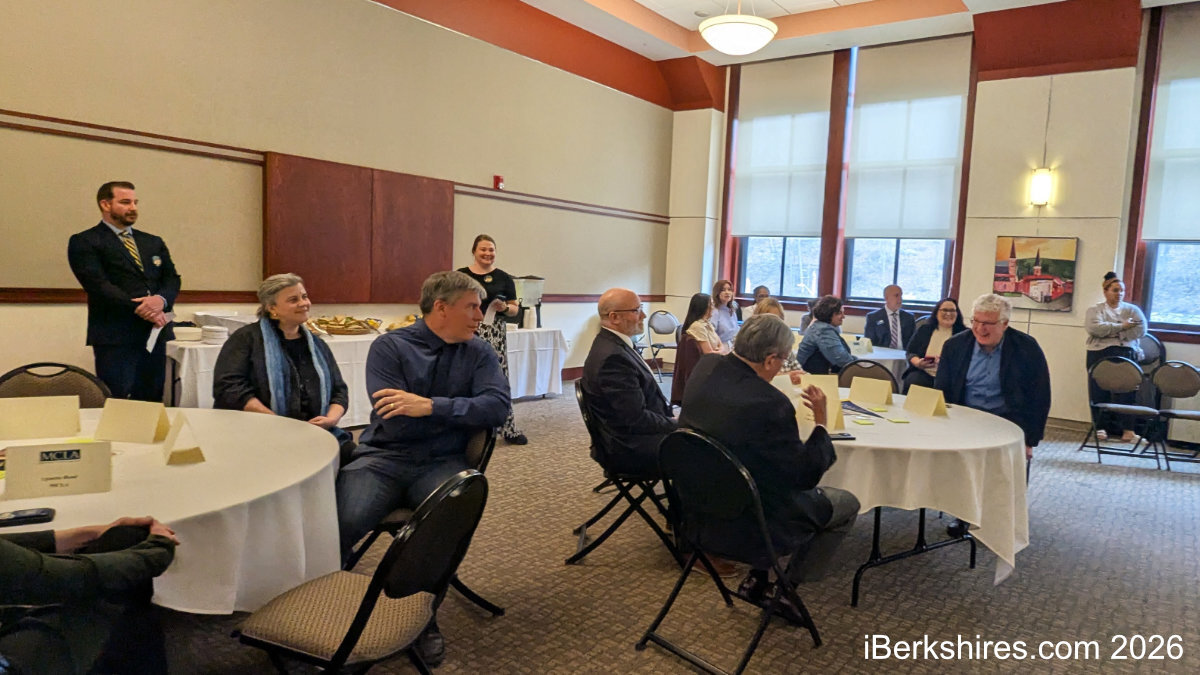
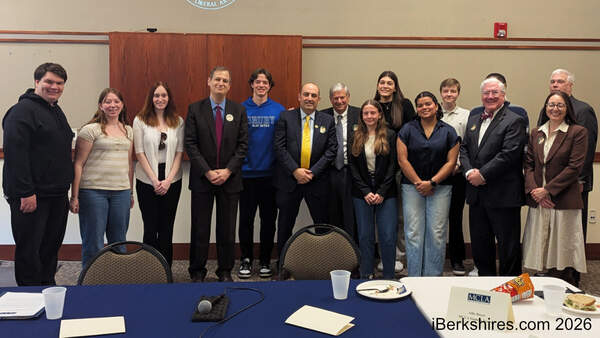
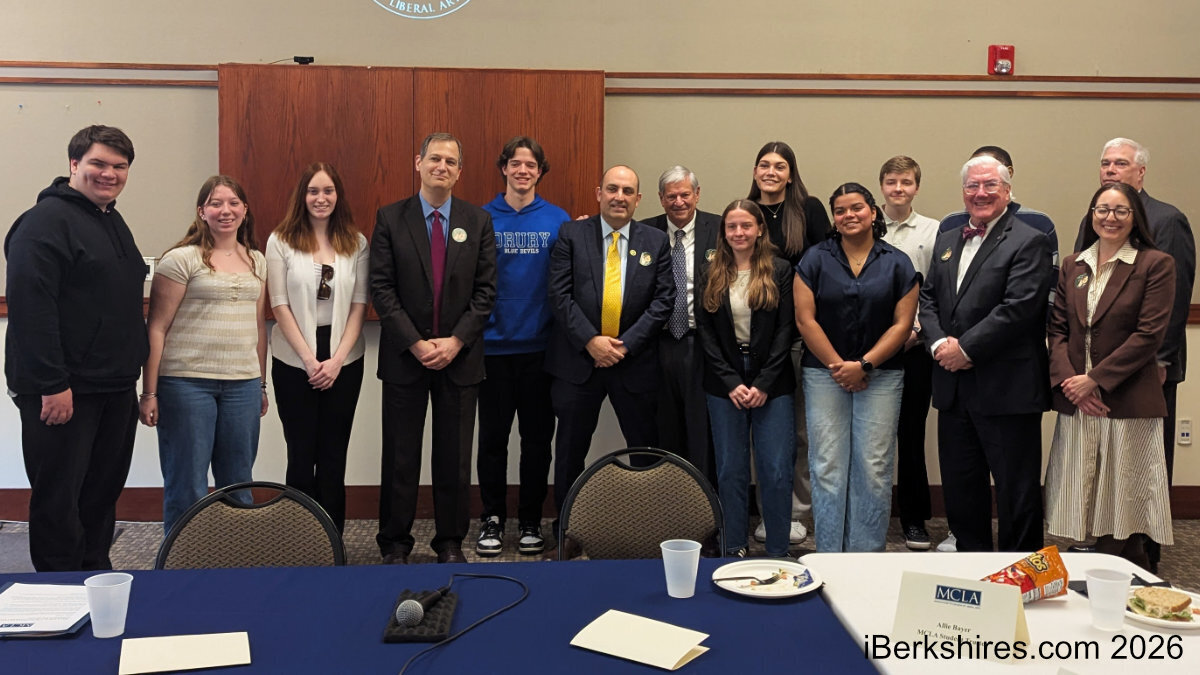
Northern Berkshire educators attend the gathering in Murdock Hall.
The gathering at Massachusetts College of Liberal Arts was part of an education focus in 413 Day, a celebration of Western Mass. Zrike and other state educators had also been in Pittsfield to learn about the needs for early childhood education.
"To hear your stories is very helpful as we try to make sure that we craft policy, and we leverage resources in order to make those dreams more possible for people," Zrike said. "... We want to make sure that we're supporting as many people to get through college in a way that doesn't leave them behind."
The conversation was held in the college's Murdock Hall. Zrike, who was only 11 days on the job, said he felt the best way to prepare himself for the position was to talk to real students on different sides of the timeline: those exiting high school and those in the middle of college.
Dannenberg spoke to the Fair Share Amendment that Gov. Maura Healey deployed to make higher education more affordable. He said one key to making college accessible is giving students the opportunity to get a head start before they even set foot on a campus.
"The importance of time," he said. "Today, the typical student graduates from community college in just over 3 1/2 years; the average student graduates from a four-year college in 5.5 years. We can make college exceptionally more affordable still if we get students to accelerate. It becomes more affordable, and it opens up possibilities so they can graduate debt-free."
Drury High School seniors shared their own experiences in the early college program.
Lucas Hamilton said the variety of classes he has been able to take through MCLA has opened his eyes to potential majors and careers.
For Cole Shadler, the classes went beyond variety and pointed him toward a specific career path. He spoke about a public health course.
"I loved everything in it, from just looking at the microscope to learning about the human body," Shadler said. "So that's what really got me to physical therapy — is that I love researching science, and I love to help people."
Marie Auger said she was happy to be able to clear college courses before even enrolling as a full-time student. Zrike noted that the program makes a high school diploma much more valuable.
"Having early college is a good start, right? And I love that when you hand a diploma to a high schooler, it's not just a diploma — it's the diploma plus the credentials ... that's an awesome thing," he said.
Zrike then asked the MCLA students how they would improve the program.
Destiny Rivas felt advertising these opportunities would have been incredibly helpful for her in high school, especially within vocational schools.
"Truthfully, when I got in here, I asked what it was," she said. "I went to a trade school … and we have this stigma that trade schools — you are going right into a job, you are not going to college … that stigma makes it harder to learn about programs like early college. No one pushed that to us."
Fellow student Caroline Schamling agreed, adding that if she had been able to take early college courses, she would have had a better sense of her path instead of switching majors mid-stream.
"I came to college with the intention of becoming a physical therapist, and then, after my first semester, I scratched it completely," she said. "And here I'm in education now. So I wish I had the experiences of having those early college classes to know what I was getting myself into."
Drury student Rosie Bleu agreed, noting that schools could do a better job of steering students toward the program.
"I feel like some people don't realize how much knowledge we have access to or how much education we can get," she said. "... I feel like it would be really important if we really hammered down on increasing engagement and getting people to take early college classes and just showing them all of the benefits that it can offer us."
Dannenberg noted that even struggling students can benefit from college-level work because it builds confidence and preparedness.
When Zrike asked the high schoolers for their perspective, Auger said she felt much more prepared for the transition.
"It just made the whole experience of coming to MCLA a lot easier, and it just also made me way more prepared," she said. "Understanding that I may not always have someone right by my side all the time, but that's okay."
Shadler said it gave him a better sense of what to expect, noting the shift in environment. Instead of being confined to one assignment for an entire class period, he enjoyed the freedom and independence at MCLA. He added that simple changes, like not having to raise his hand to use the restroom, created a more professional atmosphere.
Hamilton appreciated the resources MCLA offered and enjoyed the exposure to college faculty.
"It just expands my resources a lot more, taking classes with the professors and different kids in an actual college environment, rather than a smaller high school environment," he said.
Dannenberg called the Drury students "vanguards." He noted there are currently 10,000 students in the state enrolled in early college, and that the governor hopes to increase that number to 100,000 over the next decade.
The conversation turned back to the MCLA students, who discussed structural hurdles that complicated their own transitions.
Rivas felt that, in some cases, counselors and school employees could be better informed. She recounted having to do much of her own research to find scholarships and schools within her budget.
"Truthfully, I was not going to go to college … My counselor told me that the Army would be the best way for me to get my nursing degree for free," she said. "So, about this time two years ago, I was sitting in an office ready to sign a contract with the Air Force. And I had no idea until I was here. My counselor, kind of, threw out the first thing that he knew could get done."
MCLA student Nathaniel Chaney faced a similar situation. Recruited to play basketball in Pittsburgh, his only resource was his coach.
"He didn't really have that knowledge either. I didn't really feel comfortable going around asking questions," he said. "Having that support in high school would have been helpful so I could find these resources and advocate for myself."
Masyn Lavarier felt he lacked financial literacy, noting the language surrounding college costs was often inaccessible. He admitted he originally conflated a higher price tag with a better education.
"I had a weird perspective on finances. I was worried that my education in college would suffer because I cannot afford a, quote, 'better' college," he said. "I learned later that is not the case at all. But I was afraid to ask those questions because I was kind of afraid of the answers to them."
In terms of support, however, Lavarier felt MCLA was doing it right. As soon as he stepped on campus, a network was ready to help him navigate his college career.
Dannenberg said people often overestimate the cost of college, especially given recent affordability efforts, but acknowledged that policymakers must bridge the communication gap.
"We policymakers need to have a more compelling, clear, simple message to students and families," he said. "...It's an education to hear from you that we've got a long way to go."
Zrike thanked the MCLA students, the Drury students, and the local education community. He admitted that while he was new to the area, he was already a "Blue Devils fan."
"You all have incredibly bright futures. I have a lot of these conversations, and I'm way more optimistic about the world that we live in," he said.
Tags: 413 day, higher education, MCLA, state officials,