Pittsfield School Building Committee OKs PHS Statement of Interest

By Brittany PolitoiBerkshires Staff
Print Story | Email Story

PITTSFIELD, Mass. — Pittsfield High, the city's oldest school, will be the subject of the next funding request to the Massachusetts School Building Authority.

During a special meeting on Monday, the School Building Needs Commission voted to move forward with a statement of interest. The City Council on Tuesday night unanimously approved submitting a PHS statement of interest.

Mayor Peter Marchetti said that if they don't get in the queue, they could be talking an eight-year wait rather than a four-year wait. The deadline for submission is April 17. 

"To underscore the discussion today, which would be one of many by multiple bodies, any action taken today by us is not a funding commitment, is not a project commitment. It's a concept commitment," Finance Director Matthew Kerwood said. 

Focus areas include the renovation and modernization of the heating system and the replacement or addition to obsolete buildings for educational offerings. 

The school was built in 1931 and is about 163,600 square feet. It was renovated in 1975 to add nearly 40,000 square feet, including the theater and gym, the Moynihan Field House. 

Vocational spaces have been added and upgraded over the years, and laboratories have been improved, along with periodic updates to building elements. Security systems were modernized, and a couple of years ago, the school's three inefficient, original-to-the-building boilers were replaced

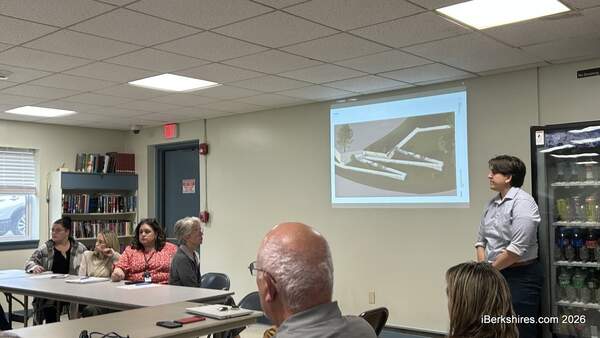
"It's a 95-year-old school, and there are things that are going to come up with a 95-year-old school," Commissioner Brendan Sheran said while giving a presentation. 

The converted locomotive engine boilers were replaced, but he reported that the school has concrete foundation issues and old pipes throughout.

"So while we did do a great replacement here, and that's helping to alleviate heating issues within the school, there are other infrastructure needs to connect to that that may need to be addressed in the future," he said. 

The school's condition was rated "2" along with Conte and Morningside in MSBA's 2025 School Survey.  The district is currently deciding if Morningside Community School, with classrooms that have no walls, will reopen in the fall, and the city's other community school, Conte, is staged for a combined build with Crosby Elementary School. 

Needed replacement or repairs include: piping and vent systems, electrical and lighting systems, the roof, brick and concrete, parking, entrance security, energy efficiency, and more. 


"I mean, the list goes on," said Sheran, who was an educator at PHS for 15 years. 

Priority areas identified for an SOI to the MSBA Core Program will be for the replacement, renovation, or modernization of the heating system to increase energy conservation and decrease energy-related costs, and replacement or addition to obsolete buildings to provide a full range of programs consistent with state and local requirements. 

This is what the school was found to be most eligible for.  If invited into the program in December, a draft schedule places construction between 2031 and 2033. 

It was emphasized that the authorization vote OKs the superintendent to submit a statement of interest in an effort to get into the process for the next PPS building project. 

"It's not a commitment to any final outcome. It's not an allocation of funding, and certainly not a decision that's going to result in work being done in the immediate future," Sheran said. 

"It's that first step, and there's a whole lot more to learn and learn and consider along the way." 

MSBA is a quasi-independent agency that partners with local districts to improve school facilities, distributing over $18 billion in reimbursements since 2004.  It has a dedicated revenue stream of one cent of the state's 6.25 percent sales tax. 

There is the potential for MSBA to cover up to 80 percent of reimbursable costs if a project is pursued, and Pittsfield's current rate is 78.9 percent.

A SOI is the first step in the MSBA program and allows PPS to detail deficiencies in the PHS facility and how they impact the delivery of education. 

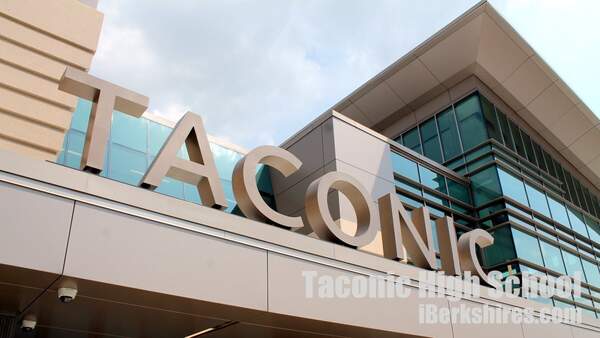
The district submitted statements of interest for five schools since 2007, and only two have been accepted: Taconic High School in 2009 and the proposed Crosby/Conte elementary build in 2024. 

Sheran pointed to a 2010 visioning statement of the committee that said its highest priority is to create two high schools that consider the projected school population, and provide the premier secondary education to the students of Pittsfield and the region.

The first outlined phase was to rebuild Taconic with a focus on its vocational programs, which was completed in 2018 at $120 million, and the second is to renovate PHS to facilitate the programming needs of a liberal arts education, including the fine and performing arts. 

The PPS Facilities Master Plan draft timeline places the renovation of PHS between 2029 and 2036. 


Tags: MSBA,   PHS,   

If you would like to contribute information on this article, contact us at info@iberkshires.com.

Dalton Planners Hold Public Hearing on Tiny Homes Bylaw

By Breanna SteeleiBerkshires Staff

DALTON, Mass. — The Planning Board held a public hearing last week on a bylaw for mobile accessory dwelling units (ADU) that will be brought before a special town meeting.

For nearly two years, Amy Turnbull has been trying to amend the current ADU bylaws to allow mobile tiny homes.  

A movable tiny home is defined as a unit under 400 square feet that meets all of someone's daily needs, including sanitation, cooking, and other facilities, and which is also mobile. Most homes considered "tiny" are built on a trailer so they can be towed.

Her proposal defines a movable tiny house as a "residential property with an existing primary house, intended for year-round living," and outlines eight conditions for approval.

Among these conditions: the unit must adhere to accessory dwelling unit regulations, undergo site plan review, be licensed and registered with the state Registry of Motor Vehicles, have approved energy, water, and wastewater systems, and comply with American National Standards Institute 119.5 and National Fire Protection Association 1192 safety requirements.

Additionally, the unit must be certified for ANSI or NFPA compliance by a manufacturer or third-party inspector, including adherence to Appendix Q and the International Residential Code's structural guidelines and energy efficiency standards. The tiny house cannot move under its own power, and its undercarriage, wheels, axles, tongue, and hitch must be concealed from view. Wheels and leveling or support jacks are required to rest on a level gravel or paved surface.

Turnbull has gotten enough signatures for her petition to amend the current bylaws to add her definition of the mobile ADUs. Last Wednesday, the board held a public hearing on the petitions, which will be voted on at a special meeting.

Turnbull says she has two reasons for wanting to add this to the town's bylaws: aging in place and affordable housing.

"We need a variety of housing types in Dalton, and that we also need to address the idea that you know nearly 30 percent of our population by 2035 is going to be over 65 years old, and it's problematic because  ... there's not enough choice for these people to to age in place,"she said. "What movable tiny houses does, is it provides a less restrictive ADU. It's much cheaper to place, and it's easier to place, less time consuming. And what it offers to people is it offers people who are owners a place for their children to come and live, or a caregiver to come and live, or for the people who own their own house to come and live while they rent out their maybe their three bedroom home to a new family who wants to attend to Craneville simultaneously."

She said people need to move away from calling and treating the tiny homes as though they are trailers, as one former Planning Board member has voiced opinions on.

"That is an opinion, and I think we need to get over that, because I want to say that these are foundation homes, and that the chassis is a foundation, and it's a stick-built home on a chassis, and in very many ways it's like a modular house. I think we will not be surprised in the next 10 years if we see the market turn around and start to make smaller, tiny modular homes, but that is not the case right now, and we have a dire need for affordable housing," she said.

At a former Fire District meeting the Water Department drafted regulations for water hook-ups for these types of homes. The superintendent sent a letter to the Planning Board to be read at the meeting stating it will not be a hindrance for sewer system connection.

"The Department of Public Works does not feel that mobile ADUs will be an issue with the town sewer system. The homeowners will be responsible for any issues outside of the sewer main and connect and responsible for connecting in, so that would address any permits, fees, or anything like that would be added to that," the letter states. 

"The Water Department, as we've stated previous, and as you stated, the water department has come up with their own set of SOPs, standard operating procedures, for hooking up a an adu and a mobile adu, which will then have to meet winterization and all those, but they've laid out a plan for that, that they have, so I'd like to point that out," board Chair Robert Collins said.

One concern was raised that if someone can have a mobile ADU could they also have another tiny home on their property, including the main house. That situation is not likely, said Turnbull, as it would cost a considerable amount of money. Town Manager Eric Anderson also stated that in his former community when they adopted similar laws their first one wasn’t put in until a couple years later and then maybe one a year.

View Full Story

More Pittsfield Stories