Williamstown Fin Comm Mulls Use of $2M Windfall
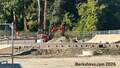
WILLIAMSTOWN, Mass. — The Finance Committee last week discussed how the town should use the $2 million it is in line to receive from the sale of the former town garage site.
"My understanding from [Town Manager Robert Menicocci] is, unlike the [American Rescue Plan Act] funds, which were distributed by the Select Board, this is just another revenue for the town and has to go through town meeting," Chair Frederick Puddester told his colleagues. "It would be good for us to think about what our priorities might be for this, to give feedback to [Finance Director David Fierro] and [Menicocci] on how to deal with the $2 million that fell out of the sky."
Fierro confirmed to the committee that proceeds from the sale of 59 Water St. to Williams College would be classified as "special revenue" and sit outside the town's budget, needing an appropriation of town meeting to spend all or part of the windfall.
Melissa Cragg suggested that the special revenue could be left in free cash, but it would generate less of a return on the investment than it would if it went to, for example, the town's stabilization fund. One potential drawback of putting it in stabilization, Puddester noted, is that a two-thirds vote of town meeting then would be required for a withdrawal.
Suzanne Stinson, who was later elected to chair the committee for the 2026-27 meeting cycle, indicated that the $2 million could be used to address the issue of tax base growth that has concerned the Fin Comm for years.
"I feel like it would be important to put that into something that has a long-term outcome for the town, given how much we're talking about significant structural changes," Stinson said. "We talked about if we had a way of gaining development — either commercial real estate or residential development. Those things, in particular, could conceivably add to the tax revenue.
"If there's an opportunity, I'd like to make sure we think through those opportunities."
Puddester noted that the town is facing three pressing and pricey infrastructure needs related to erosion of the Hoosic River at three points: near Cole Field at the site of a capped Williams College landfill, near the junction of Syndicate Road and North Street (Route 7) and near the Hoosac Water Quality District's wastewater treatment plant.
While all three projects need to be done, the town is waiting for approval from the Massachusetts Department of Environmental Protection for its stabilization plan and hopeful that the Army Corps of Engineers might get involved in the solution, defraying the cost to the town, Puddester said.
He joked that if the $2 million was "parked" in the stabilization account while a riverbank stabilization plan is finalized, it would be relatively easy to get the two-thirds vote needed to release the funds.
"If the stream bank is spewing trash [near Cole Field], I think we could get a two-thirds vote at town meeting," Puddester said.
Puddester also said that if the town invests the $2 million in an actively managed account, the money could help taxpayers even before it is spent.
"If we earned 5 percent on $2 million, that's $100,000 we could use for tax relief [annually] and still have our $2 million nut for whenever the Corps and the state get their act together," Puddester said in a meeting telecast on WilliNet.
Cragg said she was happy the special revenue will be allocated differently than the $2.2 million in federal COVID-era aid the town received in 2021 and which needed to be earmarked by the Select Board by the end of fiscal 2024.
"I'm glad it's going to go to the voters and not get frittered away like the ARPA money did," she said.
The Select Board's allocations of the ARPA funds included $220,000 to the town's Affordable Housing Trust; $80,000 in bonus pay to town employees for work during the pandemic; $50,000 for equipment upgrades at the town's public, educational and governmental television station; $300,000 for infrastructure needs at Williamstown Elementary School; and $225,000 to defray the cost of building the new fire station on Main Street.
In addition to electing Stinson as chair and Margo Neely as vice chair, the Fin Comm's main order of business on Wednesday was approving budget transfers to cover overages in the snow and ice removal budget for the winter of 2025-26.
Fierro explained the reason for the deficit spending for the benefit of the committee's newest members, Mary MacDonald and David Bartels, and anyone viewing the meeting at home.
"It is the only department in which we can overspend," Fierro said. "Once you raise a snow and ice budget, you're stuck with that number forever. … Even in a mild winter, we overspend."
This year, the budgeted amount was about half of the total spent due to the rising cost of salt and diesel and the number and timing of snow and ice events. The DPW overspent by $226,063 in FY26.
To help address the overages that the town anticipates every year, the Fin Comm has a budgeted reserve account that was funded at $50,000 in FY26. Fierro also brought the committee a list of accounts that underspent in the fiscal year that ended on June 30 that, along with the $50,000, covered the $226,063 shortfall.
"We could decide tonight not to transfer the money," Puddester said. "If we don't transfer the money to snow and ice, [the $226,063] becomes free cash for next year. We could actually put the deficit for snow and ice on next year's tax bill. It's the only budget item the state allows you to do that."
It was clear that Puddester offered that option not as a proposal but only as an illustration of what is allowed under state law.
Fierro suggested that it might be time to adjust the budgeted number for snow and ice removal ($250,000) because it has not changed for 10 years and is never enough to cover the actual cost.
Cragg noted that as recently as a couple of years ago, the actual cost was $291,000, so any increase should be modest.
"We probably should budget for more than that, but I wouldn't say $491,000."
Puddester said he liked the practice of underbudgeting for snow and ice because it gives the town some flexibility. The alternative, guessing the true cost of snow and ice removal for a season 12 months in advance, could tie up money that could be allocated elsewhere in the budget.
The committee voted unanimously to recommend the budget transfers as recommended by town hall staff.
Fierro told the committee that after the line-item transfers to cover the snow and ice overages, the town stands about $45,000 under budget in FY26 expenses — pending any late bills that show up at town hall. In addition, Fierro said that the town is running about $300,000 ahead of its projected revenue for the last fiscal year, leading to a potential $345,000 balance of free cash to carry over to the FY28 budgeting process.
Speaking of that budget process, Stinson recommended that the committee break with past practice of dormancy during the fall and early winter months and hold monthly meetings leading up to its weekly meetings that begin in March to review the town and school district budgets.
"What I'd like to propose is we actually meet monthly throughout the year, keeping a focus on what we're thinking about, so when we roll into the weekly meetings in March, there's much more context already available and there's thought and preparation among ourselves to better grill Dave," Stinson said.
The rest of the committee agreed.
It also spent time at Wednesday's meeting talking about how the Finance Committee can play more of a role in educating town residents about the municipal budget and pressures it is facing, particularly as Williamstown projects a need to hold a Proposition 2 1/2 override vote as soon as 2029. It discussed collaboration with civic groups in town as well as more engagement with other town committees.
Paula Consolini noted that while the Finance Committee would not be an advocacy group if an override actually is needed, it can help make sure residents are better informed.
"It's better to get information to people before you get into a 'political season,' so to speak," Consolini said.
Tags: Finance Committee, land sales,