Williamstown Select Board Directs ARPA Funds to Elementary School Projects
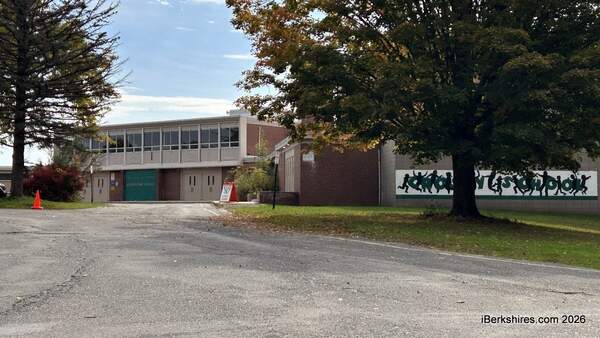
WILLIAMSTOWN, Mass. — The Select Board on Monday voted to allocate $300,000 of the town's American Rescue Plan Act funds to cover infrastructure needs at the elementary school.
Specifically, school officials attended Monday's meeting to ask the town to support an estimated $550,000 to $600,000 project to replace the two playgrounds at the preK-6 facility.
"There are two pillars that stand alone in terms of why we should be addressing them," school district Business Administrator Joseph Bergeron told the board. "One is: Neither of the playgrounds is at all accessible — not for people to play on them, not for caregivers to be near them and not for staff to be near them — which, at this point in the development of our community and our world, is a real tragedy.
"The second thing that stands by itself is the playground being 22 years old or so at this point. It has received use 365 days a year for 20-some years, and it is showing that wear."
Bergeron said the playgrounds are so old that spare parts are not being manufactured. When the district needs a replacement part, it is buying used pieces off of eBay.
Since the playgrounds — one for preschool and one for the upper grades — are open to the public outside of school hours, they are the most used public facilities in town, Bergeron said.
"I think we need to do this," Select Board member Jeffrey Johnson said. "I think it would be huge for the town. That's a hub of town."
Bergeron said the school district first started looking at a replacement plan for the two playgrounds in 2017 and had specifications in hand.
If the board released the $300,000 on Monday night, Bergeron said the district would work on finding grants and exploring fund-raising opportunities on Tuesday morning. Six years ago, the cost for replacing both playgrounds was estimated at about $475,000.
Officials hope to be able to address the more worn down of the two playgrounds, the upper school playground near the Williamstown Youth Center, as soon as this summer, Bergeron said.
Longer term, the 22-year-old elementary school has more big ticket repairs on the horizon.
"This is the first of the capital expenses we'd be coming to the Town of Williamstown for Williamstown Elementary School over the next few years," Bergeron said. "It will be followed by roof work and window work and floor work as that becomes a need."
Bergeron also referenced a failed inverter for the solar array on the roof of the elementary school. He said the district has a quote in hand from last summer for $60,000 to replace the units and make the panels functional, but, right now, it is holding off on making the upgrade for a variety of reasons.
"Does it make sense to put that money into the installation on the roof when we know shortly thereafter we'll be doing more significant work on the roof?" Bergeron said. "Part two is, based on the $60,000 investment, the solar project already in town, the combined financial impacts of the benefits of additional credits, the exchanging of those to make certain credits available to other town buildings, having Williamstown Elementary School on fewer credits and recopuing the investment of $60,000 in repairing a 15- to 20-year-old system, we'd need to do the math on whether that makes sense.
"It has not gone into our annual budget as an ask because its benefit is somewhat in question at this point."
The board voted, 5-0, to approve the allocation of $300,000 to the school's capital expenses.
It split on a separate vote to devote $700,000 of the remaining ARPA funds to the town's infrastructure projects.
Chairman Hugh Daley suggested the $700,000 outlay because he noted it would replace the $700,000 of Chapter 90 funds the town manager previously was forced to spend on overruns for the bicycle/pedestrian trail from Syndicate Road to the Spruces Park.
Daley said a $700,000 replacement of ARPA funds would, essentially, make the town's infrastructure plan whole.
"We had a bank account, our Chapter 90 funds, that we were doing our capital planning off of," Town Manager Robert Menicocci said. "Three are capital projects that are lined up to go. … There's more than enough [need] to spend this [$700,000] a couple of times over."
Andrew Hogeland questioned whether the board needed to earmark the full $700,000 and suggested, instead, that it allocate the money as projects come online.
"I would leave the $700,000 undefined as it has been for a while," Hogeland said. "We don't know what's going to happen in three or four months."
The rest of the board sided with Daley, and, in a 4-1 vote, opted to allocate the $700,000 on Monday, leaving a balance of about $166,000 in unallocated ARPA funds.
One member of the board put a stake in the ground to advocate for where those funds ought to be spent.
"Why not be crazy and think about taking some of this money and doing some of the recreational things for grownups and kids alike in town that we've been talking about forever and never have the money?" Jane Patton said. "I love the kids, love the school, love everything about it, but this sometimes comes down to where we have this total and complete tunnel vision. If there's an opportunity here to address something that's been a very long-standing need, that would have some benefits, is there a way to do some, not all?
"I feel compelled to throw that out as a potential option, because we keep talking about this. There's been zero forward motion on it, not an inch. …. The library's important, the school's important, infrastructure is important. Everything is important. But we never seem to get to a place where we put any real money toward the absolute void in those kinds of facilities and opportunities for the community writ large."
The town has spent, effectively, $700,000 toward the overrun on the bicycle/pedestrian trail, but that spending was not by design; the unexpected bill came due only after the project's completion.
On the other hand, town meeting in May is being asked to support a $4.125 million track and field project at the middle-high school, and school officials repeatedly have stressed that the facility will be available to the public when not in use by the school. And Williamstown residents have access to "Cole Fields, the tennis courts, the track, and both turf fields at the Weston Athletic Complex," according to Williams College's website. In addition the college's "paddle tennis courts" are open from 8 a.m. to 9 p.m.
Tags: ARPA, playgrounds,