Community Development Board OKs Pittsfield's New Master Plan
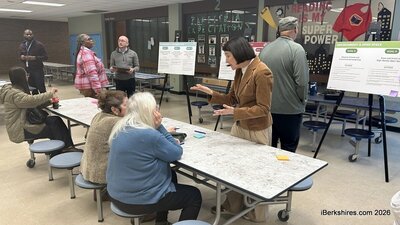 |
| The public was invited to offer feedback on the Pittsfield Master Plan earlier this year at Conte Community School. |
PITTSFIELD, Mass. — Pittsfield's "Pathway to 2036" master plan aims to build a more equitable, sustainable and prosperous future for residents.
The Community Development Board unanimously has approved the master plan, a policy guide for future physical development that covers land use, infrastructure, sustainability and more. The plan was last updated in 2009, and Pittsfield engaged the VHB engineering firm and CommunityScale consultants to bring it through 2036.
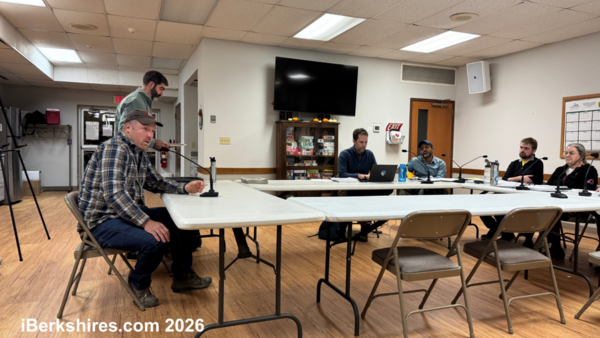
"I think that it's well done. I think that it's ready to go, and I would also say that this board can choose to amend the master plan at any time," City Planner Kevin Rayner said at a meeting earlier this month. "This is a living document. Just because we approve it doesn't mean we can't change it."
Pittsfield held hands-on feedback sessions over the past year to solicit feedback from residents, displaying master plan goals and objectives on poster boards and allowing community members to post notes on them. The project began in August 2025.
An implementation committee of city staff will be formed to undertake action items. Rayner committed to updates with the Community Development Board.
Board member Elizabeth Herland, a member of the Master Plan Advisory Committee, commended the consultants' and city staff’s work and said they provided opportunities to review the plan at various stages.
"I felt there was good public input," she said.
The plan has 15 goals around economic development, housing, transportation, infrastructure, the environment and open space, community, governance and collaboration, with associated actions.
Pittsfield’s community profile reports that the city population declined steadily from 57,020 in 1970 to 42,514 in 2020, with a modest increase to 43,457 in 2024. This represents a loss of more than 14,500 residents, roughly one-quarter of the city’s population, over 50 years. This is attributed to economic restructuring; Pittsfield once functioned as a regional industrial hub, namely from General Electric.
In 2024, the most common age group for residents was 65 years and older, 8,938, and there were 7,905 residents under 18. The city’s median household income in 2024 was $72,621, and its poverty rate was 13.6 percent.
Its vision statement reads: "Pittsfield is a vibrant, creative, and welcoming city that blends its historic character with forward-looking innovation. As a cultural, economic, and service hub of Berkshire County, Pittsfield will foster safe, walkable neighborhoods, broaden housing options, strengthen climate resilience, support efforts to provide additional well-paying jobs and enhance quality of life for all residents. Through strategic investment, regional collaboration, and inclusive civic engagement, the City will build a more equitable, sustainable, and prosperous future."
An implementation matrix in the plan shows the municipal entity responsible for each recommended action, the type of action, and the timeframe: short term (2026-2027), medium term (2028-2031), and long term (2032-2036).
Long-term items include advocating for the designation of new or expanded opportunity zones, designing and introducing modern stormwater storage infrastructure, building stronger connections with cultural institutions such as Tanglewood in Lenox and MASS MoCA in North Adams, and coordinating a strategy for addressing private ownership barriers for blighted properties in the Westside and Morningside neighborhoods.
Tags: master plan, Pittsfield,