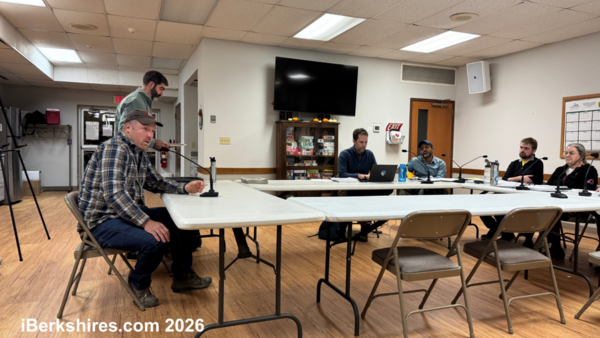
Dalton Sees Drop in Tax Rate, Increase in Bills
DALTON, Mass. — Property owners will see the town's tax rate drop for fiscal 2027, but the average homeowner can expect a bill that's about $113 more.
During its meeting on Monday, the Select Board voted to maintain its single tax rate, as it has done historically, which means all types of properties within the town, whether residential, commercial, or industrial, will be taxed at the same rate. The board also voted not to adopt residential or small commercial exemptions.
The town's tax rate for fiscal year for FY27 is projected to be $16.48 per $1,000, 39 cents less than last year's rate of $16.87.
The average single-family home valuation is $371,614, an increase of about $15,000 from FY2026's valuation of $356,286.
This valuation increase raises the tax bill by about $113, bringing the average single-family tax bill to $6,124.20 or $461 per 1,000.
Splitting the tax rate would shift the percentage of the burden away from the residential onto commercial, industrial, personal property (CIP) lowering the homeowners' bills but increasing expenses for local businesses, Assessor's Clerk Lee Nunez said.
"Typically, a split tax rate occurs in cities and towns where the CIP class accounts for 30 percent or more of the percentage share of that community," he said.
Dalton's development is mostly residential, at 87 percent, with only 15 percent for its CIP class, Nunez said.
"It appears that we're moving more to residential property tax burden. That is the split. I think last year was 85.15. Now it's 87.13. So, we're moving towards the residential not less," said Select Board member Antonio "Tony" Pagliarulo.
"I think that's mostly because the residential properties have appreciated more than the commercial properties. Not that we're getting vastly greater numbers of houses," Town Manager Eric Anderson said.
The town's total taxable value is $1,044,403,905, an increase of 4 percent from fiscal 2026, and the new growth valuation in assessed property value is $4,603,944, which equates to $75,873 in additional property tax revenue. The town also has $478,101.65 in excess levy capacity.
During the tax classification hearing, the board was presented with two scenarios demonstrating how a split tax rate would affect property owners.
Under the maximum allowable tax shift of 1.5, the average single-family homeowner's annual tax bill would decrease by approximately $362 compared to last year, while the commercial, industrial and personal property tax rate would increase to $24.72.
A more modest shift of 1.1, would limit the average homeowner's annual tax bill increase to approximately $17 while establishing a commercial, industrial and personal property tax rate of $18.13.
"I know I thought of this notion of the split, but in terms of looking at these numbers, obviously it's too onerous and it doesn't pay back," Pagliarulo said.
Tags: fiscal 2027, property taxes,