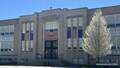
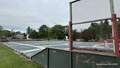
Brodie Mountain as it looked in its last ski season in January 2002. (Photo by John Hitchcock)
The purchase last month of the former Brodie Mountain Ski Resort in New Ashford by Silverleaf Resorts of Dallas means that condominiums will replace skiers and snowboarders.
The nearly 600 acres of forests and ski facilities was sold by FO Ski Resorts, which also owns and operates Jiminy Peak in Hancock.
FO principals Brian Fairbank and Joseph O’Donnell of Boston Concessions bought Brodie in November 1999, from founder Jim (JW) Kelly and operated Brodie as a separate ski area for two winters, then limited operations to a snow-tubing area with one short chairlift.
Kelly, meanwhile began construction of an 18-hole golf course on his Donnybrook Farm, immediately south of the ski area on Route 7 but entirely in Lanesboro. Although about six holes are playable, no date has been set for a commercial opening.
Kelly’s background was primarily in logging and the operation of sawmills when he decided to build a ski area in March 1964. Although surrounded by long-established ski centers in the Berkshires and Southern Vermont, Kelly brought a new and lively, if not exuberant, approach to the ski business.
At the time when Brodie opened a three-level base lodge topped by the 5,000-square-foot Blarney Room with its hardwood floors or carpeting, the standard at most other resorts included gravel floors. Other ski areas closed at dusk, but Kelly did a record-setting bar business and brought in live bands and entertainers.
As a ski instructor and news reporter for first The Berkshire Eagle and then the Springfield Republican, I followed Brodie happenings closely.
I first skied Brodie Mountain in late December 1946, when the “Mad Russian†Gregory Makeroff had two rope tows and a few trails just south of the present Brodie parking lot. When I arrived with my skis, a lanky ex-Marine was busy splicing the main tow rope.
His name was Walter Schoenknecht and he was leasing the operation from Makeroff. After the winter he returned to his home in Connecticut and built Mohawk Mountain before moving on to Mount Snow. The next winter a former Williams ski coach, Jim Parker, made the Brodie connection with Makeroff, who then moved out West and died shortly afterwards.
Then Harley Phelps, operator of an adjacent farm, acquired the Makeroff property and skiing became past history.
But Jim Kelly’s father bought the adjacent land for its logging potential and in 1963 a federal recreational study named Brodie Mountain one of three prime sites for a commercial ski operation in the Berkshires. (The other two were Spruce Peak atop the Mohawk Trail and the Saddleball section of the Greylock Range).
That was enough for Jim Kelly, and he decided to enter the ski business. He sought information for all sources, including me, and he and I walked the property on deep snow cover in early April 1964. By December he had a ski center with the imposing base lodge, a chairlift and a short T-bar and a half-dozen trails.
Other ski operators, including those at Jiminy Peak only 3 miles away, were doubtful about Kelly’s ability to run a ski center.
In those days there was little in the way of snow-making except at Bousquet in Pittsfield and little natural snow fell in Kelly’s first winter. With Washington’s Birthday approaching, Kelly Hardwood Trucks were busy hauling snow from deep drifts near the Berkshire Hills Country Club in Pittsfield, and soon there was plenty of white stuff at Brodie.
The next year Kelly installed the first top-to-bottom snowmaking system. For good measure, he lighted most of the trails. And when the snow became too hard, Kelly invented his Hard Pack Pulverizer and sold it to competitors as well.
Baby boomers were blasting down Brodie’s ever-increasing number of trails. I got into the act and opened a cross-country ski touring center at Brodie with most of skiing at Donnybrook Farm.
Brodie was hot, and Kelly was acknowledged as a shrewd and creative operator. He introduced professional ski racing and the Irish Olympics in conjunction with the St. Patrick’s week festival, with even Mount Snow’s Schoenknecht participating and observing.
But Kelly’s success inspired the competition, and the old-timers at Jiminy, including then President Fred Crane Jr., contracted with Kissing Bridge Inc. of western New York to manage the area. Kissing Bridge, which was also managing Mount Ascutney in Vermont, brought in young Brian Fairbank as resident manager and the rest is history.
Before too long, Fairbank had joined forces with O’Donnell (one of the bidders for the Red Sox) and after a few years they acquired control of Jiminy and made the former almost moribund ski area the pride of southern New England.
Meanwhile, Jim Kelly turned over active management of Brodie to two of his sons, Matt and Doug, and saw the former baby boomers turn into slow skiing old-timers. Brodie maintained a faithful but declining following, who praised the now slower tempo and sunnier, easier slopes.
When Fairbank and O’Donnell bought Brodie, they found it difficult to bring back the old crowds and after two years decided not to spend the approximately $5 million thought necessary to bring Brodie up to Jiminy’s level and instead built the new Jiminy Village Center.
Jim Kelly, once a tennis fanatic, had transformed his zeal from skiing to golf, and all indications are that his Donnybrook Golf Club will be as outstanding as Brodie skiing was in the old days.
And Kelly, ever a shrewd dealer, maintained ownership of two apartments at Brodie, located over the lower terminal of Andy’s Chairlift. Fairbank told me Monday that the original agreement means that Kelly will still own two units at the new Snowy Owl Resort for “at least 70 years.â€
The FO deal with Silverleaf, for some $2.6 million, stipulates that there will never be any public skiing or boarding at Brodie, although FO would operate such activities for condo owners if desired. And FO will operate its tubing center for at least another winter.
What goes around comes around, as they say, and Schoenknecht lost control of Mount Snow before succumbing to MS several years ago. American Skiing Co., present owner of Mount Snow, Killington, Attitash, Sugarloaf USA and Sunday River in the East, now includes golf at most of its properties.
I played the Mount Snow course recently with PR man Mike Murphy and agree that the Geoffrey Cornish-designed layout will be a true test for the third annual Vermont Senior Open Aug. 24 and 25. There will be separate divisions for pros and for amateurs in the 50 to 59 age group as well as 60 plus, with $16,000 in cash prizes for the pros.
This month will see club championships at most courses, as the competitive schedule will enter the more relaxed fall foliage season. Get out there.
John Hitchcock of Williamstown writes frequently about the area sports scene.
If you would like to contribute information on this article, contact us at info@iberkshires.com.
Your Comments
iBerkshires.com welcomes critical, respectful dialogue. Name-calling, personal attacks, libel, slander or foul language is not allowed. All comments are reviewed before posting and will be deleted or edited as necessary.
i have just found out that Brodie Closed by the owners of Jiminy Peak...would have been a mich better idea to close Jimminy. Brodie was the most unique mountain in America. Sad Stuff.
I worked at the mountain in the 2000/2001 season. I had come from Australia and couldn't believe what a great place Brodie was. Jiminy had great skiing - Brodie had the great atmosphere !
My earliest and fondest memories of skiing and riding were at Brodie, and my worst experiences with conditions and lift attendants were at Jiminy.
Brodie should never have closed it's trails...the Blarney room will be forever missed...
Wow, This Is The First I Have Learned About Brodie Being Closed... I Grew Up Skiing Here, I Took My First Runs Here, I Collected Cans/Refuse Here, I Even Took My First Helicoptor Ride From The Parking Lot... I Cannot Believe It's Closed... I Am Dumbfounded... The Staff Were ALWAYS Happy-Go-Lucky, Helpful, Customer Oriented, And Above All Else - Determined To Make Your (my) Day/Night As Easy As Possible!!! I Am Sad To See It Gone...=(
Gee, so sad to hear that a few moutains I grew up skiing have closed. I remember the Blarney room as a tot; those forbidden stairs up to the den of adulthood. So many great memories of skiing w/ my Dad. I live in California now but have land around Wilmington, where I skied Haystack, now closed. As was opnce said, you can never really go back..,
I grew up skiing at Brodie in the 70's & 80's, I always had so much fun there, and it was just as good skiing there as an adult! The Irish Olympics were great! I remember my friends making the brave attempt at jumping the green pool, only to land right smack in it! I was never foolish enough to try, spectating was my game and what game it was to watch! St. Patty's Day was always best celebrated at Brodie...green snow, green beer, green food...I am so sad to see it closed and sold for condominiums - corporate America sucks!
I was in western MA and took a drive to New Ashford and drove into the Brodie/Snowy Owl property. I knew it had closed so I wanted to see what it looked like in 2009. What I saw was devastating - graffiti on buildings, peeling paint, shutters falling, etc. The only thing missing was blowing tumble weeds. I hope it is developed soon and everything torn down so nobody else that loved that place sees it in the condition it is today.
I skied at Brodie for 18 yrs, and it was the first Mountain I skied on in my life. I made a lot of friends from the campground and the ski instructors. Those were the best times of my life. I am now 33 yrs old, and always think of Brodie every winter. I am disgusted on how it looks now, and how it is closed. Memories are forever, it's just a shame that I can't teach my children how to ski there. My first son's middle name is Brodie, we wanted to keep that mountains name alive in our family. Since thats what Brodie was all about "FAMILY". Thanks to all the greedy people out in the world for breaking up the Brodie family.
I worked at Brodie I live in Australia it is the best time I ever had the Kelly s were really good to me I will never forget the green snow and the parties and all the lovely girls that I met glad I played a part of what is now history.
Born in schenectady and skiing most of my life, i found myself at brodie often. I even rang the bell in the blarney room, I made sure there were not that many people in the bar. The warmest memories were with my best friend the late Ron Flory. I know Jim would have remembered us. We skiied all day and danced all night. I just happened on the site. I sure hope I get a chance to come down this fun hill again. I now live in the Dallas area and don't ski the east Carry on all!! John
My husband and I had gone to Allendale Elem. in Pittsfield together in the 50's. Didn't see each other again until we both ended up at Brodie with others in 1972. Been married 36 years this month, due to Brodie. Living now in Maryland. Many fine memories esp. St. Patrick's Day festivities. By the way, neither of us ski. We just loved the atmosphere. We recently got a puppy and named him Brodie, after one of our favorite places.
Old memories fade hard... My dad, Bill Murthey, ran the ski shop at Brodie during the first year of operation, may two. I remember standing in the mud in my goulashes, watching bulldozers knock down trees just above where the base lodge would be. The only building then was the small A-frame that became the ski patrol building for the first few years. It was 1964. I was six.
When not in school, I was the first person on the slopes, standing there waiting for the t-bar to open. I used to build a jump right by the t-bar lift line and fling myself off it to the delight of folks waiting in line - always trying to get more applause - at least until the ski patrol guys would wipe it out. Always trying During the break between day and night skiing (yes, they actually used to shut down for a bit), me and the Kelly kids would take the cafeteria trays out on the hill to kill time.
Most of my lunch money allotment went into the jukebox. I remember Jim Kelly asking me not to keep playing 'California Dreamin' and 'Day Tripper' over and over again because he was getting complaints. After we closed the ski shop at the end of night, I'd head up to the third floor with my parents - yes at that young age - to listen to the bands and marvel at everybody having such a great time.
It's too bad Brodie couldn't survive, but the great memories still do.
Lanesborough Officials Take Road District Dissolution Off Warrant
By Breanna SteeleiBerkshires Staff
LANESBOROUGH, Mass. — The Select Board has removed a town meeting warrant article regarding the dissolution of the Baker Hill Road District.
JMJ Holdings development consultant Tim Grogan spoke in public comment saying the Berkshire Mall owner is currently has purchase-and-sale agreement for the mall.
Back in February, the Select Board settled a tax dispute with JMJ Holdings by agreeing to move forward in dissolving the district if the company paid $1.1 million to the town. JMJ Holdings had to provide a signed development-and-purchase agreement 30 days before the town meeting.
JMJ holdings did not submit a payment to be made by May 9. Because of that, the Select Board voted to take the article of the warrant to be voted at the annual town meeting.
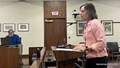
Meanwhile, the Baker Hill Road District presented a slideshow defending the district and explaining what it does.
The district currently provides a non-resident-funded revenue stream of around $500,000 per year. These funds help pay for police cars and officer salaries, dump trucks, fire trucks, and more for the town.
"Dissolution would mean the district's three commercial property owners would no longer have to pay for upkeep of the Route Seven/Eight connector road. As a result, the BHRD annual contribution of more than $500,000 to Lanesborough would disappear permanently, since the services and maintenance costs associated with the Route Seven and Eight connector road would still remain," said Tom Caraccioli, PR consultant with AH&M Inc. "Lanesborough would have to absorb these costs and continue to provide emergency services to the mall and Target. The financial burden for these remaining expenses would then fall on Lanesborough taxpayers through higher taxes or the reduction of other important town services."
The proposal with JMJ would affect the town in a negative way Caraccioli claimed.
"JMJ is proposing a one-time payment of $1.1 million to Lanesborough in exchange, JMJ would never pay BHRD taxes again. The decision to dissolve the BHRD by accepting this proposed $1.1 million would be a permanent choice that would have irreversible consequences," he said. "There will be no official system in place to cover recurring costs once the money from this single payment is spent. Therefore, the proposed one-time payment is not a long-term solution for the town of Lanesborough."
JMJ's dispute was that the Berkshire Mall no longer exists as a functioning entity and it should not be on the hook for protection and maintenance that had been based on the mall's operation in its heyday. The company is seeking to redevelop the site as senior housing and town officials were asking the state to take over the Connector Road.
District officials said it's not guaranteed that the state would take over the road linking Routes 7 and 8, built to service the mall back in the '80s, and that the state Department of Transportation had historically discouraged the town from asking. Even if it happened, it could take three to five years, during which no BHRD funds would be collected if the district is dissolved. The state would not replace the revenue they support, and they argued the state is facing its own budget issues making it unlikely they would want to take over.
The road district was created by an act of the Legislature and would require another act to dissolve it. The town meeting article asked for voter support for a home-rule petition to start that process.
After the presentation, it was asked what the current financial status of the BHRD, given that JMJ hasn’t paid in a long time and if the district actually has the money or if it is dependent on the mall sale.
Mark Siegars, attorney for BHRD, reminded the room that the mall is under a purchase and sale agreement and if the sale closes, the district expects to receive more than a million dollars because of the lawsuit and lien, but does not have that cash yet. If the sale does not go through, BHRD will take the mall and sell it. The district still gets payments from Target, which is separate from the mall.
There were also some questions on the district's history, with Select Board member Jason Breault asking if the mall did not have a high tax rate from the district, would it still be solvent. The exchange became heated between Siegars and BHRD Chair Bill Prendergast.
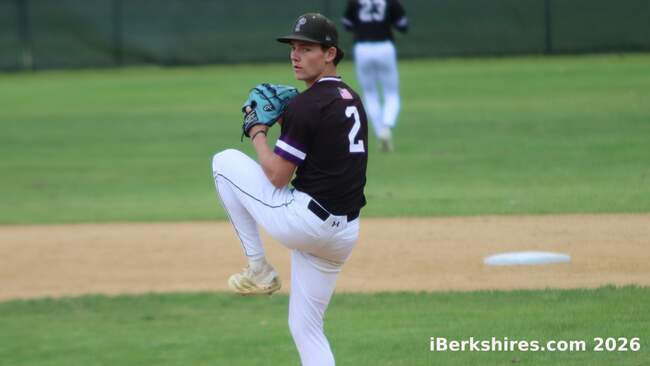
Jason Codey struck out 13, walked two and allowed just an infield single as the Generals earned a 7-1 win over Wahconah to claim their third straight regional title. click for more
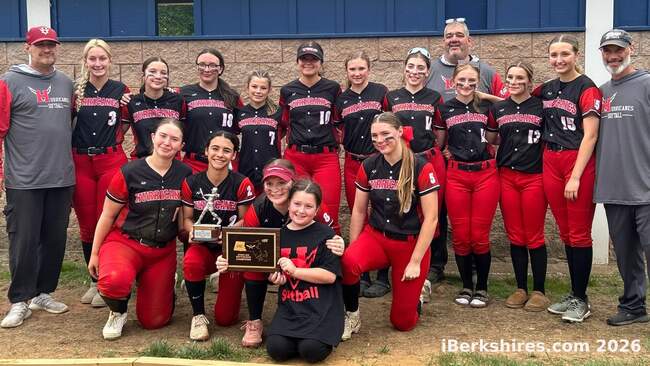
Gracelyn Wright struck out eight, and Genevieve Lagess went 3-for-5 with four runs batted in as the Hurricanes beat Monson, 17-3, to claim their first Western Mass title in four years. click for more
For the boys, Ward Bianchi helped lead the way with a win in the shot put and a second place in the javelin as the Mounties finished 16 points ahead of runner-up Pittsfield (pending the results of the pole vault, which were unavailable at 11 p.m. Friday night). click for more
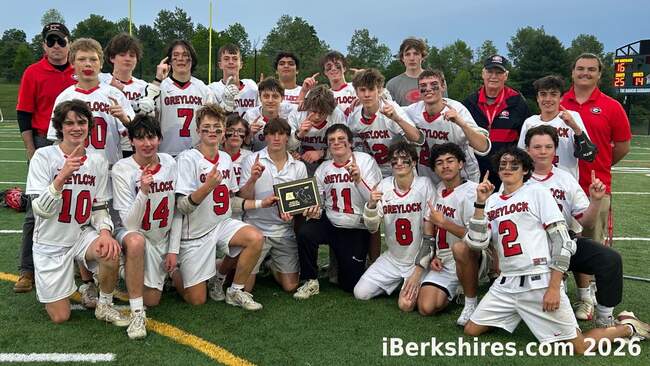
Brady Auger Friday scored five goals to lead the Mount Greylock boys Lacrosse team to a 16-14 win over Hoosac Valley in the title game of the Western Massachusetts Class C Tournament. click for more
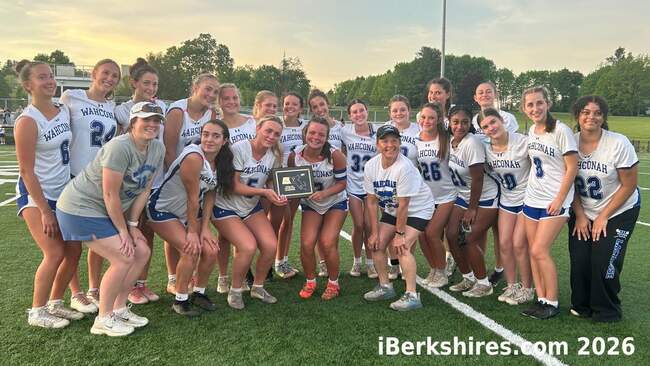
Brooke Harrington scored four goals, and Abigail Rodhouse had a hat trick as Wahconah won its second straight Western Mass title and the rubber match against the Mounties in the third one-goal game between the teams this spring. click for more