BMC Audiology Department Providing New “Stylish” Hearing Aids

Print Story | Email Story
According to a survey conducted by the Better Hearing Institute, as many as one in two Americans over the age of 50 has a hearing problem. A six-year study by the House Ear Institute found that Baby Boomers in particular may be contributing to an increase in early hearing loss due to their excessive exposure to loud rock music. The so-called Baby Boom generation is also generally wary of the appearance of traditional hearing aids, and not as likely to use them to correct hearing loss. As a result, Berkshire Medical Center’s Audiology Department now offers a state-of-the-art hearing aid that is specifically designed to be more “stylish” and less noticeable. “Many adults will begin to see the first noticeable changes in hearing acuity as they reach their 50s,” said John Fosnot, Audiologist with BMC’s Center for Rehabilitation. “In fact, every second person over age 50 experiences a decrease in speech understanding in noisy listening situations like business meetings, social gatherings and restaurants.” According to Fosnot, many people in the 50-plus generation resist addressing hearing loss, often waiting until the hearing loss is seriously affecting their quality of life. For Baby Boomers, who expect to continue working or plan to stay socially active, untreated hearing loss negatively impacts work situations and relationships and can drastically affect future employment prospects. BMC’s Audiology Department now offers the Oticon Delta, a revolutionary new design in personal hearing devices that looks more like a high tech fashion accessory than a hearing instrument. “This is definitely not your grandfather’s hearing aid,” said Fosnot. “This new style of hearing aid doesn’t look at all like a hearing aid. It has a fashionable, high tech appearance and a streamlined triangular shape and it’s so tiny that it’s virtually invisible when being worn. Best of all, this trendy hearing device contains some of the most sophisticated computer sound processing technology available so that it can give a significant improvement in speech understanding in noisy listening situations.” Berkshire Medical Center’s Audiology program offers the new Delta hearing aid in 17 metallic colors including “Cabernet Red” and “Racing Green.” “With this hearing aid, Baby Boomers can stay active and in touch with their surroundings without feeling self conscious about wearing a hearing device,” says Fosnot. “They can just put unit on and forget it – it’s that comfortable.” For more information about hearing loss and the new Oticon Delta hearing aid, or for information on having a free hearing test, call John Fosnot at Berkshire Medical Center at 413-447-2225.
If you would like to contribute information on this article, contact us at info@iberkshires.com.

Pittsfield Housing Project Adds 37 Supportive Units and Collective Hope

By Brittany PolitoiBerkshires Staff

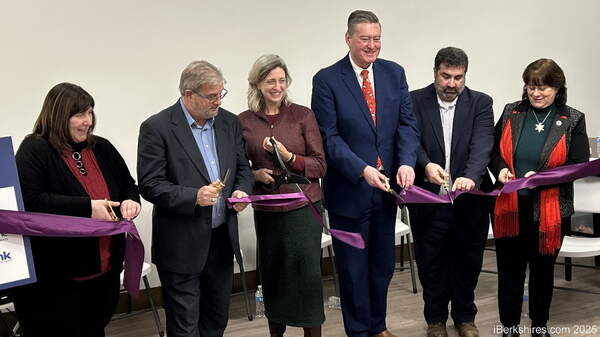
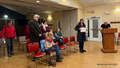
PITTSFIELD, Mass.— A new chapter in local efforts to combat housing insecurity officially began as community leaders and residents gathered at The First on to celebrate a major expansion of supportive housing in the city.

The ribbon was cut on Thursday Dec. 19, on nearly 40 supportive permanent housing units; nine at The First, located within the Zion Lutheran Church, and 28 on West Housatonic Street.  The Housing Resource Center, funded by Pittsfield's American Rescue Plan Act dollars, hosted a celebration for a project that is named for its rarity: The First. 

"What got us here today is the power of community working in partnership and with a shared purpose," Hearthway CEO Eileen Peltier said. 

In addition to the 28 studio units at 111 West Housatonic Street and nine units in the rear of the church building, the Housing Resource Center will be open seven days a week with two lounges, a classroom, a laundry room, a bathroom, and lockers. 

Erin Forbush, ServiceNet's director of shelter and housing, challenged attendees to transform the space in the basement of Zion Lutheran Church into a community center.  It is planned to operate from 8:30 a.m. to 4:30 p.m. year-round.

"I get calls from folks that want to help out, and our shelters just aren't the right spaces to be able to do that. The First will be that space that we can all come together and work for the betterment of our community," Forbush said. 

"…I am a true believer that things evolve, and things here will evolve with the people that are utilizing it." 

Earlier that day, Executive Office of Housing and Livable Communities Secretary Ed Augustus joined Lieutenant Governor Kim Driscoll and her team in Housatonic to announce $33.5 million in federal Community Development Block Grant funding, $5.45 million to Berkshire County. 

He said it was ambitious to take on these two projects at once, but it will move the needle.  The EOHLC contributed more than $7.8 million in subsidies and $3.4 million in low-income housing tax credit equity for the West Housatonic Street build, and $1.6 million in ARPA funds for the First Street apartments.

"We're trying to get people out of shelter and off the streets, but we know there are a lot of people who are couch surfing, who are living in their cars, who are one paycheck away from being homeless themselves," Augustus said. 

View Full Story

More Central County Stories