"It was cheaper to build a brewery than to pay for my drinking habit," jokes Paul Fortini, Founder and President of the Old Saddleback Brewing Company in Pittsfield, when asked what prompted him to open his business.
"Seriously though, I developed an interest in beer-making [because] there's a science to it. It's like wine, there's a lot of different varieties you can create all with their own unique characteristics."
The science of brewing
"Beer is basically made up of just water, malt, hops, and yeast," explained Daniel Stansfield, Old Saddleback Brewing Company's Production Manager and Brew Master. "But developing different flavors, that's a whole other thing. There's a science to brewing beer."
The process begins with their brewing, or base, malt which is housed in their raw materials silo. In all, 85 percent of their beers are made from this base malt to which other malts are then added to develop different varieties.
From here, the grains go into their milling room where they crack open the grains to expose the cores. Old Saddleback uses fifteen types of malt and thirteen types of hops (the bitterness). "Malts give beer its sweetness and hops its bitterness — they're the yin and yang — beer brewing is all about balance," explained Stansfield.
The split grains are then transferred to the brew house platform where they are boiled in a large stainless steel kettle to become an unfermented beer called wort (pronounced "wert"). The grains are boiled in this way in order to extract the bitter and flavors from the hops.
The wort is then sent onto the fermentation room. This area is a "clean room" where you must step into a pan of disinfectant before entering and where HEPA filters line the ceiling. It is here that the yeast is added to the wort, initiating the fermentation process. The wort gives off a lot of heat once fermentation begins, so a cooling system was installed in this room.
Once the beer is fermented, it goes to the conditioning area where it clears, is conditioned, and matures. This process takes approximately three to five days.
From here the beer is filtered and transferred to the bottling tank where it is injected with carbonation.
Finally, the beer goes to the bottling machine where thirty bottles are filled and sealed per minute. This is a labor-intensive process as it takes three to four people to run the machine. "We have seven employees working in the brewing area," said Stansfield. "Most everything we do here is manual. It's hard work, but fun, and we enjoy it."
"It takes two weeks from grain to glass," stated Stansfield in explaining the beer-making process. "Lagers take twice as long: about a month from grain to glass."
All shipping and receiving is done directly from their facility.
A Berkshire brew
Steven Brewer, the General Manager at Old Saddleback, reported that "we distribute throughout Massachusetts and New York and in the future we hope to be in Rhode Island and New Hampshire as well."
Fortini added that "we recently signed distribution agreements in Vermont, Connecticut, and Maine. We are now a regional New England supplier of beer."
Fortini went on to say that Old Saddleback's presence in Berkshire County has always been strong.
"In 1994 I was partners with Bob Smith in a restaurant and brewery here in Pittsfield. But then we decided to split the two business in 1997 because he was more interested in the restaurant end and I wanted to grow the brewing business," explained Fortini.
Brewer added that Old Saddleback is also a member of Berkshire Grown: they are considered a farm brewery — or micro brewery — since they produce under 15,000 barrels of beer a year, and they support small local businesses by using some of their ingredients in their beer — like local clover honey.
"We're also very involved in many events throughout the county," said Brewer. "Our beers can be found in many restaurants throughout the Berkshires, we've sponsored concerts and shows at Tanglewood, Butternut Basin, and Mass MoCA, and were part of this past Monday's Beautiful Bountiful Berkshires dinner and auction."
Brewer attributes their popularity in the county to the fact that "the people of the Berkshires choose what we bottle. Our beers are formulated and taste tested by locals. We pick several different recipes each Friday and bring people in from all walks of life and ethnic backgrounds throughout the county to taste our beers. Then we take the beers that they like best from the tasting room right to the brewery."
This unique way to structure the formulation of their beers seems to have worked for Old Saddleback. On August 28, 2001, they won the People's 1st Choice award of Best Brewery at the Show at the Saratoga Battle of the Brews (which benefits the Red Cross).
Brewer summed up their success with "we're not big, we're not Bud. We're just doing what we're doing and doing it as well as we can."
For more information on the Old Saddleback Brewing Company, or to inquire into their taste-testing process, call (413) 496-9088 or visit their web site at www.oldsaddleback.com.
If you would like to contribute information on this article, contact us at info@iberkshires.com.
Your Comments
iBerkshires.com welcomes critical, respectful dialogue. Name-calling, personal attacks, libel, slander or foul language is not allowed. All comments are reviewed before posting and will be deleted or edited as necessary.
No Comments
RFP Ready for North County High School Study
By Tammy Daniels iBerkshires Staff
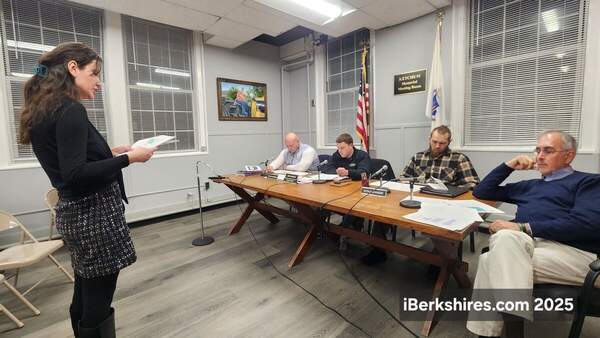
NORTH ADAMS, Mass. — The working group for the Northern Berkshire Educational Collaborative last week approved a request for proposals to study secondary education regional models.
The members on Tuesday fine-tuned the RFP and set a date of Tuesday, Jan. 20, at 4 p.m. to submit bids. The bids must be paper documents and will be accepted at the Northern Berkshire School Union offices on Union Street.
Some members had penned in the first week of January but Timothy Callahan, superintendent for the North Adams schools, thought that wasn't enough time, especially over the holidays.
"I think that's too short of a window if you really want bids," he said. "This is a pretty substantial topic."
That topic is to look at the high school education models in North County and make recommendations to a collaboration between Hoosac Valley Regional and Mount Greylock Regional School Districts, the North Adams Public Schools and the town school districts making up the Northern Berkshire School Union.
The study is being driven by rising costs and dropping enrollment among the three high schools. NBSU's elementary schools go up to Grade 6 or 8 and tuition their students into the local high schools.
The feasibility study of a possible consolidation or collaboration in Grades 7 through 12 is being funded through a $100,000 earmark from the Fair Share Act and is expected to look at academics, faculty, transportation, legal and governance issues, and finances, among other areas.
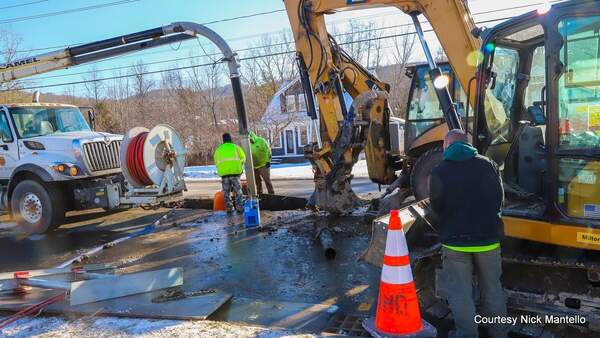
The city has lifted a boil water order — with several exceptions — that was issued late Monday morning following several water line breaks over the weekend. click for more
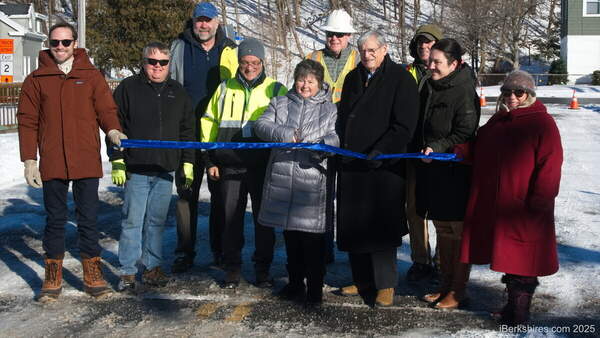
The bridge had been closed to all vehicle traffic since March 2023 after being deemed structurally deficient by the state Department of Transportation. click for more
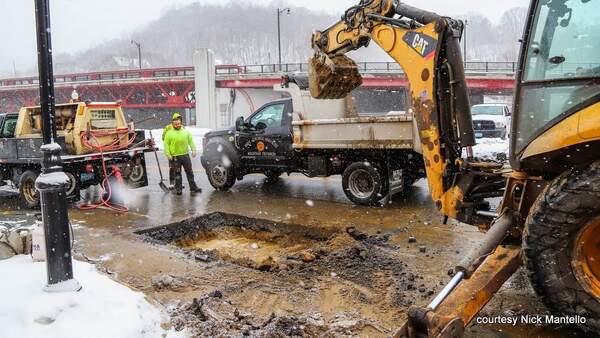
The Water Department has been responding to multiple water line breaks throughout the city since Friday, causing temporary loss of water in some areas. click for more
Nearly a year of study and community input about the deteriorating Veterans Memorial Bridge has resulted in one recommendation: Take it down. click for more