Farmers Feeling the Burden of Winter Losses
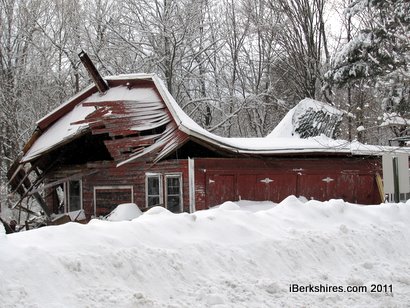 The winter hasn't been kind to barns and other structures (like this unoccupied one in Clarksburg) because of the amount of snow dropped over the region. |
SHEFFIELD, Mass. — John Springstube fought a losing battle against the snow this winter.
The barn that houses his 120 sheep, ewes and lambs collapsed recently, killing at least 10 animals and burying much of his farm machinery.
"We lost 40 feet of our main dairy barn, which collapsed in the center, and the rest of it is coming down as we speak," said the Alford farmer. "I know that we've lost about a dozen ewes and lambs but I don't want anyone going in there to count, it's too dangerous. My daughter is foster-mothering a few lambs at the house because they've lost their mothers. She's feeding them with bottles; it's like having a newborn in the house again."
Springstube is just one of the many local farmers and their livestock who are struggling under the weight of record snowfall this year.
Collapsed roofs, deep drifts and herd illness present a greater threat to animals this winter, and that's why Aimee Thayer, county executive director for the U.S. Department of Agriculture and the Berkshire County Farm Service Agency, is encouraging farmers to check their animals and report any losses to the USDA.
"It's been a really tough haul for farmers this winter," Thayer said in a phone interview. "A lot of infrastructures are compromised because of heavy snow; shelters come down. Any round bales that have been left in the field are buried so feed isn't that accessible. This is why it's really important for folks to give us a call if they've lost livestock."
The more calls and loss applications USDA bureaus receive in their national database, the more likely it is that President Obama or the secretary of agriculture will declare a livestock disaster and begin the process of reimbursing farmers for animals lost because of winter conditions, Thayer said.
This reimbursement is particularly important for Springstube as he totals up his losses in livestock and equipment. But it could have been worse: His two daughters, who each had prize-winning heritage breed sheep worth at least $300 a head, were in the barn when the roof gave out. Fortunately, Springstube said, no one was hurt save the animals.
"We tried clearing the roof but some parts were too steep and the weight of the snow on top was too much after that last rain," he said. "Every day, I would look up at the rafters and I told everyone if they heard that roof crack to get out immediately. It would have been a disaster if it had been them in that barn."
Losing sheep is not the only trial that Springstube and others farmers have faced this winter. He said he has spent countless hours getting machinery unstuck and digging out round bales so that the animals can eat.
"The last storm we had it took me four hours to get the tractor unstuck," he said. "I have a logger friend who cleared some paths for me to get around the property but those were buried in snow almost immediately. The snow banks are so high that we had to make tunnels for the animals to get the rest of them from the collapsed barn to a second building. This winter's been hard on everybody."
In many cases, said dairy farmer Jim Larkin of Sheffield, president of the Berkshire County Farm Bureau, winter livestock losses cannot be tallied until the snow melts, heads are counted and damage is measured.
"The cold weather can really mess up milk production for at least two or three days," he said. "If the temperature gets below zero it takes a day to get everything back up and running. In the diesel equipment the fuel gels up at least once a winter. It's harder for the animals to recover if they've been sick and they are more prone to pneumonia. The extra snow means extra time as it takes more work to turn over the silos. You get into the pattern of 'deal with it' whatever it is."
Yet, as farmers continue to struggle against the tide of snow and cold, Thayer hopes they will take counts and make time to report their losses for the benefit of other farmers around them.
"They have 30 days after they discover that an animal is dead to fill out an online application," she said. "We make sure we are quick with disaster reports and hopefully they will be compensated when all is said and done."
For more information on disaster reports and other farm losses call 413-443-1776, Ext. 104 or visit the USDA Farm Service Agency website.
Related Stories:
State Urges Roof Clearing After Dozens of Collapses
Two Adams Buildings Awaiting Demolition
County Roofs Buckle Under Pressure
Building Collapses in Great Barrington
Is the Hoosac Mill Tumbling Down?
Tags: agriculture, collapse, farming, snowstorm,