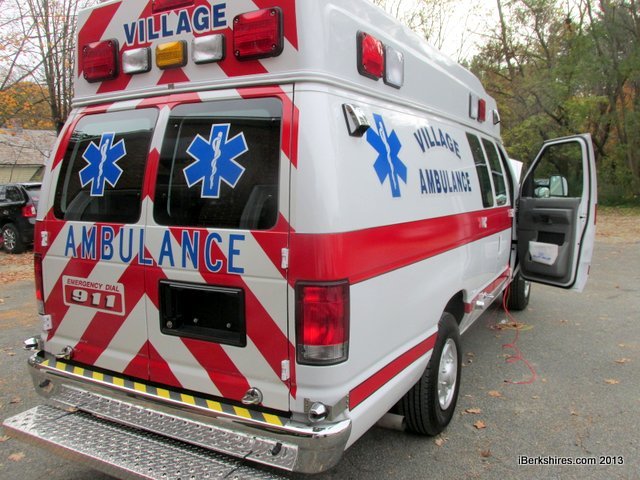
Village Ambulance Adds Van-Style Rig
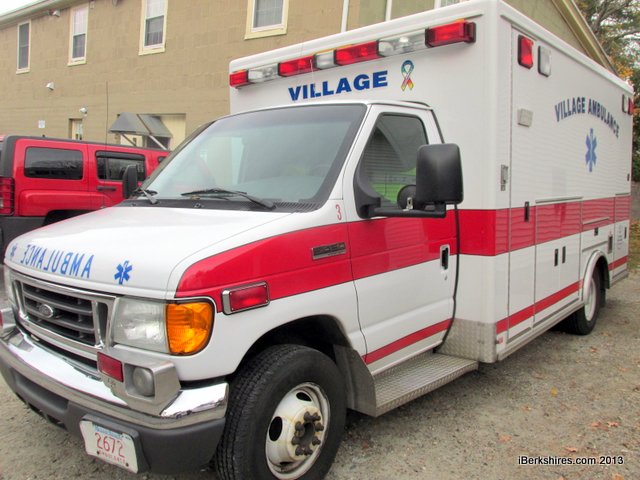 Village Ambulance took possession of a new van-style ambulance on Wednesday. Village Ambulance took possession of a new van-style ambulance on Wednesday. |
The private non-profit Wednesday took delivery on a 2013 Ford Supervan XL, which will replace a 2007 modular-style ambulance.
This winter, the service plans to increase its fleet from four to five rigs to accommodate a call volume that nears nine trips per day.
The new van ambulance offers better fuel efficiency, easier maneuverability and lower repair costs.
It also makes more sense given the workload of the VAS fleet.
Although the new van will be effective on emergency calls, its primary use will be to carry the load of the hundreds of non-emergency trips VAS personnel make each year.
"We've found that our call split is 60 percent non-emergency — transfers between facilities, for example — and 40 percent emergency," said VAS General Manager Shawn Godfrey.
VAS ambulances make about 3,200 trips per year, Godfrey said.
The ambulance slated to go out of service has nearly 165,000 miles on its engine, but in reality the vehicle has more wear and tear than that number indicates.
"We could say 160,000 miles, but you have to look at the revolutions on the engine," Godfrey said. "If we're standing by at an accident scene for three hours with the engine running, that's the equivalent of how many miles on the engine?"
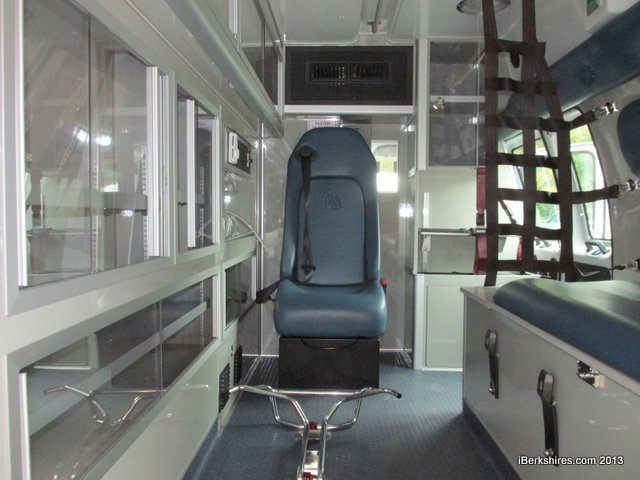
Godfrey stressed that all of the VAS rigs will be able to provide all of the services the agency provides, including emergency calls. The one difference functionally between the more familiar "box" ambulance and the van-style or "Type II" model is that the latter has a little less room in the working compartment, and it is a tighter fit with more than two or three personnel in addition to the patient.
On transfer runs, one EMT or paramedic in the back is more typical. And it makes more sense to use the smaller model when possible — especially when you consider it gets about 15 mpg, as opposed to 10 to 12 mpg for the modular style unit.
"After extensive strategic planning, we found operating three modular ambulances and one van-style ambulance is the best approach for our organization in terms of fleet utilization and fiscal responsibility," Godfrey said. "We already have a deployment plan for how the ambulances will be utilized."
Village Ambulance is getting ready for its 2014 Membership Campaign, an annual appeal to the residents of Williamstown, Hancock and New Ashford. This spring, Godfrey said, the service plans a major capital campaign so it can replenish reserve funds dedicated to fleet replacement.