Grossman: Colegrove Park School Measure of City's Character
By Tammy DanielsiBerkshires Staff
Print Story | Email Story
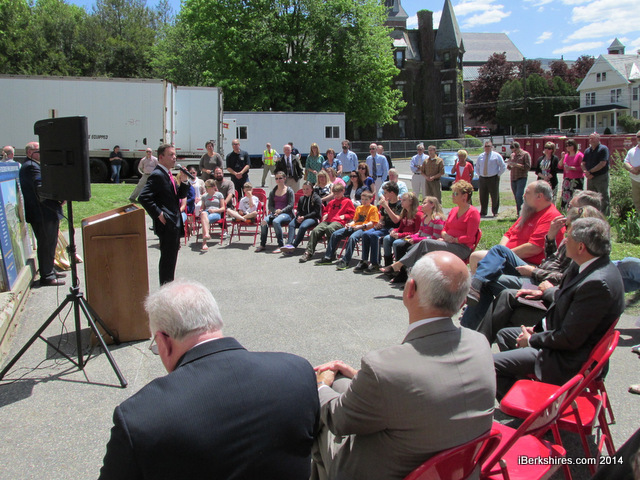
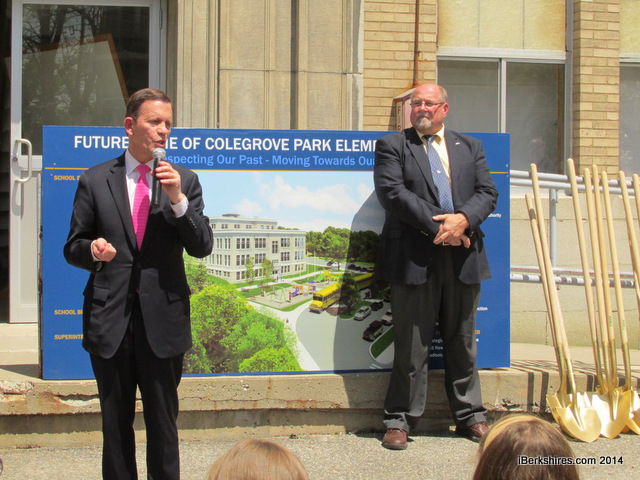
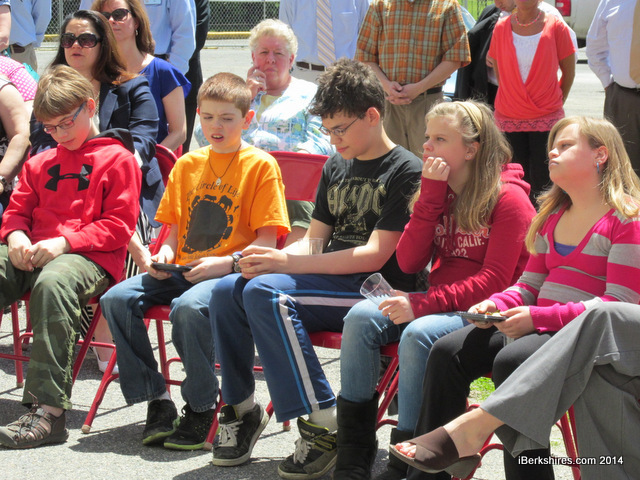
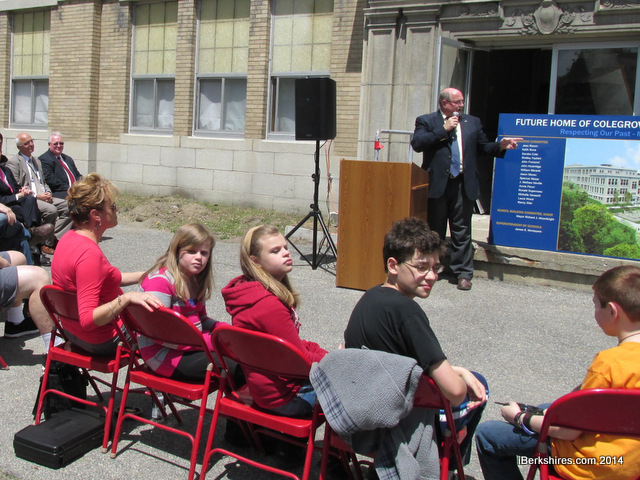
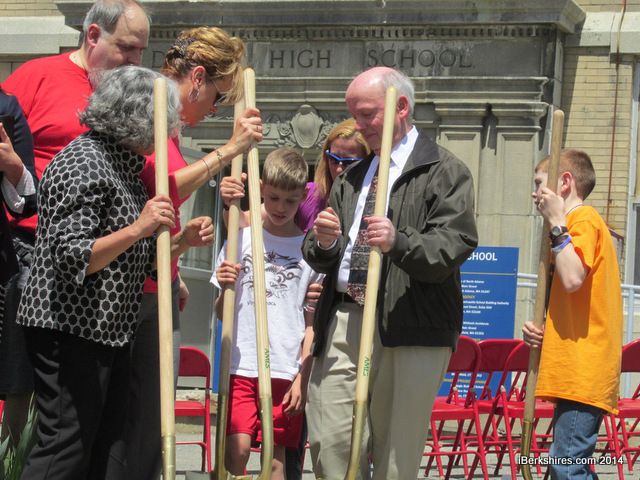
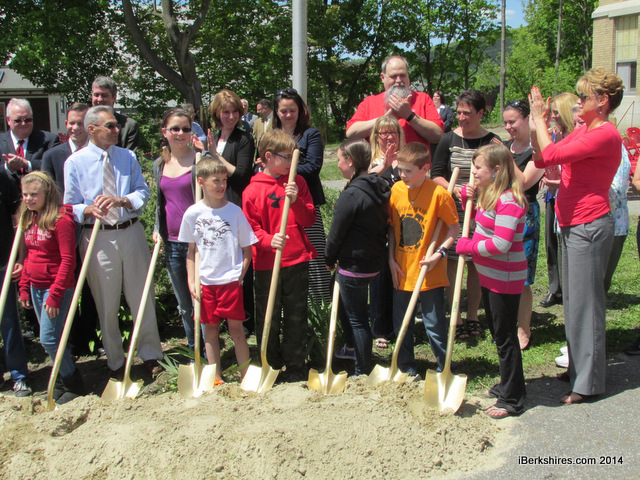
Sullivan School pupils take a turn at 'groundbreaking' for the new Colegrove Park Elementary School.

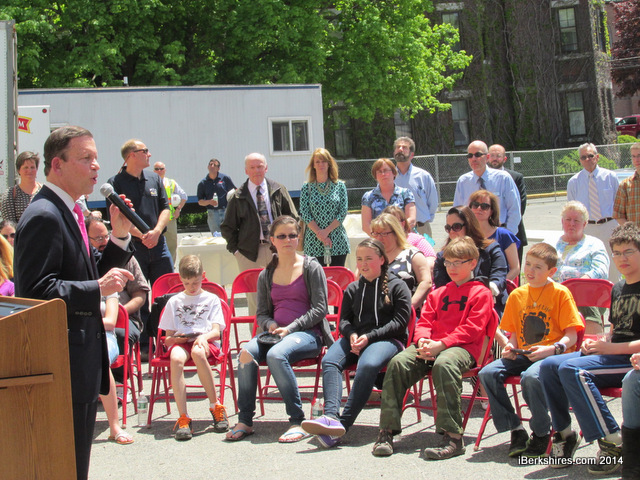
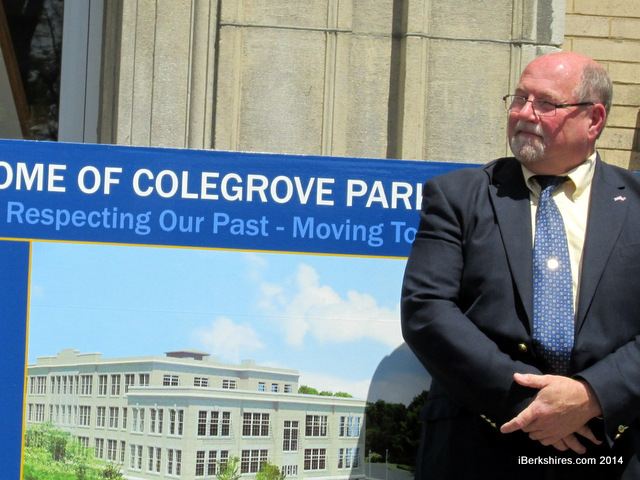
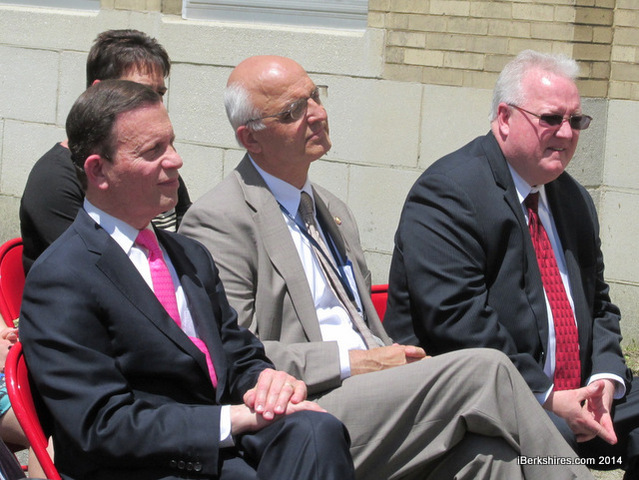
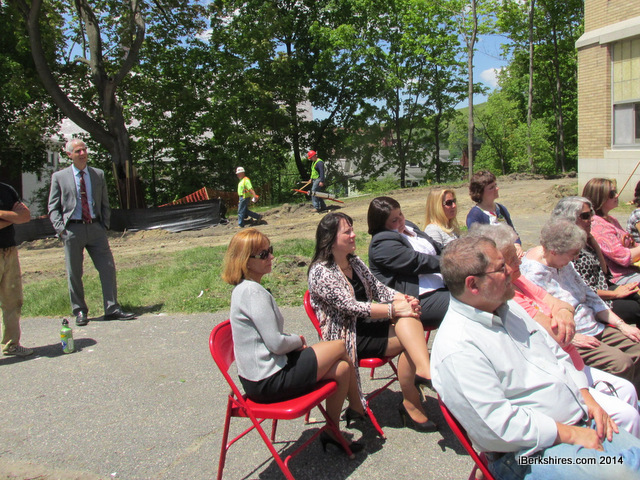
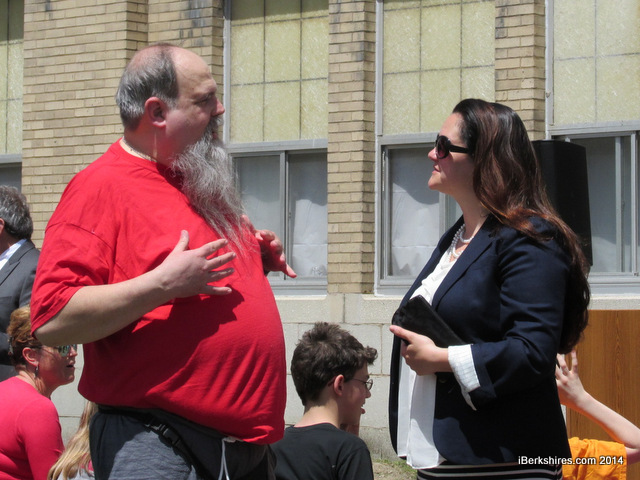
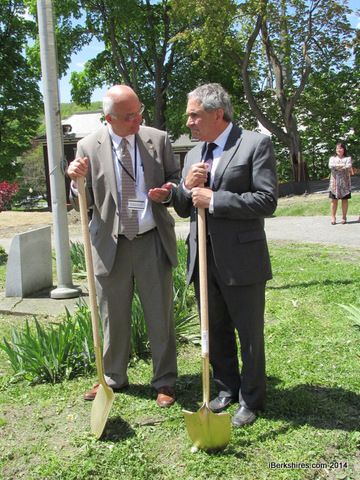
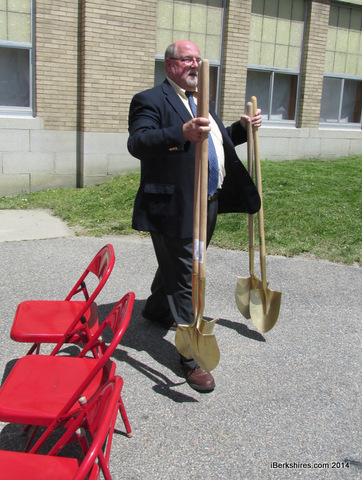
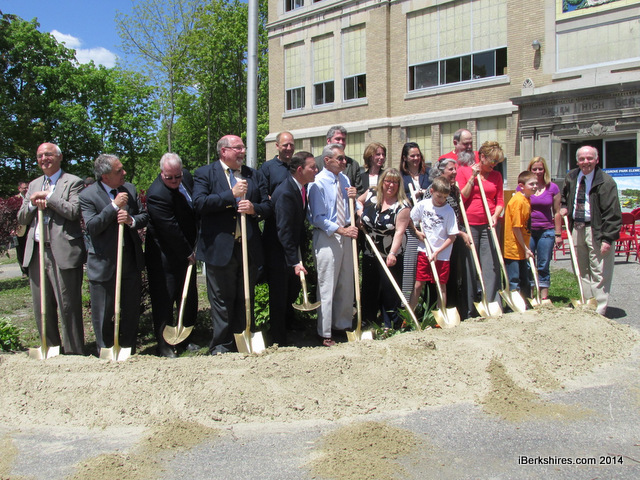
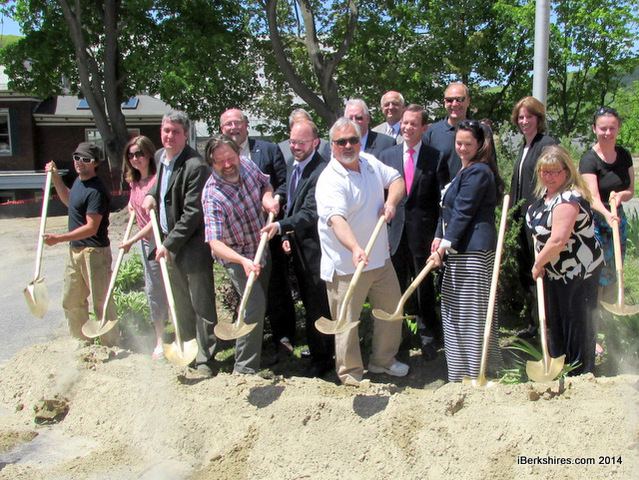
NORTH ADAMS, Mass. — The new Colegrove Park Elementary School project was officially launched at noontime on Wednesday with a host of dignitaries and ubiquitous gold shovels.

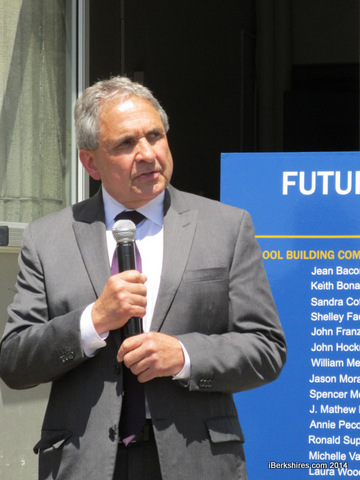
The groundbreaking on the long-awaited school building project on East Main Street is an indication of the city's resilience, said State Treasurer Steven Grossman, chairman of the Massachusetts School Building Authority.

"When a city like this has gone through the challenges that you have gone through even as recently as the end of March  with the closing of a hospital, there are two ways we can go," he said. "... we can say you know, I don't know if it's possible to rebuild or the people of a city can come together and show their character and values ...

"And that's exactly what the people of this city have done."

The path to a new school has been long and not without controversy. The planning began some seven years ago to address the space needs of the city's elementary schools and the perceived failing of the middle school model.

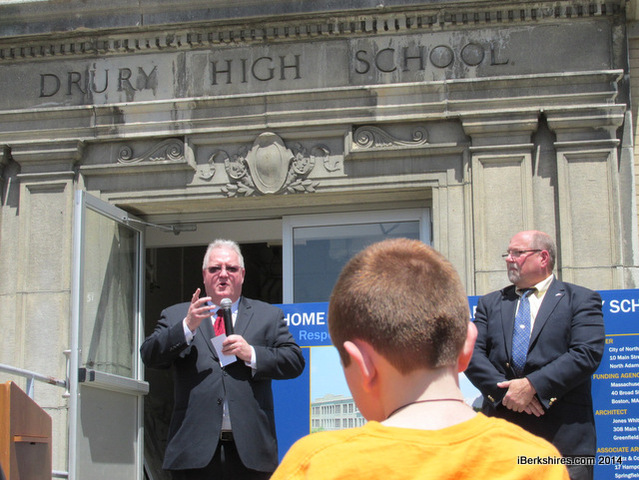
Conte Middle School was closed in 2009 partly because budgetary issues and the city piloted a new academic format that would add the eighth grade to the high school and Grades 6 and 7 to the elementary schools. Century-old Conte, which was originally Drury High School, was initially considered out of the picture.

But the design team hired by the School Building Committee returned a plan that would once again open its doors to the city's schoolchildren. But it would take an extra year to convince citizens the plan was sound, including a citywide petition referendum on the borrowing for the $29.6 million project.

Colegrove Park Elementary School, named for Jeremiah Colegrove, who came to what was then a village in 1793 to start a business, will replace Sullivan School that was built in the early 1960s. Sullivan Principal Shelley Fachini and a handful of pupils attended the ceremony.

"This is a very exciting day in the city of North Adams as we move this project forward after several years of planning and hard work," said Mayor Richard Alcombright to the guests circled around the side entrance, the heavy machinery already at work on the building in the background.

He thanked the City Council, committee members, state officials and "the wonderful people of North Adams who strongly pulled together to make this project happen." He particularly thanked parent Lynette Ritland Bond for her efforts with the Friends for North Adams Schools in spearheading the grassroots campaign that led to the school project victory just a year ago.


"I look forward to bringing the project to completion with all of you," the mayor said.

The MSBA is providing an 80 percent reimbursement on the project, expected to be completed in late summer 2015.

MSBA Executive Director Jack McCarthy said the Colegrove Park project will be academically suitable, high-tech, sustainable and cost-effective.

"Benjamin Franklin said an investment in education pays the best interest and we're proud to be your investment partner in this education to the tune of a little more than $23 million."    

The vote to approve the borrowing on the school was close, he acknowledged, and he wondered why people would vote to raise their taxes.

"It's kind of counterintuitive, but then when I see these students seated in front of me it becomes crystal clear," McCarthy said. "The folks believe in you, they believe you deserve a first-rate 21st century learning environment and that's why they voted to raise their taxes."

He urged the Sullivan School pupils to thank their parents and the community for supporting them.

The group tossed the dirt from a neat pile, allowing the children to all take a turn with the shovels, with a little coaching from the treasurer.

"Today is about reaching for the sky, today is about getting beyond all the problems and challenges and say 'yes we can,'" said Grossman. "I want you kids to reach for the sky, to rejoice in this moment for years to come."

If you would like to contribute information on this article, contact us at info@iberkshires.com.

Why the Massachusetts Art Community Is Worth Continued Investment

By James BirgeGuest Column
How do we quantify the value of art on society and culture? Even eye-popping figures, like the $100 million estimate for the jewels stolen from the Louvre, or the record auction last fall that saw a piece by Gustav Klimt sell for more than $236 million can't fully account for the value of the history, stories, and emotions behind the creations themselves. But beyond that, there is a measurable financial, cultural and social benefit of the arts that is often taken for granted. 

Closer to home, arts and cultural production in the Commonwealth of Massachusetts totals nearly $30 billion annually, representing more than 4 percent of the state's economic output, according to the Mass Cultural Council. All told, more than 130,000 jobs are spread across the commonwealth creating a vibrant and thriving artistic community for us all to enjoy. 

Despite the obvious impact, these figures are under threat. A recent survey by MassCreative compiled recent federal cuts to the National Endowment for the Arts, the National Endowment for the Humanities and the Institute of Museum and Library Services and identified 63 grants canceled and $4.2 million in grant funding rescinded across New England so far this year. 

The dollars, of course, are important. But they also only scratch the surface on what they bring to the community. Today, we risk losing part of the culture and identity many now take for granted. 

While others choose to look past these less tangible, but just as vital benefits, we're doing the opposite. Massachusetts College of Liberal Arts is all in to ensure the next generation retains their access to works of art, while also being empowered to create themselves. 

Last fall, MCLA officially broke ground on the new Campagna Kleefeld Center for Creativity in the Arts, which will serve as a new hub for the campus and the local community for arts programming. When complete in fall of 2027, our students will benefit, but so will all of Berkshire County and artists in the surrounding area. 

This exciting new facility is just one of the many forthcomings our region can enjoy in the coming years. Just a few miles away, anticipation builds for the Fall 2027 anticipated opening for the Williams College Museum of Art. Years in the making, the museum likewise grows from an enduring commitment to the arts, both in curriculum and in practice. Exciting times are also underway for the Clark Art Institute with the construction of a new facility to house a collection of 331 works of art, including paintings, sculptures, drawings and other works. Their wing is scheduled for completion in 2028. And listeners will no doubt enjoy the sounds and melodies from Mass MoCA Records, the latest endeavor to foster creativity and artistic pursuits through music launched in October as well. Of course, many are also awaiting the reopening of the Berkshire Museum anticipated this summer, after a tremendous renovation process to rejuvenate the experience for visitors. 

So much time, energy, and yes, dollars, have already been invested in taking these facilities from ideas and sketches and making them reality. But they represent much more than new buildings. They represent new opportunities to cultivate and accelerate the thriving arts community in Massachusetts and the northern Berkshires. 

Art, regardless of the medium, is a reflection of who we are, where we've been, and what we aspire to be. It can be inspired by hopes or fears and chronicle collective triumphs as well as tribulations. The goal of art is not only to document history, but to inspire those positioned to change it and to feel something new or even to provoke us to revisit our own assumptions or misconceptions. 

As unfathomable of a number as $30 billion can seem, boiling down the impact to any number inherently discounts the unknowable downstream effects our graduates will bring to the community and the broader world after they leave our institutions. Likewise, rescinding $4.2 million now removes a huge chunk of that growth potential.  

Justification for making these investments today when simply boiled down to dollars and cents still places us on solid ground strictly from a financial perspective that forgoes all of the intangible, but no less valuable, benefits as well.  

The arts are still worth our support. And our community will be richer for it. 

James Birge, PhD, is president of Massachusetts College of Liberal Arts in North Adams.  


View Full Story

More North Adams Stories