The ROPES Camp Is In Full Swing
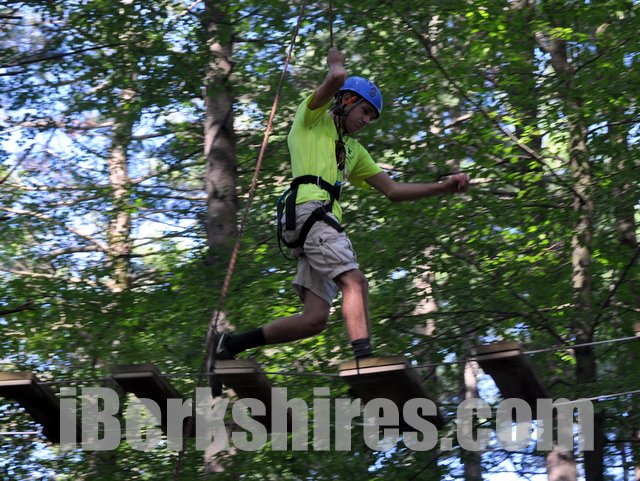 The ropes course for local youth at Windsor Lake has been instilling confidence for 19 years. The ropes course for local youth at Windsor Lake has been instilling confidence for 19 years. |
NORTH ADAMS, Mass. — The ROPES summer camp program has entered its 19th year and shows no signs of slowing down.
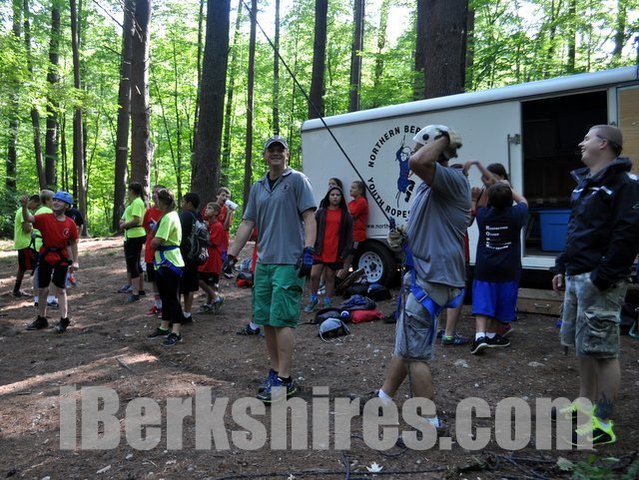
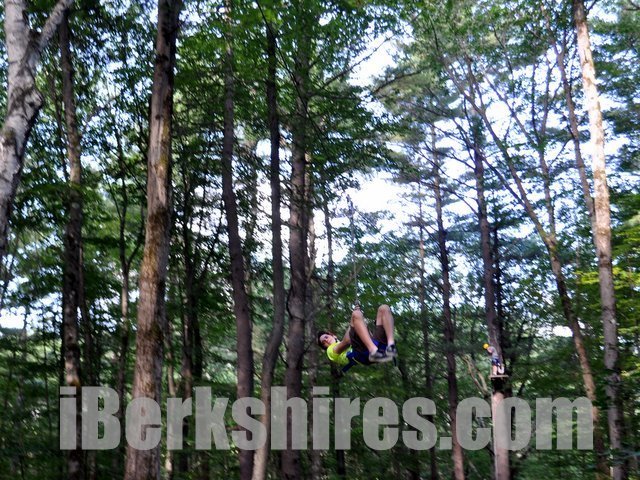
Driving through the Windsor Lake campground during the summer is often pretty quiet. But that isn't the case when camp is in session and even the loudest bird can't compete with laughing children on zip lines.
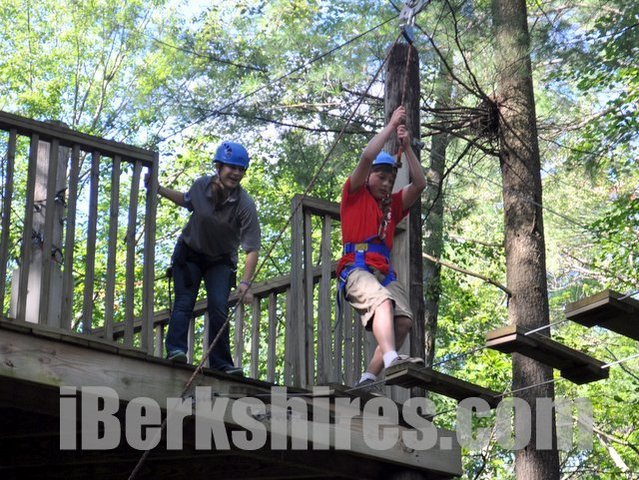
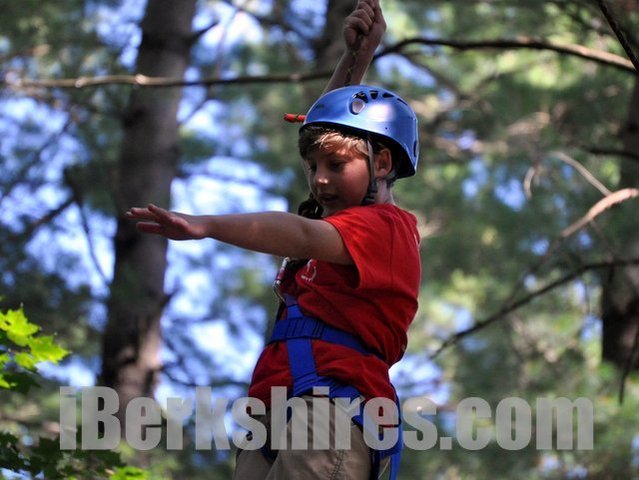
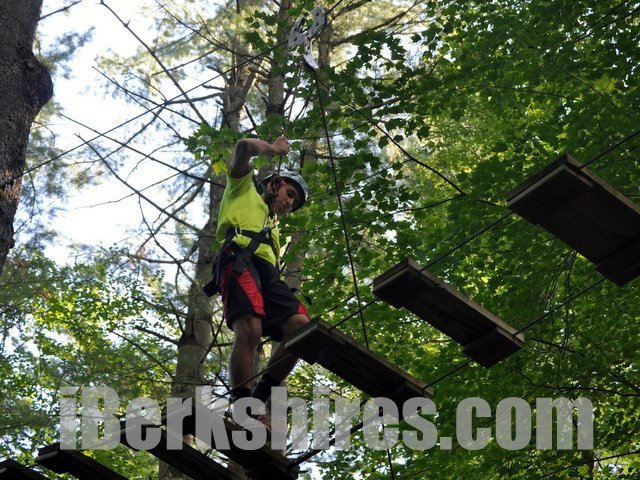
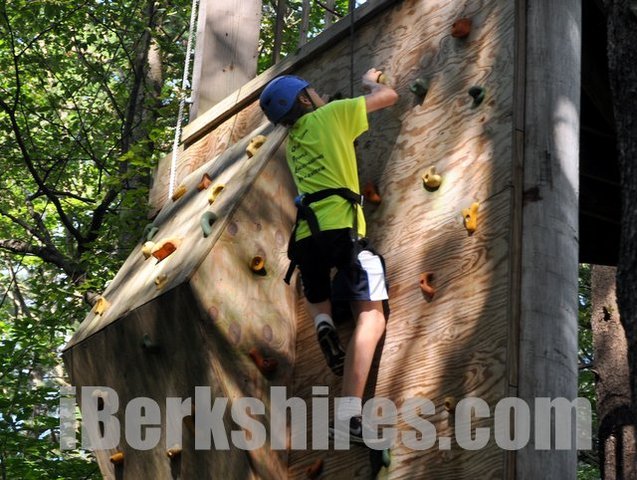
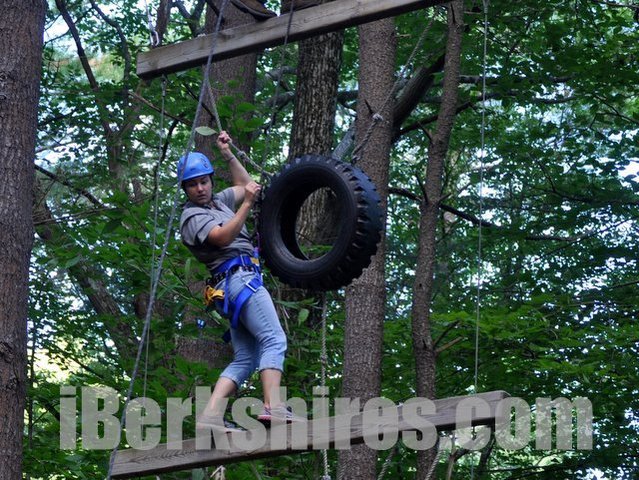
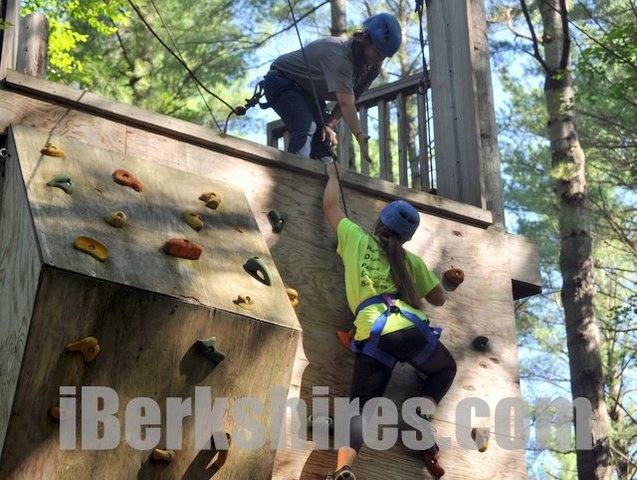
ROPES, which stands for Respecting Other People Encouraging Self-Esteem, is a free summer program that runs for one week twice during the summer. The program pits fifth- and sixth-graders from the Northern Berkshires against massive vertical obstacle courses that sit high in the tree canopies.
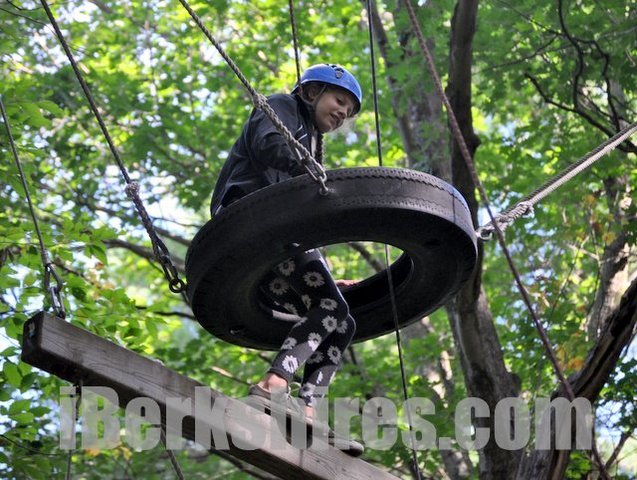
Retired North Adams Police Lt. and organizer David Sacco said climbing these structures that combine rope, tires, wooden planks, and ladders is only a small aspect of the camp. He said the real goals is to instill in children respect toward each other, teamwork, and the willingness to try.
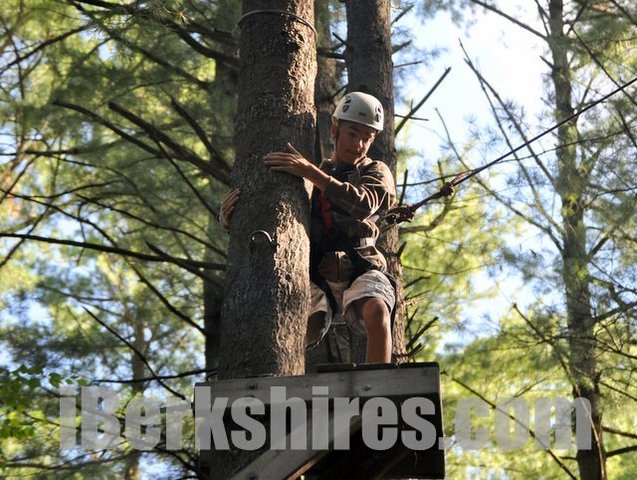
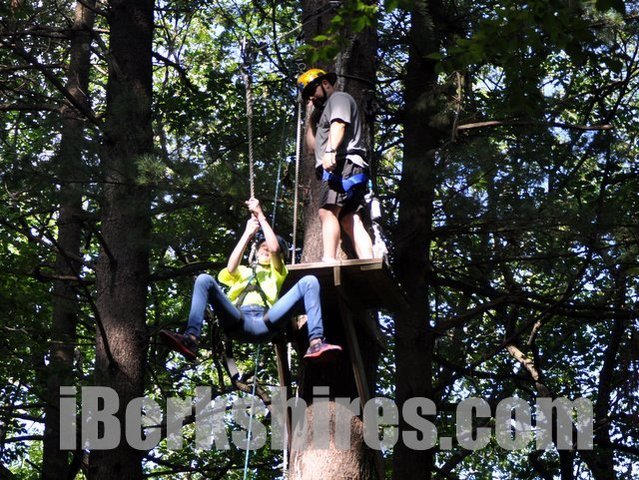
And this seems to be critical when tackling these outwardly frightening courses — such as the "leap of faith" that includes scaling a tree, swan diving off a platform, then trying to punch a giant red ball dangling from a rope.
Sacco said most kids try the obstacles no matter how overwhelmed they are at first.
"We get a lot of kids who get here Monday morning who don't want to be here or say they don't want to get up there," Sacco said. "By Friday, they are climbing trees and jumping out of things."
Sacco said the ROPES Program morphed from a previous DARE program, which teaches children the dangers of drugs and how to say no to them.
He said the Governors Alliance against Drugs filtered money in 1996 through the state for this very cause and the rope obstacle courses were added as a summer extension of the DARE program.
He said Superintendent James Montepare was able to secure funds to install some elements of the high ropes course bu the grant money ran out soon after.
"Just as we were getting going, the grant money ran out," Sacco said. "The camps in Central and South Berkshires folded up so we as a group got together because we couldn't let this happen. It is too well received and the kids liked it."
Sacco said through dedication and fundraising the camp was reborn and the ropes strung up once again under a new title created by a Conte Middle School student.
"With the help of a very, very dedicated bunch of people with a lot of community support we have been able to maintain it and here we are 19 years later with literally thousands of kids that have gone through it," he said.
Sacco said generally each session is full with 125 kids. He said even ROPES alumni have a chance to come back after two years at ROPE camp as mentors to aid the younger kids.
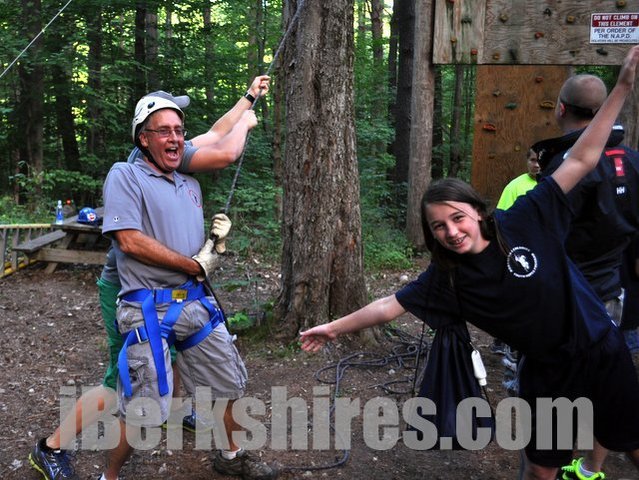
Sacco pointed out the many volunteers throughout the campground belaying campers and strapping them into their safety harnesses. The volunteers include teachers, administrators, firefighters, students, police, and other first responders. He said all of the volunteers are dedicated and know the importance of investing in the children.
"I think they see the value of investing in our youth," he said. "Not to coin that old phrase, but they are our future and we have to take care of them."
Sacco said the campers start out with the low ropes course that are more mentally challenging because they cannot be completed alone and force participants to work together.
.JPG) |
"You learn that you have to reach out and grab someone's hand to make it across," Sacco said. "We try to drill the lesson that everyone needs a hand sometimes, and it really doesn't matter what gender or color the hand is."
He said this is a critical aspect campers have to learn before they take on the high ropes course, which though individual challenges, are more easily accomplished if the camper knows the rest of the camp supports him or her.
There is absolutely no bullying allowed at camp and students are urged to encourage each other. Sacco said this empowers campers to climb the highest trees even if they are uneasy about it.
"No one is telling you you have to do it, just try to do it," he said. "If you are afraid of ladders, try going up one rung. If you go up one rung you are already better off than you were when you got here in the morning, and if you tried one may as well try two."
Besides bullying, Sacco said cell phones and electronics are also banned from the camp. He said the electronic devices only hamper the communication skills the camp instructors want to impart on the children.
He said children have to interact face to face and after a few hours they often forget about texting and video games.
"At the end of the day they realize they went eight hours without texting someone," he said. "We joke and call it a medical miracle that you can make it through the day. It's a positive alternative than just sitting home."
Sacco said he hopes the program is able to return every summer and he added with all of the support the community provides the program he believes thousands more kids will learn the "ROPES philosophy."
"It is a philosophy that all of the adults around here have embraced and follow and they are up here because they want to be," he said. "They know it's a good thing and 19 years later we are still here and growing."
Tags: ROPES, ropes course, youth programs,