Clark Art Receives Gift of Allan Sekula's Private Library
WILLIAMSTOWN, Mass. — The Clark Art Institute's library recently received an important gift of the 15,000-volume personal collection of artist Allan Sekula. Art historian and professor Sally Stein made the gift of the Allan Sekula Library to the Clark in memory of her husband Allan Sekula (1951–2013).
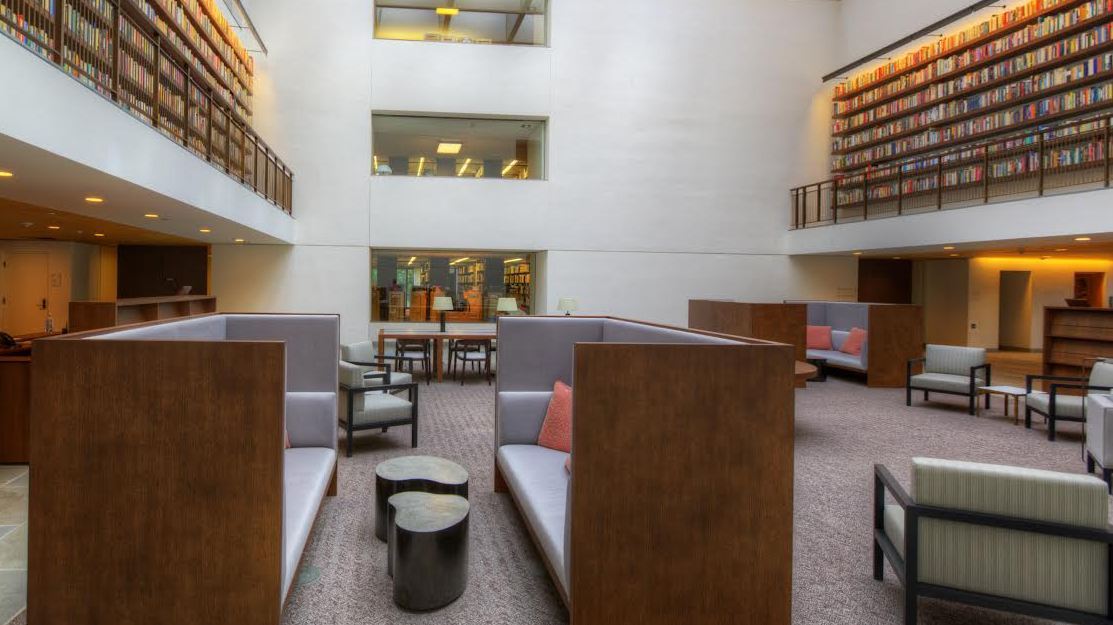
The collection is housed in the Manton Research Center, which will reopen on Nov. 12 after an extensive renovation.
An international artist, photographer, filmmaker, and writer, Sekula was recognized as a public intellectual, art critic, and theorist, as well as for the social commentary, criticism, and activism that informed his life and work. He was a member of the Photography and Media Program faculty at the California Institute of the Arts. Collected over decades, the library reflects Sekula’s personal and professional interests.
"It is a rare and distinct privilege to receive the library of an artist and thinker that is so rich and varied. The totality of his personal library gives us insight into the diverse intellectual interests of Allen Sekula, while the individual titles add an important new resource to strengthen our library’s collection," said Olivier Meslay, Felda and Dena Hardymon Director of the Clark. "We are deeply indebted to Sally Stein for her generous gift and know that these books will fuel further inspiration in future generations of art historians, students and scholars."
A selection of works from the Allan Sekula Library are prominently displayed on soaring 24-foot-high bookshelves that have been installed on balconies flanking the east and west ends of the Manton Research Center's new reading room. These elements serve to visually articulate the significance of the scholarly pursuits that are central to the building’s role and underscore the Clark's commitment to advancing and extending the public understanding of art through research and education. Their presentation in this space becomes "de facto installation art," Meslay explained, "going beyond collectionism to allow varying levels of interpretation of both format and content. In this sense, Allan Sekula as an artist is present not only through the specifics of the books he collected, but also in the exhibition of the material."
In making the gift, Stein noted that "The Clark has fostered interdisciplinary thinking about art, its histories, and likewise its cultural effects. So it seems most fitting a place to preserve and make accessible the very eclectic library created over four decades by artist and social critic Allan Sekula. Throughout his life, he refused narrow categories and inspired others — in and out of academia — to do the same. I hope his books, including quite a few we jointly acquired and shared, continue to serve as resource for expansive thought and action."
In addition to volumes on contemporary art and photography, the Sekula collection has particular strengths in titles treating social justice, economic disparities, consumerism, the history of the workers' movement, maritime history, and the destruction of natural and man-made environments. These volumes supported the artist's various projects, including his seminal studies "The Traffic in Photographs (1981)," "Photography Against the Grain (1984)" and "The Body and the Archive (1986)"; films such as "Tsukiji (2001)," "A Short Film for Laos (2007)" and "The Forgotten Space (2010)," an award-winning film project about the consequences of global shipping; and multi-format projects including "Fish Story (1995)," "TITANIC’s Wake (2001)" and "Polonia and Other Fables (2009)."
"The addition of this wonderful collection enriches and expands our collection in exciting new ways," said Susan Roeper, director of the Clark’s library. "Allan Sekula's inquisitive mind and wide–ranging interests are reflected in a library that provides tremendous new research material for students, scholars, other artists, and for our community. Sally Stein has made a gift that will be an invaluable resource for our library patrons."
Tags: Clark Art,