Updated October 10, 2017 10:35PM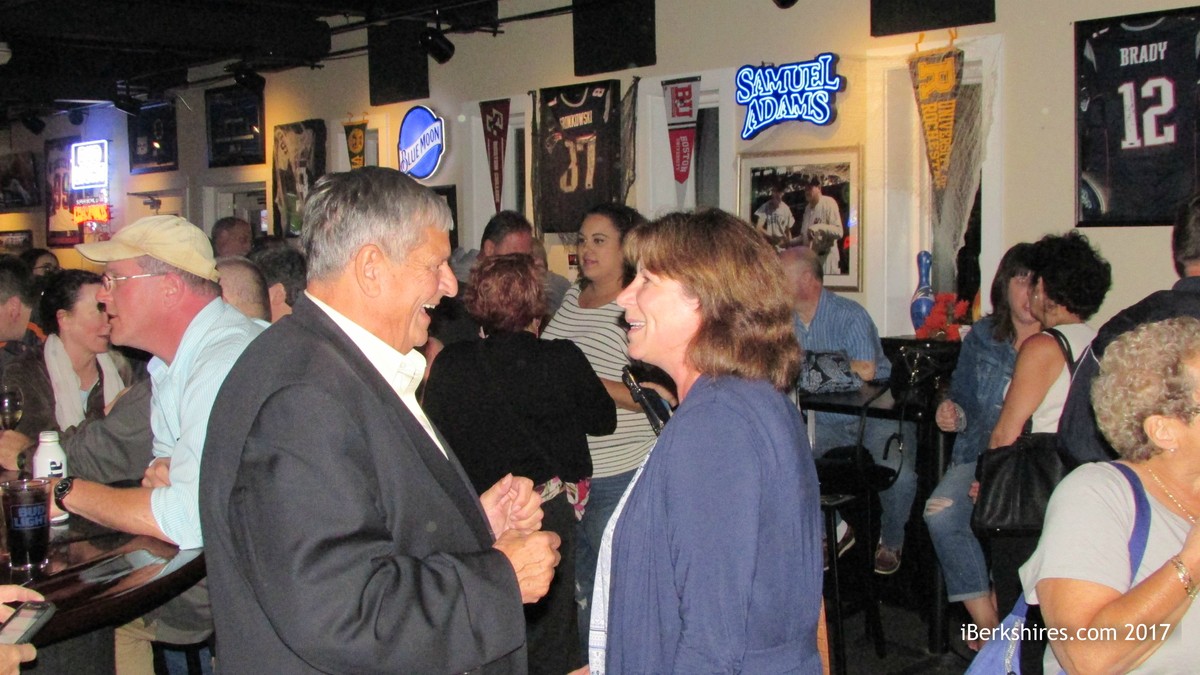
Barrett Runs Away with 1st Berkshire Democratic Primary
With the vast majority of the votes counted and seven of the district’s nine municipalities, including the city of North Adams, checking in, Barrett had 2,224 votes, more than 42 percent of the votes cast.
The former North Adams mayor had a 575-vote margin (11 percent of the total balloting) over his next closest rival, Stephanie Bosley, who had 1,649 votes with the towns of Florida and Hancock outstanding.
Barrett moves on to face Republican Christine Canning of Lanesborough, who ran unopposed in the Republican primary, for the right to fill out the term of the late Rep. Gailanne Cariddi, D-North Adams, who died in June.
For Barrett, who occupied the corner office at City Hall for 26 years, it was a comeback of sorts. In 2009, he lost the mayoralty to Richard Alcombright, and six years later, Alcombright defended his office against a challenge from Barrett.
On Tuesday, however, Barrett won convincingly in the Steeple City, garnering 1,239 of 2,345 Democratic votes cast, 53 percent of the total in the four-way race. Canning collected 57 votes in the city in the uncontested Republican primary.
Barrett Tuesday said this year’s election showed the true feelings of the North Adams electorate.
“I think what happened is that when I did lose at that time, there was a different population that had come into town who really didn't care what I did yesterday,” Barrett said. “They wanted to talk about tomorrow. It was unfortunate the way that it happened.
“The victory today was the majority of the community stepping up. It was the first time that North Adams had voted in a long time. We've been influenced by outsiders, and it really hurt the middle class in North Adams.”
With three city residents in the four-candidate field, it was no surprise that turnout was high in North Adams. City Clerk Marilyn Gomeau said she was “extremely pleased” with a turnout that exceeded her expectations.
The 2,402 votes cast in the primary represented 28 percent of North Adams’ 8,644 registered voters.
The last contested Democratic primary in the 1st Berkshire district was in 2010, when Cariddi ran against David Bissaillon and Edward MacDonald. Cariddi won with 52 percent of the vote, and 7,178 votes were cast.
The turnout in the 1st Berkshire District towns in the 2016 State Senate Democratic primary, the last contested primary, was 2,776.
Tuesday’s turnout of 5,262 (with two towns still to come) fell in between the two, leaning toward the higher turnout of 2010, when the primary was part of a regular election cycle.
Not surprisingly, Kevin Towle did well in Lanesborough, where he resides, collecting 112 votes, more than four times that of his nearest rival in the town, Lisa Blackmer, who finished with 25 votes.
Blackmer won tiny New Ashford, with 10 of its 35 votes. Bosley won convincingly in Williamstown, where she took 513 votes, more than twice as many earned by Barrett (218) in the town of his birth.
Barrett won both Adams and Cheshire, two towns hit hard by the issue of education funding, where budgetary constraints forced a bitterly contested decision to close Cheshire Elementary School earlier this year. Barrett made equitable state funding of education one of his cornerstone issues this summer and fall.
“I felt as though that situation should never have happened,” Barrett said of the CES closure. “There should have been involvement from the state in this. I blame the state for putting them in that situation to start with. When they changed the funding formula in 2007, the mayors at that time said, 'This is just what's going to happen.' And it did happen. The chickens have come home to roost.
“I see more problems like this if we don't start paying attention to a funding formula that's going to deal with the economic wealth of the community. ... That's the message I'm going to try to sell in Boston.”
First, he will face a general election challenge from Canning in the heavily Democratic district.
Barrett said Tuesday night that he “absolutely” would debate the Republican.
“I have no problem debating her,” he said. “She has her views, and I have mine.”
Massachusetts Democratic Party Chairman Gus Bickford congratulated Barrett on his win.
“John Barrett will be a bold, progressive voice for the working families and residents of the First Berkshire district and will continue to build upon the work the late Representative Gailanne Cariddi, including increasing access to broadband and investing in programs to support and sustain local industries,” Bickford said in a statement.
Barrett commended his Democratic rivals for their conduct in the campaign.
“It was a race that dealt with issues,” he said. “We didn't attack each other. We stuck to what we believed in. And it's so nice in this age to have, especially, in a party fight, a race where we didn't attack each other. That's good.
“We'll have a unity type of dinner coming up later this week. And then we'll talk about some of the things we have to do.”
For Barrett, that means giving a voice to the voiceless.
“I think I ran for one reason: I wanted to get a seat at the table for the people who haven't been represented, not only in North Adams but throughout the country, maybe,” he said. “I think there are people out there who need to have that voice, and I want to give them that voice. I came from that middle class.”