Pittsfield Revamping Solar Regulations to Limit Residential Impacts
PITTSFIELD, Mass. — Following hotly contested proposals for solar arrays in residential areas, the city is revamping its solar regulations.
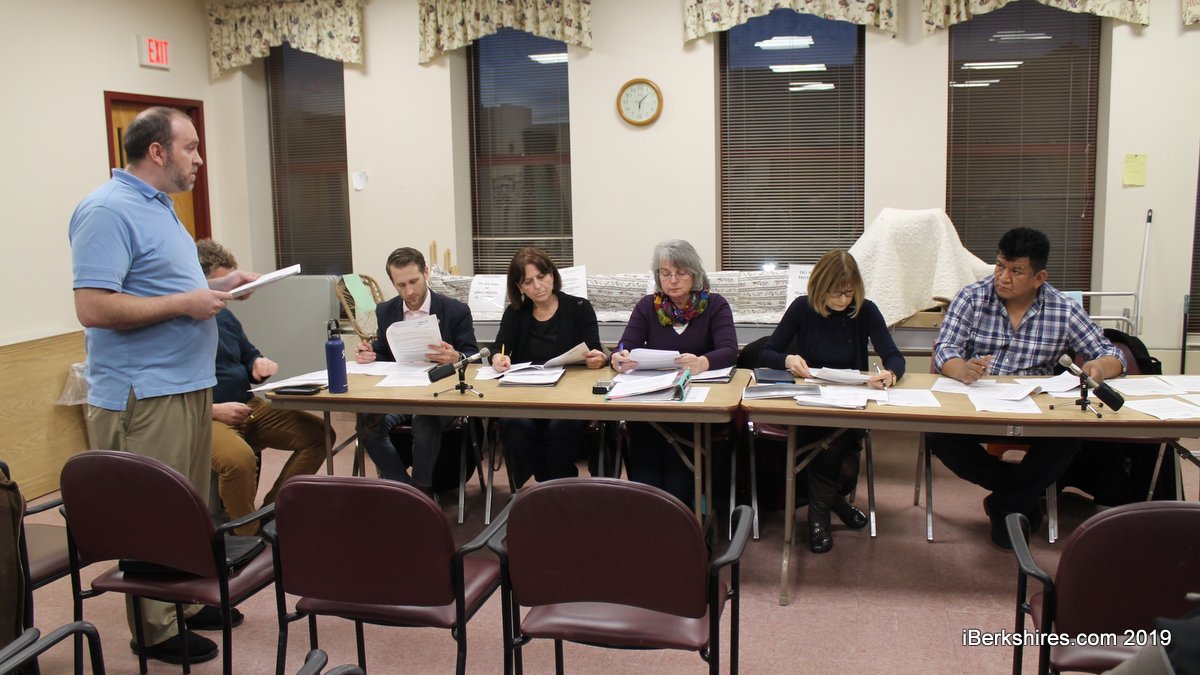
The new regulations were endorsed by the Community Development Board and are being presented to the City Council by the Zoning Board of Appeals. Permitting Coordinator Nate Joyner took the lead on the development of the updated zoning laws and said it is particularly aimed at addressing concerns raised during the debate of recent proposals.
"I think we tried to address the concerns of the boards and the residents," Joyner said.
The ordinance breaks solar proposals into three sizes: small, medium, and large. The medium and large-scale arrays cannot be installed in residential zones. It also sets criteria for commonly cited issues such as decommissioning and maintenance and setback requirements.
"The structures themselves would have to be 200 feet from any residential use," Joyner said.
The ordinance calls for construction of a system to be completed within 24 months, that the site is maintained to a level acceptable to the fire chief, and that all modifications to the system go through the Zoning Board of Appeals first.
Small-scale solar projects must be 25 feet from a property line, at least 200 feet from any abutting residential district or residential, and that as much vegetation as possible is preserved to shield the system from public view.
For the medium and large-scale systems, the setback from a property line is 50 feet and 200 feet from a residential use or zoning district. The utility lines should be underground whenever possible, cannot increase stormwater runoff, and must be screened from public view.
The measure also asks that project owners minimize visual impact to scenic areas, health or safety concerns of residents, natural habitats, land with prime agricultural soils, glare from solar panels onto abutting properties, and potential vehicular traffic conflicts.
The medium and large-scale systems must also come with a decommissioning and removal plan. The Zoning Board of Appeals can require a bond to be made to cover the cost of the eventual removal of the array.
Joyner said the ordinance is written for properties where the principal use is for a solar and that it does not govern accessory uses. For accessory uses, there is a 25-foot setback from property lines, installation only in side or rear yards and screened from view, they shall not increase stormwater runoff and utilities should be underground whenever possible.
Michele Rivers Murphy recently led the charge in opposition of a solar array planned for the Pontoosuc Country Club property. That borders a number of neighbors who teamed up to fight the proposal. Ultimately, the proponent was unable to get a permit from the Conservation Commission for an access road and walked away from the project.
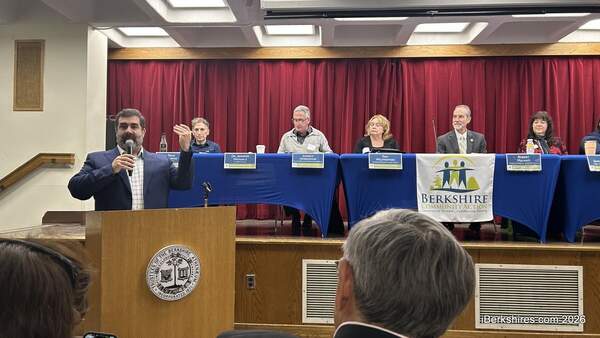
Murphy addressed the Community Development Board in favor of the updated ordinances so that others in the community won't have to fight a similar battle.
"We have to be very cautious moving forward when we are talking about putting ground-mounted solar fields in residential areas," Murphy said.
Murphy said she appreciates the effort but thinks more can be done to deter the "unintended consequences" of solar arrays in residential areas.
Resident Lewis Schiller disagrees. Schiller believes the new rules are too restrictive.
"I think the proposed amendment is designed to restrict, if not totally prohibit, the installation of any ground-based photovoltaic systems in the city," Schiller said. "It just seems to be a NIMBY approach."
He disagreed with the subjective nature of some of the requirements, felt the setbacks would eliminate the potential for homeowners who don't live on traditional rectangular lots, could ultimately lead to the cutting of more trees to comply with those requirements, and that other types of infrastructure is not as heavily restricted.
Joyner replied to many of Schiller's concerns saying performance standards are set for other types of infrastructures, that setbacks are defined, and an appeals process is outlined elsewhere in the city's ordinances.
The Community Development Board had little issue with the proposal and unanimously endorsed it.
Tags: ordinances, solar array, zoning,