Clarksburg Planners Hit Pause Button on Solar Development

The Planning Board is weighing the benefits of large-scale solar arrays to the community.
However, at least two property owners have come forward indicating they were interested in allowing such arrays on their land.
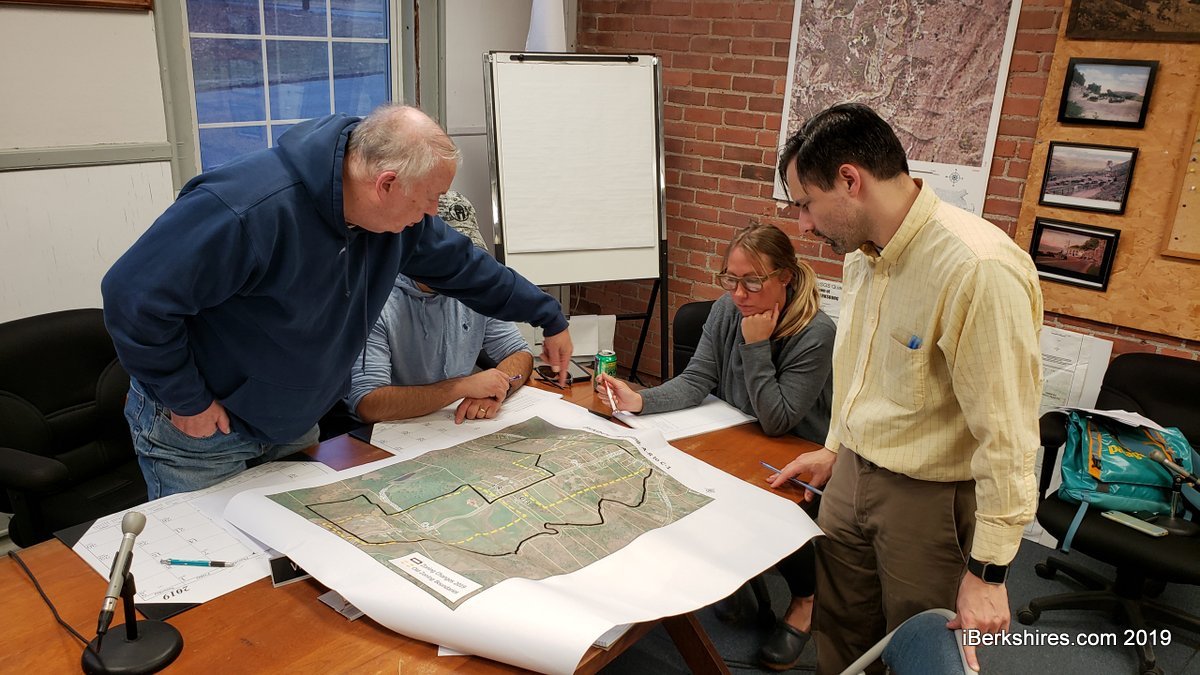
Planner Erin Scott said at last Wednesday's board meeting that she had questions and concerns about moving forward with any changes to the bylaws regulating solar arrays passed in late 2017.
"Why are we moving forward with adding to the overlay?" she asked, pointing to the three existing arrays that have either generated complaints or provided little to no revenue.
"Without any thing in place to benefit from them, why are we rushing to move forward with creating additional overlay when we're not going to benefit," agreed Planner Greg Vigna. "We don't have much developable land in town and if we start breaking up these larger parcels that we do have, where does that leave us in the future?"
Two large commercial arrays are off River Road, including one at the former country club, and the third is off West Cross Road. Only one of the three has agreed to payment in lieu of taxes and the Select Board in February voted to assess the other two for personal property taxes.
Officials believe personal property taxes could bring almost $30,000, a not insignificant amount for a town nearing its levy limit. Though that may not hold up because of a state exemption for solar arrays.
Bob Davis of North Adams, who owns 65 acres off Musterfield Heights, said he had been told that in the "next round," the town would consider expanding the overlay to include his property and that of Bryan Tanner.
"Our property is a better fit for solar, it's out of sight, it's large areas," he said. "Our lands are as good or better."
Scott said the town's already had problems with an array being in violation of conditions and she would take Davis to look at all three.
"You're surrounded by mountains and you're standing in a barren wasteland. It's about conserving our land ... and natural ecosystems," she said, expressing frustration that "they're not reputable, they're not trustworthy, they don't do what they say they're going to do."
Vigna agreed: "The reason we created the overlay was to prevent stuff like that."
Davis, however, said his property was suitable because there were no neighbors and it wouldn't be seen.
"I would be as mad as you guys are if they trashed the land and didn't go by the guidelines. Absolutely, I think if you agree to the ones you feel aren't going to be an eyesore," he said. "If there's a piece of property that's not going to be visible from anywhere but from a drone helicopter and it would be an acceptable solar farm area that is producing clean energy and they were willing to give the town some money — that may be something you write in the bylaws."
The board asked if he had considered using the land for residential growth. Davis said he had but that infrastructure for a subdivision would "cost a ton of money and a ton of time." The solar companies, on the other hand, are offering him money for leasing and taking on all of the infrastructure work.
"I'd hate to be the one to be punished because of the past," he said.
The board, on a motion by Scott, agreed to "pause the conversation on expanding the overlay district until we can find out more about how large-scale solar will benefit the town."
The board also met with Matthew Dovell of Berkshire Regional Planning Commission to go over some a proposed zoning changes, including aligning zoning with current property boundaries and changing building lot requirements.
Tags: Planning Board, solar array,