Clarksburg Town Meeting OKs $1M Infrastructure Borrowing
CLARKSBURG, Mass. — A $1 million borrowing to fix infrastructure needs passed by a large margin on Wednesday night and the results were met with cheers.
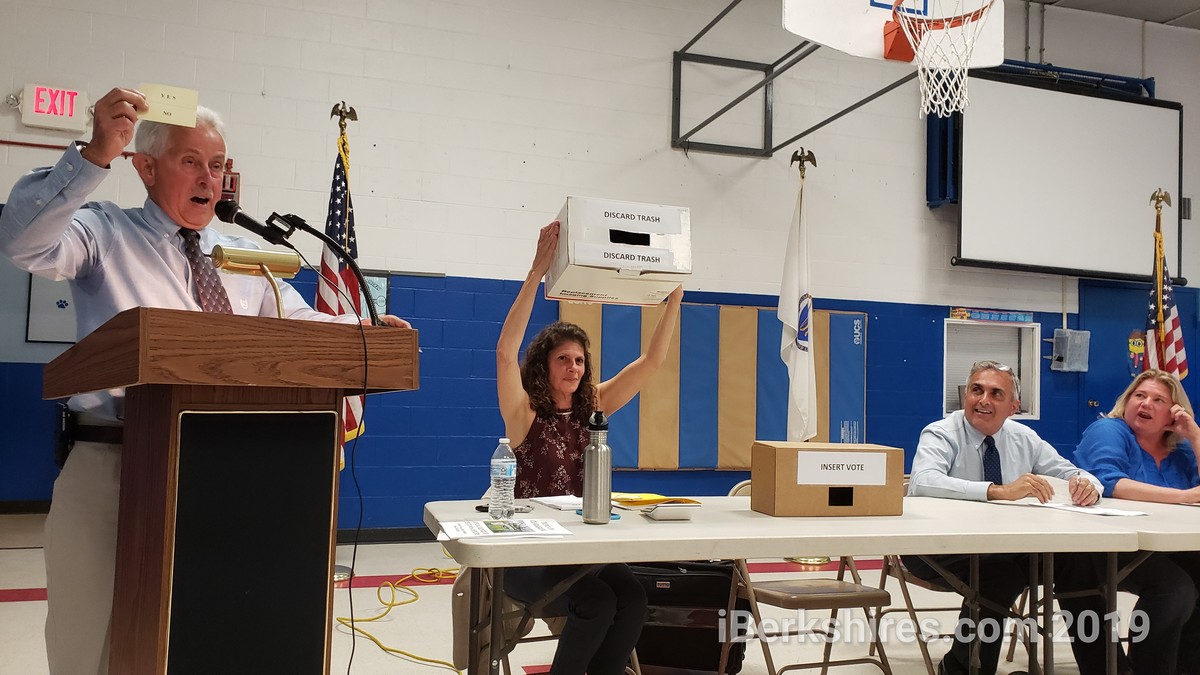
The final tally was 157-43, more than three to one in favor.
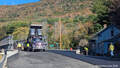
The approval was a win for town officials who have been talking up the need for the funds over the past year to begin to address numerous repairs of the town's aging roads and buildings, including a roof for the school and an addition on the town garage to cover expensive equipment.
"I'm glad it passed," said Select Board Chairman Ronald Boucher afterward. "It's like I said before, we have to do something. This is just the first step."
The vote hasn't been without controversy, though not as heated as the debate during the two votes that killed the proposed $19 million school project nearly two years ago.
Robert Bona, who has taken aim at the town's spending in the past including the "boondoggle" school project, rose in defense of the borrowing.
"I've been here for 80 years and we've seen the proudest, nicest town in this whole area," he said. He was proud his children and grandchildren had attended Clarksburg School and gone on to have professional careers. "There are people here who say, 'the hell with the school, the hell with the kids, my taxes are too high' ...
"But I want to live in my house and I want to be able to be proud of where I live. And so many people are not proud of that. Shame on you. Because this town deserves that million dollars."
His comments were greeted with a round of applause, as were those by Carl McKinney, former town administrator and selectman.
"We have a community that's worth saving," McKinney said. "And if this vote fails tonight folks, I have to question our ability to even maintain this town."
But a number of people were wary of cost and the broad language of the borrowing and wanted assurance that it would go to the projects stipulated — and officials wouldn't come back for more.
"How long before you come back and say I need more money?" said a Middle Road resident, adding that the town had allowed the buildings and roads to deteriorate. "I want to live in my house not for my house. ... I want to know that I can afford to live in this town and fix these roads."
One woman motioned to amend the article so it listed the projects spelled out at last week's information session; others encouraged language that would specify that only half would be used for the school.
"We hear about the school and the town, but let's face it, the school building is owned by the town, it's a town building," Boucher said. "We're going to apply it to the town buildings, the infrastructure."
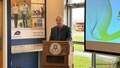
Moderator Bryan Tanner had with huddled with the Select Board before telling town meeting that the language had been passed by legal counsel and there were concerns about changing it.
"If you decide to make an amendment to it, I can't guarantee that it's going to be approved either by town counsel or the state as they go through the proceedings from tonight," he said.
McKinney offered something of a compromise motion "that 50 percent of the debt exclusion go toward school renovation, and 50 percent to other identified town projects" that passed readily.
The borrowing will be done through a debt exclusion that passed on a ballot vote of 196-157 on Tuesday night. The debt exclusion means that the cost of the borrowing will not come under Proposition 2 1/2. Instead, the debt will fall off when it is paid off in five years.
Passage at town meeting depended on a two-thirds vote and the larger than normal turnout prompted officials to use the same procedure as the school borrowing nearly two years ago. Voters lined up to get a perforated card with both a yes and a no on it, ripped the card and dropped their choice into the vote box.
The question, Article 13 on the warrant, was also moved up to second place with the understanding that many of the attendees were there for that specific vote.
The process went smoothly and Tanner continued on with other articles while the votes were tabulated. The budget items, including a $4.2 million spending plan for fiscal 2020, went through with little discussion and a second two-thirds vote, to transfer $38,000 out of the school stabilization account, passed 160-0. There was an amendment to that article, No. 12, to remove "or any other amount," thereby limiting the transfer to exactly $38,000.
Two final articles — on one dogs and kennels and a second on large animal housing requirements and proximity to wells — were tabled after a number of questions were raised about both that could not be adequately answered at the meeting.
The meeting began about 6:30 and concluded at nearly 9 p.m.
Tags: town meeting 2019,