image description
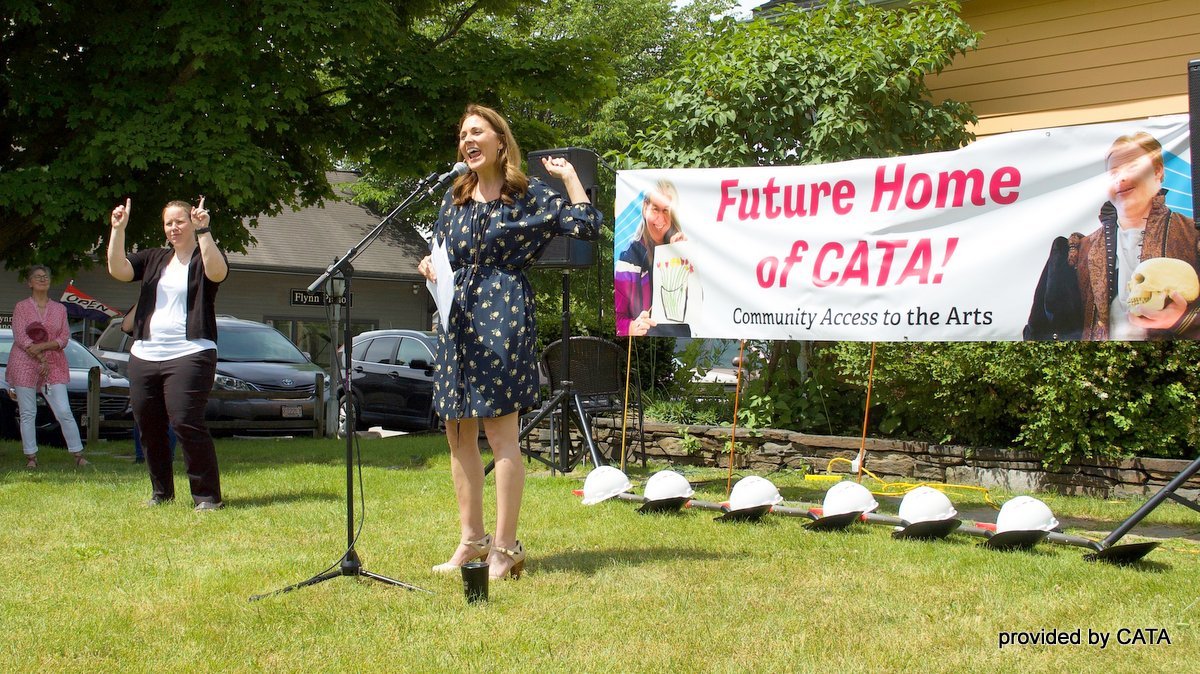
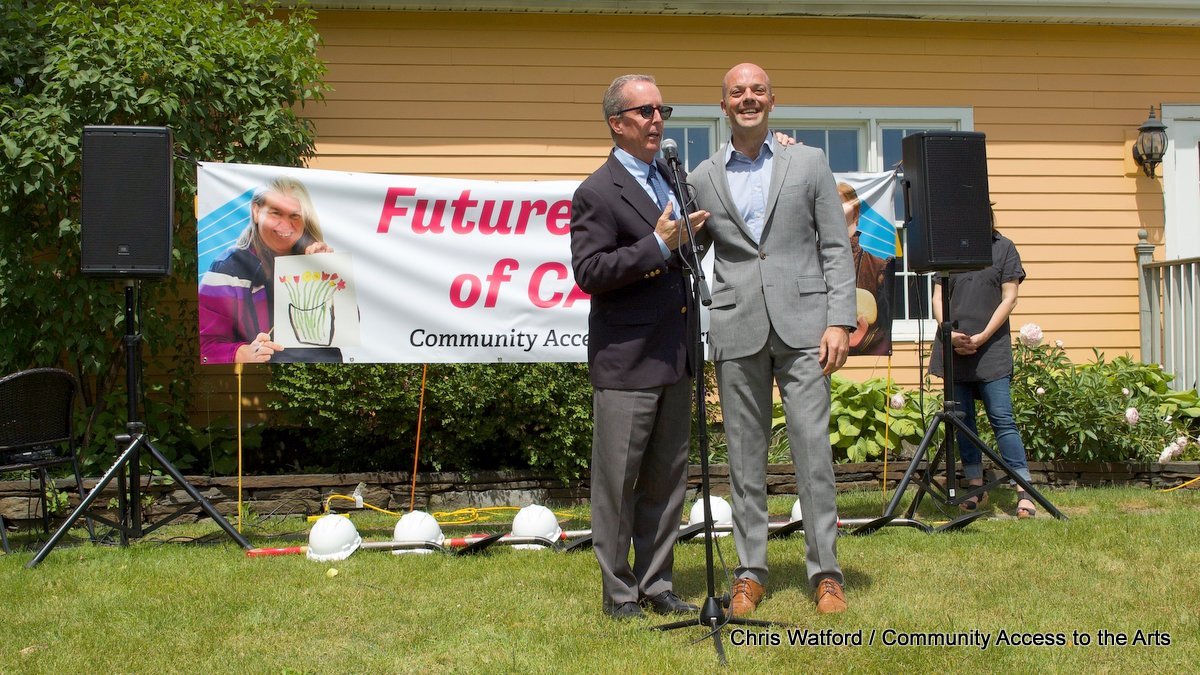
CATA Executive Director Margaret Keller at Wednesday's groundbreaking at the former Renaissance Arts Center on Stockbrige Road.
image description
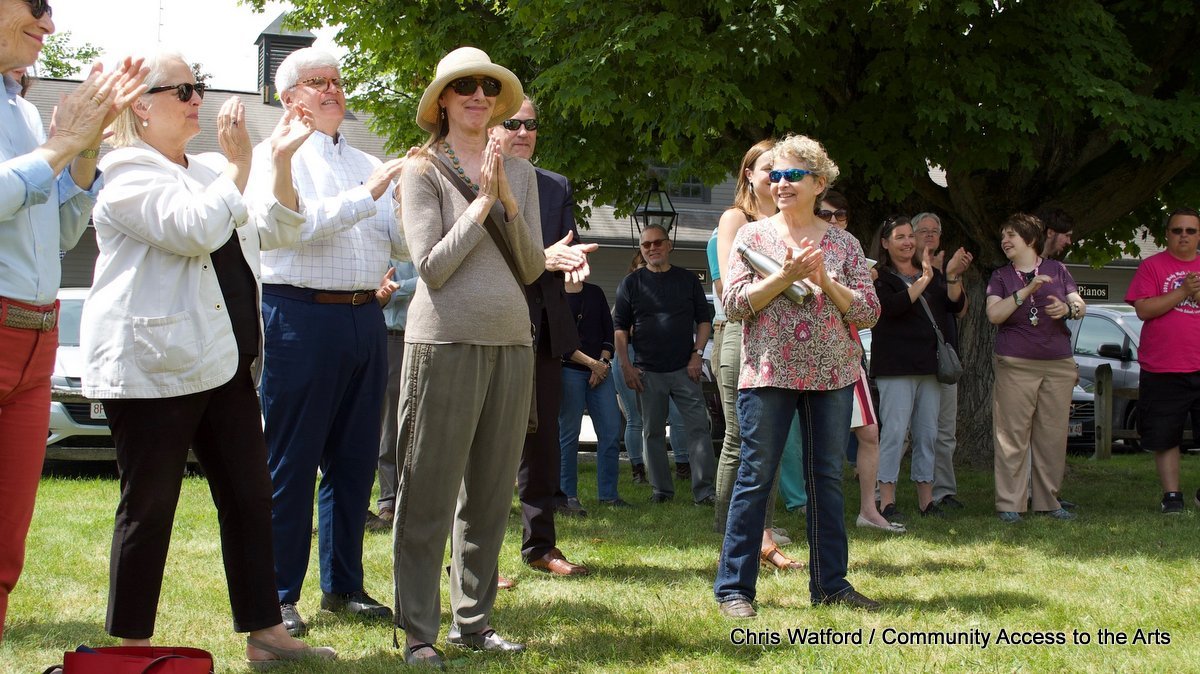
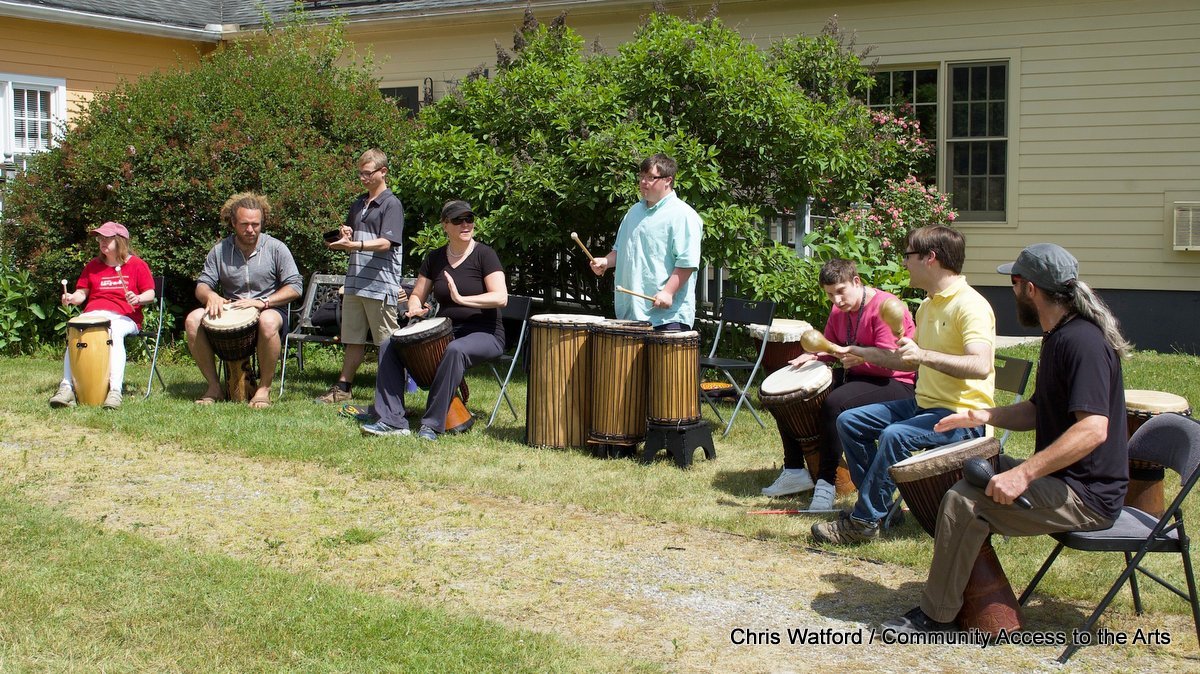
Sandra Newman, founder of CATA, is recognized during the event.
image description
State Rep. Smitty Pignatelli and state Sen. Adam Hinds offer remarks.
image description
image description

CATA Breaks Ground for New Art Center & Headquarters

Print Story | Email Story

The 6,400 square foot center is designed by Clark & Green Architects. It's expected to take about a year to renovate the structure. 
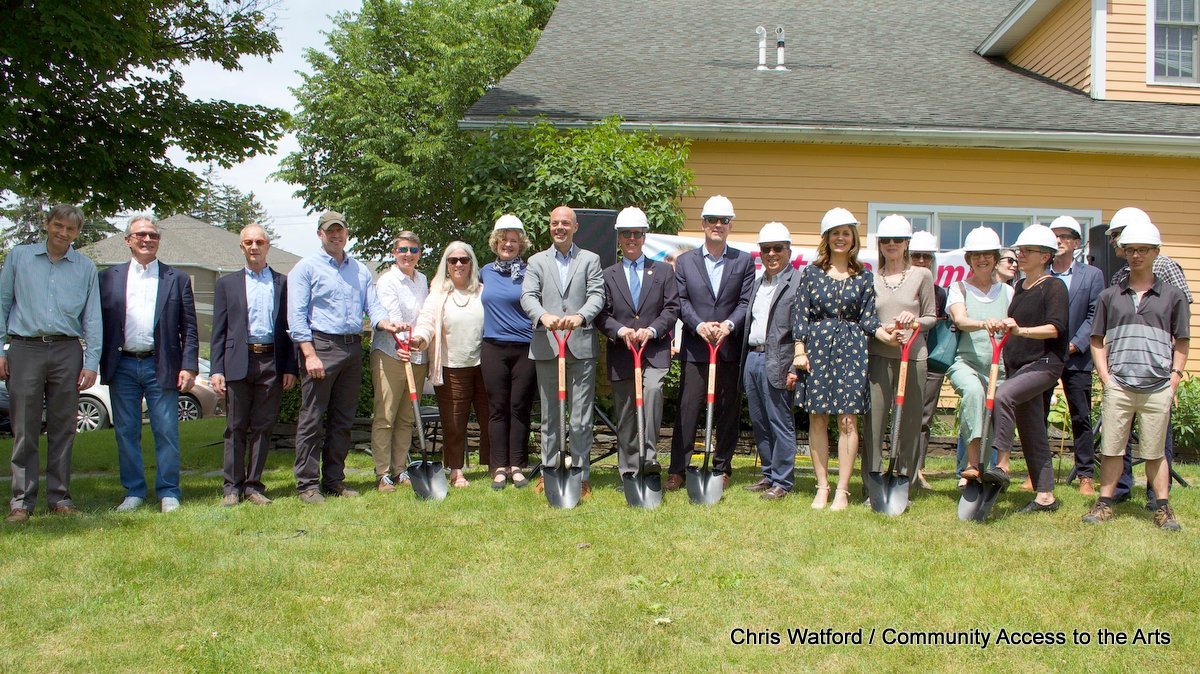
GREAT BARRINGTON, Mass. — Community Access for the Arts broke ground on Wednesday morning for a new art center at 420 Stockbridge Road.
 
The center will be a permanent home for CATA and allow the organization to expand its innovative arts programs for people with disabilities.
 
The two-story, 6,400-square-foot facility will double the organization's existing studio space, with two studios — one for visual arts and writing, the other for dance and performing arts. CATA's new arts center will also embody the principles of Universal Design, making the facility accessible to every person. For the first time, the building will bring the organization's studios and offices under the same roof.
 
State Rep. William "Smitty" Pignatelli attended the groundbreaking ceremony with state Sen. Adam Hinds. They both served as honorary co-chairs of CATA's Capital Campaign Steering Committee and provided the event's opening remarks.
 
"It was an honor to attend this historic groundbreaking for an organization that is so highly respected statewide," said Pignatelli. "The impact CATA has on those with special abilities from all around Berkshire County is clearly shown through the good work they do every day to teach their students self-expression through the visual and performing arts. I am thrilled that the community atmosphere will now have a permanent home right here in Great Barrington, and am grateful to have been a part of the celebration today."
 
The purchase and renovation of the former Renaissance Arts Center is being funded in part through a $200,000 grant from MassDevelopment and the Massachusetts Cultural Council. The design is by architects Clark & Green and Allegrone is managing the construction. Construction is slated to begin in July with the building opening in early 2020. The Massachusetts Cultural Facilities Fund also provided a $7,000 grant to support long-term planning for the new facility.
 
"After 26 years of renting space, CATA will now have a true home -- one that will double our existing space for artists with disabilities," said Executive Director Margaret Keller. "With the growth we've achieved in recent years, we have been bursting at the seams. Now, after intensive planning, we are ready to take this pivotal step forward to give our CATA artists the space they deserve. We can’t wait to share our plans with the wider community at the Groundbreaking and in the months ahead."
 
Since 1993, CATA has offered more than 20,000 arts workshops to more than 2,000 people with disabilities in Berkshire and Columbia, N.Y., counties. In the last five years, CATA has dramatically increased its participation by 70 percent and expanded its public programs including performances, readings, and art exhibits featuring work by CATA artists.

Tags: art center,   CATA,   groundbreaking,   
If you would like to contribute information on this article, contact us at info@iberkshires.com.

Pryor & Peacock's Whimsical Furniture Environmentally Friendly

By Breanna SteeleiBerkshires Staff
 

The company uses digital printing to create the upholstery fabric, saving water and saving vintage furniture from ending up in landfills.

STOCKBRIDGE, Mass. — A unique furniture store has popped up on Elm Street this month.

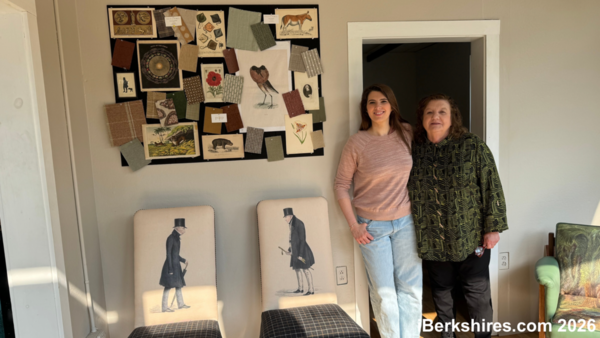
Mom-and-daughter store Pryor & Peacock is hosting the pop-up storefront from Aug. 13 to Aug. 25 at 6 Elm. The New Marlborough business is co-founded by Rosalina Wright and Luca Shapiro, who is also the creative director. 

Their online shop was created in 2024 but they wanted people to see the pieces in person, so they're renting the space for a limited time before a long-term tenant moves in.

The store sources prints to create unique fabrics and reimagines vintage and antique furniture acquired at auctions, local shops, and online.

"We source prints from all over the world that date from the late 1600s up through mid-20th century, and Luca turns those prints into fabric by manipulating them, scanning them, oftentimes has to add or subtract things, and then we manufacture the fabric using only digital printing, which is very environmentally friendly, unlike traditional textile printing," Wright said.

Upholstering the furniture can take weeks of work. Shapiro looks for the perfect design for each piece and, if need be, uses Adobe Photoshop to extend the art work to fit or enhance the print.

"One of the most difficult parts comes in marrying the fabric to a piece of furniture because we only use antique and vintage frames also to be earth friendly, and they're also more beautiful and durable than new furniture," Wright said. "So the image has to go with the furniture, so that takes a lot of work."

One of Pryor & Peacock's missions is to be environmentally friendly. Digital printing doesn't use the same amount of water as traditional textile productions do nor does it contaminate water with ink according to their website.

Not only are they saving water, but they are saving furniture from going into the landfill while also using more durable furniture that doesn't break as easily as current pieces. They started their business to create something unique and to help the environment together.

"It's creating something nobody else is doing. People can't continue to buy throwaway furniture. Six percent of American landfills is furniture, and digital printing not only opens up the possibility of being able to put unique images on a piece of furniture, but it also is, as I said, environmentally friendly. So, for us, the excitement is to take an old East Lake settee that somebody's going to store in their barn and forget about, and make it something completely new and surprising," Wright said.

They hope their furniture helps bring a pop of fun to someone's home.

"We think our furniture is very whimsical and surprising, and most furniture today is oatmeal colored couches and gray neutral chairs, and it's boring," she said.

The two named their business after their mothers' maiden names to honor them and believe the name reflects their pieces.

Shapiro works in interior design outside of the business and the two liked working together and thought it would be great to start a business together. Shapiro says they can work well together and that her and her mother, Wright, has flipped houses before and have the same eye for design.

"So it's very easy for us to work together. When we see something, generally we agree on whether it works or doesn't work on a piece. We agree on the color schemes and that sort of thing. So it's very fun and fulfilling to work together," Shapiro said. 

View Full Story

More South Berkshire Stories