Protecting Children and Others During a Measles Outbreak

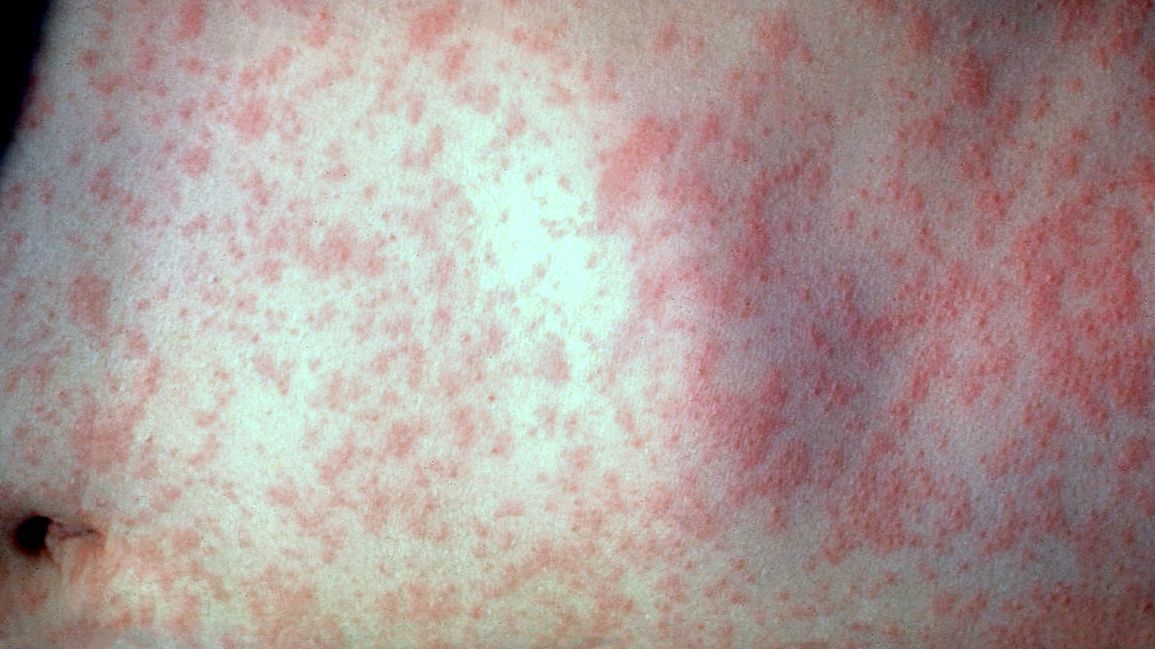
Once a common childhood disease, measles was almost an expected part of growing up. But it wasn't without consequence. Worldwide, up to 2.6 million people died annually from measles every year up until a vaccine was introduced in 1963.
In recent years, some parents have refused to vaccinate their children based on misinformation about side effects of the vaccine. As a result, the number of unvaccinated children, teens and adults in our communities is on the rise. While those making the choice to not vaccinate believe they're making this decision solely on behalf of themselves or their children, they're actually impacting the health of others. Sometimes with deadly consequences.
How is it spread? Who is at risk?
The measles virus is highly contagious and spreads easily. Spread by close personal contact, coughing, or sneezing, the virus can remain active in the air or on a surface for up to two hours after it has been transmitted.
That means that any unvaccinated individual — including infants and those with compromised immune systems — can get sick when entering a space where an infected person was even hours before. Infected individuals can then go on to spread the illness days before they show any signs of the disease.
How to protect those at risk
Measles vaccines are by far the best possible protection you can give your child. Two doses are 97 percent effective and the potential side effects are rare and not nearly as scary as suggested by a lot of popular media. If they appear at all, side effects are usually a sore arm, a rash, or maybe a slight fever. Claims that the vaccine causes autism have been undeniably proven to be false.
As for when to get your child vaccinated, the American Academy of Pediatrics, the Centers for Disease Control and Prevention and the American Academy of Family Physicians all recommend children receive the measles vaccine at age 12 to 15 months and again at 4 to 6 years old. Children can receive the second dose earlier as long as it is at least 28 days after the first dose.
How about adults?
Because the risk of death from measles is higher for adults than it is for children, teens and adults who have not been vaccinated should take steps to protect themselves. "The vaccine can be provided in two doses within 28 days of each other. This is particularly important for those planning travel overseas or to areas in the United States where outbreaks are occurring.
Those who have received only one measles vaccine as a child or who are in a high-risk setting—like health care facilities or communities with outbreaks—should get a second vaccine. If you are uncertain of your status, reach out to your healthcare provider for information and advice. Whether or not you have adequate immunity can be determined with a simple blood test.
Dr. Marie George is a specialist in Infectious Disease at Southwestern Vermont Medical Center in Bennington, Vt.

Tags: measles, SVMC,