Baker Extends Non-Essential Business Closure Order through May 18
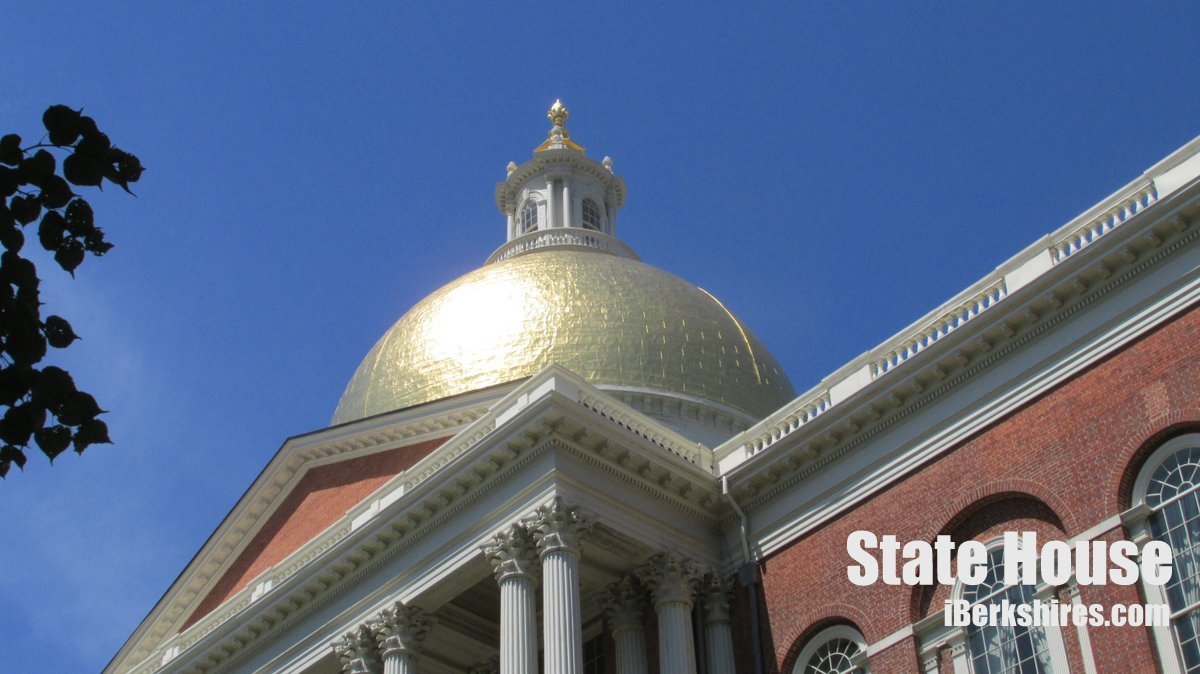
BOSTON — Gov. Charlie Baker announced on Tuesday that he is extending the order to close non-essential businesses in the commonwealth through at least May 18 and creating an advisory panel to develop plans for a phased reopening of the commonwealth's economy.
Baker also extended to May 18 the ban on public gatherings of 10 or more people, which, like the non-essential business order, was to have ended next Monday.
Although the commonwealth has seen a plateau in the metrics used to study the COVID-19 pandemic, it has not seen a decrease in those measures, Baker said. And until those numbers start to come down, it is not appropriate to talk about reopening the economy.
"Everybody has said you need to see downward trends, downward trends," Baker said. "On one of the key measures, one of the ones I pay the most attention to … hospitalizations for COVID-19 and ICU use for COVID-19, yes, it's flattened out, but we have not seen a downward trend there.
"That's a really important measure about what's going on out there in the community generally."
Lt. Gov. Karyn Polito will lead the advisory board, which will include representatives from large and small businesses, academia, healthcare and local government, Baker said.
Among the members of the board identified at Baker and Polito's noon press conference were Carlo Zaffanella, vice president and general manager at General Dynamics Mission Systems in Pittsfield; the mayor of Easthampton, Nicole LaChapelle, and Mark Keroack, president of Baystate Health.
Polito said the goal in creating the panel was to include a broad range of voices from across the commonwealth.
"We have a wide range of industry experts, as the governor mentioned, bringing their diversity of thought and experience, as well as real time information around how they're seeing their own workplaces and workplaces in other parts of the world transform into safer places for the workforce that they are connected to, but also the people they do business with in this new phase that our economy will enter," Polito said.
She said that the advisory board would be "rolling up our sleeves and getting to work today," and Baker indicated that some of its work will be released to the public over the next three weeks in anticipation of having the full guidelines ready for May 18.
"Remember, this will be a phased opening," Baker said. "Phased. It's not going to be everybody opening at once. I'm sure many people would like to see it happen that way. Others may not. But the bottom line is this will be phased.
"And it will be based to some extent on those businesses that will be most likely to be successful coming out of the gate with respect to a reopening of some sort. That is exactly, by the way, how other states are doing it."
Baker characterized the closure of non-essential businesses and the stay-at-home advisory he issued as one of the state's few weapons against the novel coronavirus, for which there is no vaccine and no known cure. And he said data shows that the weapon is working but the battle continues.
He acknowledged that the weapon has been particularly effective at either end of the commonwealth, noting positive trend lines on Cape Cod and the Berkshires, where Monday's reporting from the Department of Public Health showed no change in the number of deaths or total cases from last week.
But Baker stopped short of endorsing the idea of a "reopening" strategy that would treat some parts of the commonwealth differently from others.
"I'm glad, since Western Mass was one of the first areas to be hit hard by this thing … I'm glad to see the numbers there moving in the right direction," Baker said. "But I'd hate to do anything to screw that up."
Instead of looking at different time tables for narrow regions of the commonwealth, Massachusetts is looking to do more coordination with neighboring states, Baker said.
Both Baker and Polito talked about the hardship that the order to close non-essential businesses has caused for residents who have lost their jobs or even their businesses during the crisis. But they emphasized that reopening the economy too soon or doing so without adequate regulations in place would give back ground that has been gained in the fight against COVID-19.
"We're all incredibly eager to move on from this phase of our lives," Baker said. "But if we move on too soon, we could risk a spike in infections that could force our state to revert to serious restrictions again. And this scenario would be far worse for our economy and our communities and for our people.
"We'll keep monitoring several data points to identify trends that indicate the rate of infection, and we will continue to make decisions based on what we think is best for Massachusetts."
Polito said her 17-person advisory board, which includes representatives "from the Berkshires to the Cape and the islands," will work to develop a safe strategy to allow reopening the businesses initially shuttered by Baker's March 23 executive order.
"There is no question people feel a longing for those familiar places where we find such comfort and receive such joy in visiting, whether it's going back to work or going to your favorite spots with your friends and your family," Polito said. "This effort will help us measure the data that's available to us, make those smart decisions, do the right things at the right time, to make it safer for people to return to work and also for people to enjoy the pleasure of living in this great commonwealth of Massachusetts.
"We can and we will do everything in our power to get this right. Looking forward is maybe a good way to describe this effort as we peek forward to the next phase of this effort."
The full Reopening Advisory Board members:
- Aron Ain, CEO of Kronos Inc & Ultimate Software
- Carlo Zaffanella, vice President and general manager, Maritime & Strategic Systems, General Dynamics Mission Systems
- Corey Thomas, CEO of Rapid 7
- Mayor Daniel Rivera of Lawrence
- Dr. Rochelle Walensky, MPH, Massachusetts General Hospital
- Girish Navani, CEO and co-founder of eClinicalWorks
- Joe Bahena, senior vice president of Joseph Abboud Manufacturing
- Kathryn Burton, chief of staff, city of Boston
- Laurie Leshin, Ph.D., president of Worcester Polytechnic Institute
- Linda Markham, president of Cape Air
- Mark Keroack, president & CEO of Baystate Health
- Monica Bharel, Ph.D., commissioner of the state Department of Public Health
- Mayor Nicole LaChapelle of Easthampton
- Pamela Everhart, head of regional public affairs and community relations for Fidelity Investments
- State Transportation Secretary Stephanie Pollack
- Steve DiFillippo, CEO of Davios Restaurants
- Wendy Hudson, owner of Nantucket Book Partners
Tags: COVID-19,
More Coronavirus Updates