Questions Linger in Wake of Williamstown Cannabis Panel Discussion
WILLIAMSTOWN, Mass. — The Planning Board heard a lot of talk Wednesday at its panel discussion on cannabis about the benefits of marijuana cultivation and got the answers to a couple of questions that came up in its process of drafting a revised bylaw.
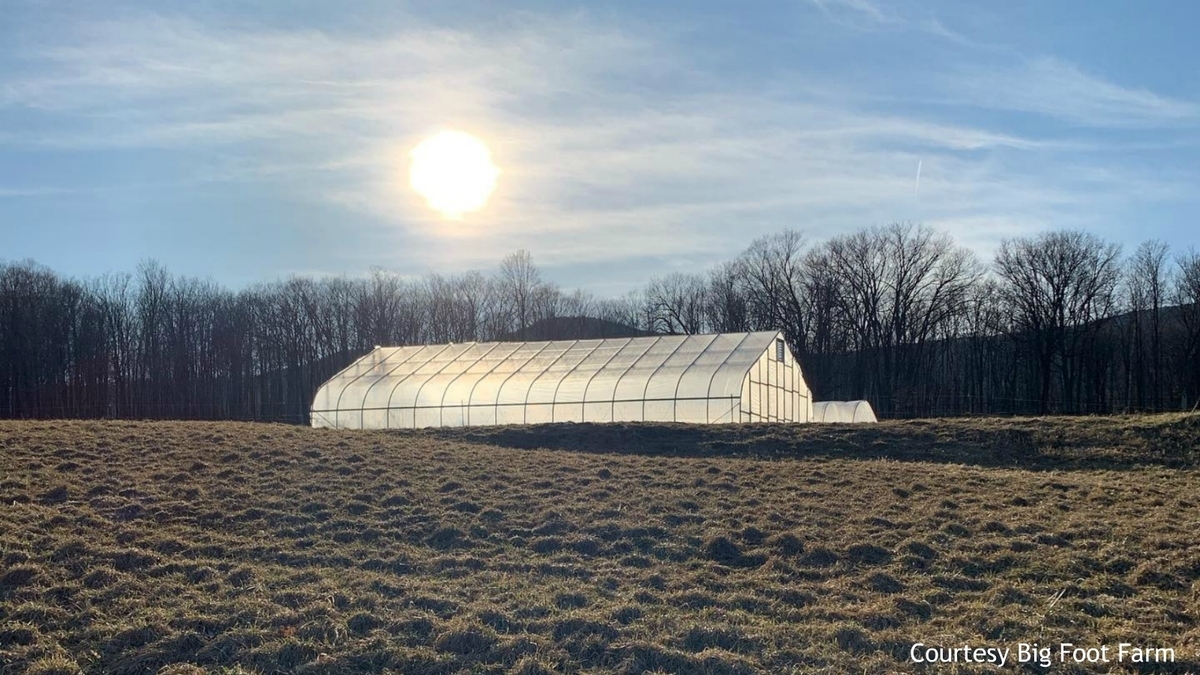
But on one question, the board heard somewhat mixed messages: Can the bylaw limit production in a zone to "outdoor growing" and still allow greenhouses or hoop houses to let farmers get their plants started in the late winter and early spring?
"I'm not aware of any regulations among different types of structures as to what is or is not an indoor grow," said Joel Bard, an attorney with town counsel KP Law. "A hoop house would be in the grayest area. I assume any greenhouse would be indoors."
Bard's colleague at KP Law, Nicole Costanzo, then told the board she has worked on Host Community Agreements that "would allow hoop houses as outdoor" cultivation.
And the proprietor of a Pittsfield cannabis production business said greenhouses are allowable on an outdoor farm as long as they rely on natural light.
"From the standpoint of regulations, it's considered outdoor even if it's a greenhouse as long as you're not using artificial light past 8 inches [of plant size]," said Suehiko Ono of Eos Farm on Barker Road.
Whether greenhouses or hoop houses are "indoor" has significant implications for the bylaw the Planning Board has been working on, effectively, for the last two years.
In the most current iteration of a replacement to 2017's "placeholder" bylaw, the board's plan allows, by special permit, commercial outdoor cannabis production in the town's Rural Residence 2 and Rural Residence 3 zoning districts while restricting indoor production to its Limited Industrial zone.
Throughout the conversation and in the bylaw the board presented to August's annual town meeting, "indoor grows" were contemplated as large, warehouse-style buildings where cannabis is produced year-round in controlled conditions with artificial lights and irrigation.
And the draft bylaw on the table puts a heavy emphasis on control of odor emissions from indoor grows — as did the bylaw that failed at town meeting earlier this year.
If the board now has to think of hoop houses as "indoor grows," as Bard's comments suggested, then the proposed local regulation — both in terms of location and air scrubbing — gets more complicated.
But if Costanzo's remark about towns treating "hoop houses as outdoor" is correct, then the board could continue on the track it already has followed, regulating outdoor farms differently than totally indoor operations.
While that question remains hazy, there is one point of general agreement among farmers: You cannot commercially produce cannabis in Massachusetts without the ability to start your plants under cover.
"We have a short growing season," Ono said. "The way you mitigate that, like you do with any farm, is you have a greenhouse. You get the plants to a certain stage of growth so, when June hits, you put them in the ground and they'll survive for the rest of the season."
Williamstown farmer Brian Cole made a similar point at a meeting of the town's Agricultural Commission this month.
"I start all my vegetables in a heated greenhouse in February," he said. "Growing [cannabis] plants is the same idea. You can get a jump start on the season, essentially."
The problem for pot production proponents is that Cole's vegetable crops are, under the commonwealth's definition, agriculture. Cannabis is not.
If it was, there would be no need for the Cannabis Control Commission at the state level or a local bylaw to govern production. And the Planning Board could have spent the last 12 months talking about something other than marijuana.
Those discussions figure to go on for a while, and the board saw Wednesday's virtual panel discussion as part of a larger fact-finding exercise for the elected body.
Planning Board Chair Stephanie Boyd came to the discussion prepared with questions of her own and questions submitted by residents in advance. After getting Ono and Sheffield Planning Board Chair Ken Smith to talk about their experiences with cannabis, she dove into specific queries.
For example, Costanzo and Bard confirmed that cannabis production is prohibited on lands under Chapter 61 (the state's preservation program) or land covered by Agricultural Preservation Restrictions. And the lawyers said they knew of no legislative efforts to change that status. However, Ono said the farmland he is leasing from Bittersweet Farm was in Chapter 61A, but he was able to pay five years of back taxes in order to get the acreage out of the program.
Other parts of the law — like the hoop house question — appeared to be less settled.
Boyd asked Bard whether the town bylaw could mandate a 500-foot setback between cannabis plants and neighboring residences, as both the current Planning Board draft and an August proposal backed by the Ag Commission mandated.
"That's still an open question," Bard said. "We're going to check with the Attorney General's Office. The traditional legal interpretation would be, given the fact the [state] regulations specifically allow [the CCC-mandated] setbacks to be diminished, there's no authority to increase them. We've also heard that the Attorney General has approved a more restrictive bylaw.
"We're going to check with their office. What they'll often do is say it's a gray area, and we'll caution you that the statute and regulations don't allow you to add that setback. Keep in mind that the Attorney General's Office is just one filter, and, as they'd be the first to say, it's a very loose filter. It's certainly not the same as a decision from an appellate-level court."
Setbacks are the way the Planning Board hopes to deal with concerns about noxious smells coming from cannabis plants when they flower in the late summer and early fall.
On Wednesday, Ono admitted that his crop does give off a smell people may find to be unpleasant. But, not surprisingly, he downplayed that, saying agriculture practices on other farms produce more offensive odors.
"There will be some smells, roughly 45-60 days of the year," Ono said. "What is the smell of raw cow manure? I'd much rather be standing next to Ted Dobson's [Sheffield cannabis farm] than any of the corn farms in Sheffield.
"The other thing … with manure in the air, there's science that shows it causes respiratory issues. With cannabis, there's no science proving anything of the sort. … Smell is more of a subjective, educational question."
Williamstown residents who have been arguing against permitting pot farms for the last two years would argue with Ono's last point. Among those residents is Dr. Fernando Ponce, who has referred the town's Zoning Board of Appeals and Planning Board to studies showing a link between proximity to cannabis plants and risk of allergic reactions and asthma attacks.
Tags: marijuana,