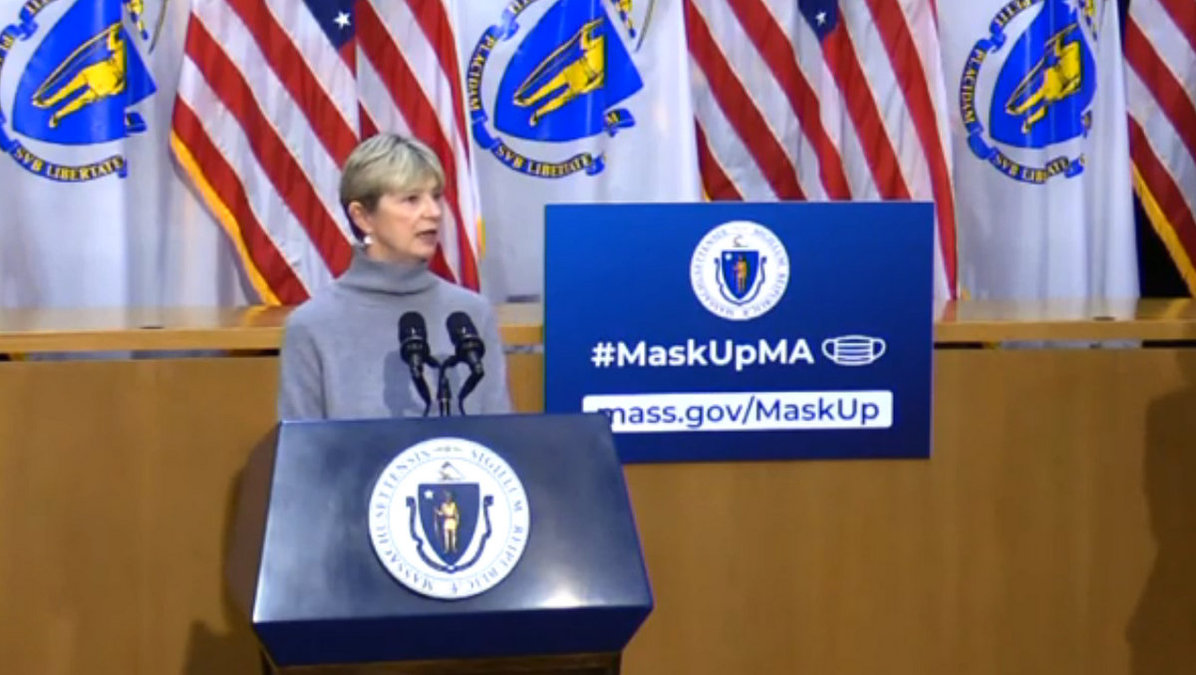
Secretary of Health and Human Services Marylou Sudders explains that health-care providers shipped the vaccine are not allowing any doses to go to waste.
First-Responders to Start Receiving Vaccinations Jan. 11
BOSTON — First-responders in the commonwealth will be able to receive COVID-19 vaccinations starting Jan. 11, and Gov. Charlie Baker on Monday said he expects them to be enthusiastic participants in the vaccination program.
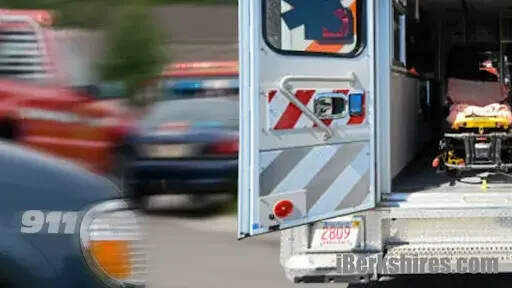
Police officers, firefighters and emergency medical services workers will be part of the next wave of the state's program, which began last month with health-care workers and residents of long-term care facilities.
Later this week, Berkshire County first-responders will be able to start signing up for appointments at one of three county vaccination centers, according to the state's website: St. Elizabeth's Parish Center in North Adams, Berkshire Community College's Paterson Field House in Pittsfield and the W.E.B. Du Bois Middle School in Great Barrington.
"With respect to first responders, I think that obviously we all agree that distribution can't happen soon enough, but the process also needs to be thoughtful and thorough," Baker said during his midday news conference. "While hospitals and long-term care facilities continue to distribute doses, we've been finalizing plans with other groups."
Baker and Health and Human Services Secretary Marylou Sudders faced questions from the Beacon Hill press corps about reports that some first-responders were expressing hesitancy about receiving the vaccine.
But Sudders said she heard no such concerns in a conference call last week with nearly 600 "police, fire and emergency colleagues."
"There were two questions that came up in the hour meeting, and they were very specific questions," Sudders said. "Someone had a very specific medical condition and wanted to know if they should take the vaccine, and in those very specific medical concerns, we say the best thing for you to do is to go back to your health-care provider and ask them. For someone who is receiving treatment for, say, cancer, and whether they should receive a vaccine, that is such a specific medical situation -- that's not a 'frequently asked question' kind of response.
"We are building out public awareness, per se, but it really didn't come up. It was more the mechanics of: How will the vaccine program work out?"
First-responders on the conference call were more concerned about the logistical decisions of holding drive-in clinics versus requiring appointments, Sudders said.
Baker said officials anticipated there would be some people in all walks of life who would be hesitant to be the first in line to receive the COVID-19 vaccine, but he believes that first-responders, in general, are eager to be vaccinated so they can protect themselves and, more importantly, their families.
"I don't think anybody expected at the beginning of this process that there wouldn't be people who would think about this as a 'wait and see,' " Baker said. "That's not unusual.
"I will say this: Generally speaking the first-responder community has been justifiably concerned about their health and the health of their family members ever since this pandemic began. And many of them have advocated to the committee that the secretary set up that they should be early in the process, given the role they play, what they do and how they are affected by their time at work with regard to their exposure to COVID. We agree with that.
"I'll tell you the reason I believe the vast majority of them will accept the vaccine. They, like many of the folks in the health-care community and the long-term care community say the same thing when they talk to the lieutenant governor and me, which is, 'I'm out there all the time. I worry about the places and spaces I'm in. I'm worried that if I get it I might give it to family members.' They are exactly the kind of folks who talk a lot about protecting their family, and that's why I believe, in the end, the vast majority of them will step up and get it."
Baker reported Monday that the commonwealth has shipped 287,000 doses of vaccines to health-care providers and, as of Monday morning, just more than 116,000 had been reported as having been administered. But both Baker and Sudders said there is a lag of a couple of days in reporting those vaccinations, so they expect the number of doses actually received to be higher.
As for COVID-19 cases in the commonwealth, the state Department of Public Health reported 3,110 new cases on Sunday, and the state currently has 2,291 COVID-19 cases in hospitals with 416 in intensive care units.
In response to a question, Baker said that, so far, his sense is that the post-Christmas "surge" is not as great as the one Massachusetts saw after Thanksgiving, but he cautioned that it is early, since the year's last major holiday, New Year's Eve, was just a few days earlier.
As usual, he pleaded with Bay State residents to continue to follow face-covering and social-distancing guidelines, and he said he would have an announcement later in the week about whether he plans to continue the current restrictions on commerce that are in effect through Jan. 10.
Baker also seized on a question about the current political climate in Washington, D.C., to chastise politicians for paying more attention to doomed efforts to overturn the presidential election than to responding to the pandemic.
"We just finished 20 minutes of Q&A with you all about the largest and most significant and potentially life-saving vaccine rollout in U.S. history that I think everyone at this point would say can't happen fast enough," Baker said, pounding his hands together for emphasis. "I think everybody would also agree that there have been bumps associated with the rollout that we all expected and anticipated with the notion that the world would eventually start to spin and things would work the way they should.
"That, in my view, is where our colleagues at the federal level should be focusing their time attention: doing everything they all, together, can do to make sure every vulnerable American, every health-care worker, every long-term care resident, every long-term care staff member and everybody else gets access to those two doses as soon as is practically possible. That should be the focus, right now, of what our colleagues in Washington are up to."
If you would like to contribute information on this article, contact us at info@iberkshires.com.
Your Comments
iBerkshires.com welcomes critical, respectful dialogue. Name-calling, personal attacks, libel, slander or foul language is not allowed. All comments are reviewed before posting and will be deleted or edited as necessary.
No Comments
Puppets Teach Resilience at Lanesborough Elementary School
By Breanna SteeleiBerkshires Staff
The kids learned from puppets Ollie and a hermit crab.
LANESBOROUGH, Mass. — Vermont Family Network's Puppets in Education visited the elementary school recently to teach kids about being resilient.
Puppets in Education has been engaging with young students with interactive puppets for 45 years.
Classes filtered through the music class Thursday to learn about how to be resilient and kind, deal with change and anxiety, and more.
"This program is this beautiful blending of other programs we have, which is our anxiety program, our bullying prevention and friendship program, but is teaching children the power of yet and how to be able to feel empowered and strong when times are challenging and tough," said program manager Sarah Vogelsang-Card.
The kids got to engage with a "bounce back" song, move around, and listen to a hermit crab deal with the change of needing a new shell.
"A crab that is too small or too big for its shell, so trying to problem solve, having a plan A, B and C, because it's a really tough time," Vogelsang-Card said. "It's like moving, it's like divorce of parents, it's changing schools. It's things that children would be going through, even on a day to day basis, that are just things they need to be resilient, that they feel strong and they feel empowered to be able to make these choices for themselves."
The resiliency program is new and formatted little differently to each of the age groups.
"For the older kids. We age it up a bit, so we talk about harassment and bullying and even setting the scene with the beach is a little bit different kind of language, something that they feel like they can buy into," she said. "For the younger kids, it's a little bit more playful, and we don't touch about harassment. We just talk about making friends and being kind. So that's where we're learning as we're growing this program, is to find the different kinds of messaging that's appropriate for each development level."
This programming affirms themes that are already being discussed in the elementary school, said school psychologist Christy Viall. She thinks this is a fun way for the children to continue learning.
"We have programs here at the school called community building, and that's really good. So they go through all of these strategies already," she said. "But having that repetition is really important, and finding it in a different way, like the puppets coming in and sharing it with them is a fun way that they can really connect to, I think, and it might, get in a little more deeply for them.
Vogelsang-Card said its another space for them to be safe and discuss what's going on in their life. Some children are afraid because maybe their parents are getting divorced, or they're being bullied, but with the puppets, they might open up and disclose what's bothering them because they feel safe, even in a larger crowd.
"When we do sexual abuse awareness that program alone, over five years, we had 87 disclosures of abuse that were followed up and reported," she said. "And children feel safe with the puppets. It makes them feel valued, heard, and we hope that in our short time that we're together, that they at least leave knowing that they're not alone."
Bedard Brothers also gave the school five new puppets to use. Viall said the puppets are a great help for the students in her classroom, especially in the younger grades.
"Every year, I've been giving the puppets to the students. And I also have a few of the puppets in my classroom, and the students use them in small groups to practice out the strategies with each other, which is really helpful," she said. "Sometimes the older students, like sixth graders, will put on a puppet show. They'll come up with a whole theme and a whole little situation, and they'll act it out with the strategies for the younger students. It's really cute, they've done it with kindergarteners, and the kids really like it."
Vogelsang-Card said there are 130 schools in Vermont that are on the waiting list for them to come in. Lanesborough Elementary has been the only Massachusetts school they have visited, thanks to Bedard Brothers.
"These programs are so critical and life-changing for children in such a short amount of time, and we are the only program in the United States that does what we do, which is create this content in this enjoyable, fun, engaging way with oftentimes difficult subjects," she said. "Vermont is our home base, but we would love to be able to bring this to more schools, and we can't do this without the support of community, business funders or donors, and it really makes a difference for children."
The fourth-grade students were the first class to engage with the puppets and a lot of them really connected with the show.
"I learned to never give-up and if you have to move houses, be nervous, but it still helps," said William Larios.
"I learned to always add the word 'yet' at the end," said Sierra Kellogg, because even if she can't do something now, she will be able to at some point.
Samuel Casucci was struck by what one of the puppets talked about. "He said some people make fun of him if he dresses different, come from different place, brings home lunch, it doesn't matter," Samuel continued. "We're all kind of the same. We're all kind of different, like we have different hairstyles, different clothes. We're all the same because we're all human."
"I learned how to be more positive about myself and like, say, I can't do this yet, it's positive and helpful," said Liam Flaherty.
The students got to take home stickers at the end of the day with contact information of the organization.
Students got to showcase their art at the Clark Art Institute depicting their relationship with the Earth in the time of climate change. click for more
The 100th annual meeting will be held on March 10, 2027, the Community Chest's birthday (there will be cake, he promised) and a gala will be held at the Clark Art Institute on Sept. 25, 2027.
click for more