Williamstown Board of Health: No Recommendation on Cannabis Bylaw
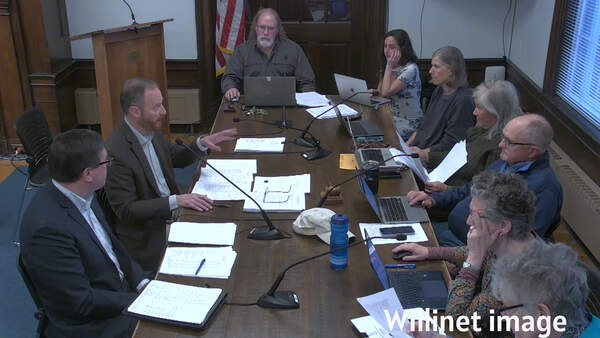
WILLIAMSTOWN, Mass. — The Board of Health on Monday decided not to make any recommendations on a draft bylaw the Planning Board is developing to regulate cannabis production in town.
By a unanimous vote, the five-member board composed of active and retired medical professionals agreed that there is "no compelling evidence for or against" the regulations the Planning Board will send to June's annual town meeting.
"I've done a bit of a deep dive into the literature, and I was unable to find any good data looking at the environmental health consequences of these biogenic [volatile organic compounds] or terpinenes," Dr. Devan Bartels said. "Looking at the [draft bylaw critic's] email he sent out, one of the biggest concerns may have been the fact that there is not data does not make them an invalid argument.
"This is a data-free zone, unfortunately, because marijuana was only made legal in the last decade. So it hasn't been extensively studied, and the impacts aren't known."
Terpinenes, or terpenes, is a natural product in plants such as cardamom, marjoram and juniper and is found in tea tree oil.
Andrew Skinner, who is one of several residents pushing the Planning Board to more heavily restrict — or even ban — outdoor commercial cannabis cultivation, sent the Board of Health a letter asking it to weigh in on the question which has dominated the Planning Board for nearly two years.
The planners themselves reached out to the Board of Health with information on the proposed bylaw and a frequently-asked-questions document it has created to educate voters who will be asked to reconsider the issue at this year's town meeting.
"It's a difficult position for us as a board to advise when there isn't good research for us to hang our hat on," Bartels said. "We don't have a lot of data."
Dr. Erwin Steubner pointed to one of the concerns raised in Skinner's letter and said there is data indicating it may not be an argument against cultivation as it would be allowed in the Planning Board's draft bylaw.
"One of his concerns was about terpinenes and whether or not they could activate some form of relapse in kids who were trying to get off marijuana or induce the desire to smoke marijuana, and the research I've been able to find is that they do not," Steubner said. "The THC in cannabis is not part of the odor in the terpinenes. The terpinenes have been available in plants for … they're ubiquitous, but the odor itself should not be related to the smoking of marijuana."
The Planning Board is scheduled to take up the draft bylaw on cannabis production along with other zoning bylaw proposals at its meeting on Tuesday at 7 p.m.
The Board of Health also discussed the recent response by Williams College to a well-publicized breach of the school's COVID-19 protocols. Steubner, who has acted as a liaison between the board and the college's administration, said the topic was discussed at their regular meeting last week.
"Obviously, they're dealing with a lot of fallout from that party," Steubner said. "A lot of parents are probably upset. A lot of students are upset.
"I think the fact that President [Maud] Mandel made it very clear both at the beginning of fall semester when two students were asked to go remote and with this incident that she's not going to accept any deviation from the protocols.
"I'd hope that would be a great message for the spring semester."
Chair Ruth Harrison commended the college for being transparent about the Feb. 26 infraction and its consequences.
"I think there's been so much good communication that the community doesn't have a lot of questions about it at this point," she said.
The board on Monday scheduled its next meeting for Thursday, April 8, when it hopes to consider the COVID-19 protocols being developed by the Williamstown Theatre Festival.
Steubner said the annual cultural event, which went entirely virtual in 2020, plans to announce its season at a gala in New York City on April 7.
"Ruth and I thought we'd have a meeting on the 8th to include [WTF Artistic Director Mandy Greenfield] and [Director of Audience Engagement Antonello Di Benedetto] to go over their full protocol, and we can give our blessing at that point."
Tags: cannabis, marijuana,