'Stop Telling Women to Smile' Author Speaks on Street Harassment
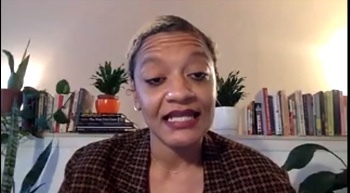
Tatyana Fazlalizadeh speaks about her book and artwork in a webinar last week.
Author and artist Tatyana Fazlalizadeh outlined her experience with street harassment and the process that went into creating "Stop Telling Women to Smile: Stories of Street Harassment and How We're Taking Back Our Power" in a webinar last week.
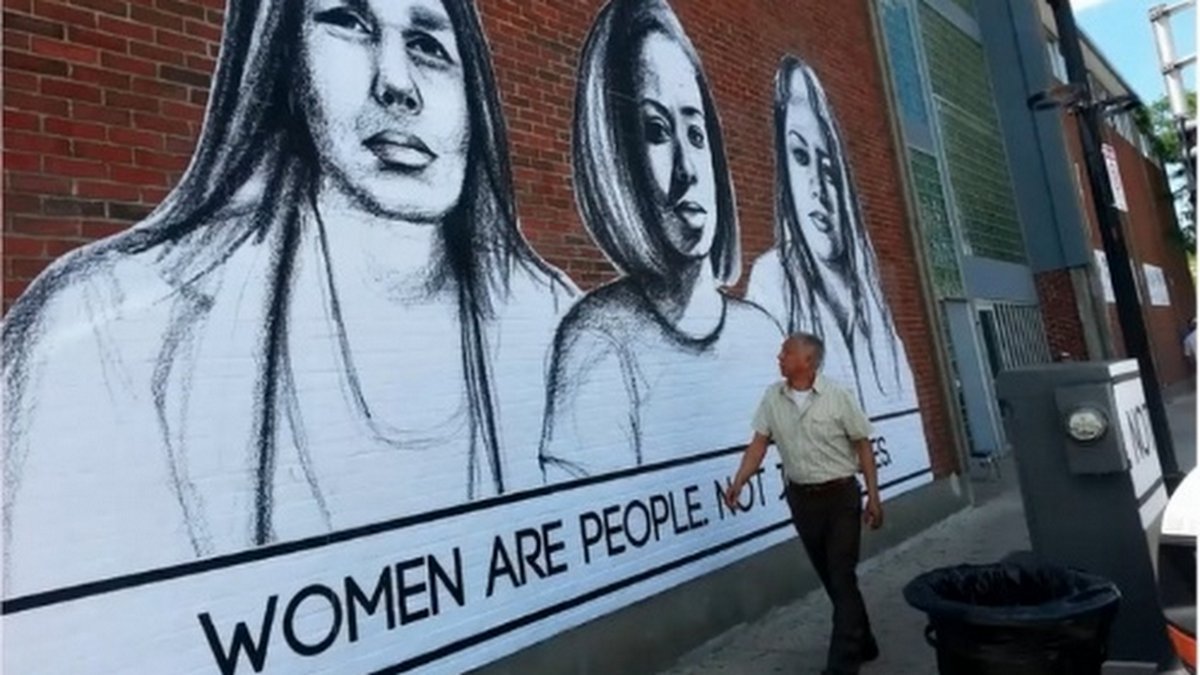
This was the third component of the Berkshire Domestic and Sexual Violence Task Force's annual "One Book, One Community" event. About two dozen groups around Berkshire County first participated in a communitywide read of the book and Fazlalizadeh's artwork was displayed in several locations across the county leading up to the virtual presentation.
Fazlalizadeh is a Black and Iranian visual artist based in Brooklyn, N.Y. She's a painter whose work ranges from the gallery to streets all over the world and has been profiled by publications including The New York Times and Time Magazine.
"Stop Telling Women to Smile" — her debut book — was released in February 2020 and uses visual art and storytelling narratives to address the daily oppressive experiences of marginalized people.
Fazlalizadeh grew up in Oklahoma City, which she says is important to understanding who she is because growing up in that environment with her racial makeup is informs her work.
"It's something that I carry with me, it's not something that ever leaves me. It's important, too, because it created the sort of circumstance for who I am as a person. And so much of my work begins with me, begins with my personal story, my personal experience," she said. "And so to know that I was a little Black girl in the middle of America, in Oklahoma, which is a very, you know, racist place, is important to note."
Her upbringing also included a keen awareness of the body she was occupying, which matured at a young age. Fazlalizadeh experienced harassment in the form of comments and questions about her body from peers and adults. This made her understand that her body was "up for consumption," she said, was going to be looked at, and was going to be sexualized whether she liked it or not.
At 17, Fazlalizadeh moved to Philadelphia to become an artist and began to experience street harassment. The mixture of learning how to hone her artistic craft and the influx of harassment was the first step in her journey that led to "Stop Telling Women to Smile."
"When I moved to Philadelphia, I was an art student, I was studying art, so a couple of things were happening: I was learning how to make art, I was learning how to be a good artist, I was learning how to use my skills, to use my talent develop these talents, and I was also experiencing a lot of sexual harassment," she explained.
"I was also starting to come into my adulthood in a way that I became aware of the things that were happening around me in a way that I could express it better. So I'm experiencing racism, I'm experiencing sexism in my life, in a very everyday real way, and at the same time, I'm becoming an artist, so I'm learning how to express those experiences, and learning how to talk about those experiences in a way that is eloquent, that is direct."
One time in particular, Fazlalizadeh was harassed while working as a muralist and was appalled that this happened even while doing manual labor. This led to the realization that her artwork didn't need to be in galleries, it needed to be on the street where the harassment was happening.
This is for a few reasons, she said, one being that it was a way to safely speak back to harassers without the threat of violence.
"There have been plenty of times where I've gotten into cursing matches with men on the street after I've spoken back to them and they continue to verbally abuse me," she said. "There have been plenty of times where I have been in fear of physical harm, there have been times where I have been physically hit and assaulted on the street. And so how can I take my artwork and use that to speed back to them, knowing that the street is not a safe environment for me and for a lot of other women?"
To create the pieces, Fazlalizadeh converses with those who bring experiences of street harassment to her and then creates a black and white portrait that will be accompanied by a phrase based on their experience.
"It begins with a conversation, I don't know their experiences, I don't know who these folks are ... I'm usually meeting people for the first time, and so I talked with them, and I asked them, ‘What are your experiences?" she said.
"And so we're having these very large conversations, very candid conversations, it's very open conversations that are discussing these folks experiences, from there, I shoot their photographs. I draw their portraits from those photographs and then we create these posters. And the posters are usually text that is coming from those interviews."
Fazlalizadeh prioritizes internationality in her project, which is the framework for understanding how aspects of a person's social and political identities combine to create different modes of discrimination and privilege.
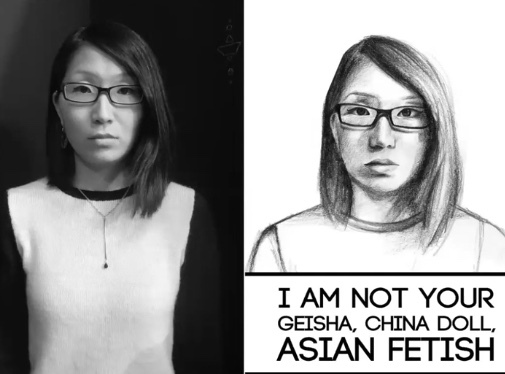
Suzanne from Oakland.
"Historically, white American society has proceeded as Black and brown girls are more sexually available than white girls, that they're less deserving of respect, that they can be approached in an aggressive manner. So I think that that was an important piece about race."
Some of the individuals featured in "Stop Telling Women to Smile" include Suzanne from Oakland, Calif., whose portrait reads, "I am not your geisha, china doll, Asian fetish," and a Black trans woman from Brooklyn named Olympia whose portrait reads, "My womanhood is not up for debate."
At first, "stop telling women to smile" was not the tagline for this project. Fazlalizadeh said the phrase caught on because telling a woman to smile seems to be a very small, trivial thing that is normalized and may not be considered harassment but is, in fact, harmful.
Fazlalizadeh said she is constantly learning about the evolving definition of sexual harassment, which can range from telling a woman to smile to physical assault. Her understanding is that it consists of unwelcome comments, stares, and any type of behavior outside that is sexual in nature and is unwanted.
In creating this work, she is trying to change the culture around harassment rather than make policies. Fazlalizadeh hopes to see a future where men are not "howling" at women on the streets, she and her peers can walk out of their houses knowing that they will be safe, women can dress how they want without the fear of harassment, and where people can live freely without the construction of gender.
Fazlalizadeh said bystander intervention is an important part of understanding and rejecting street harassment. Calling local authorities, having a sense of community, and educating cis-gendered heterosexual men, are steps that can, she believes, be taken to mitigate this kind of abuse.
"When I started this project, I wanted to tell my story, I never had the necessarily the intention to travel with it, afford to expand to be as big as it is," she said. "To be putting it up in different cities all across the world has shown me just how big of a problem this is for one and two, just how many people are willing to, to go outside and use artwork to talk back to it and to challenge it."