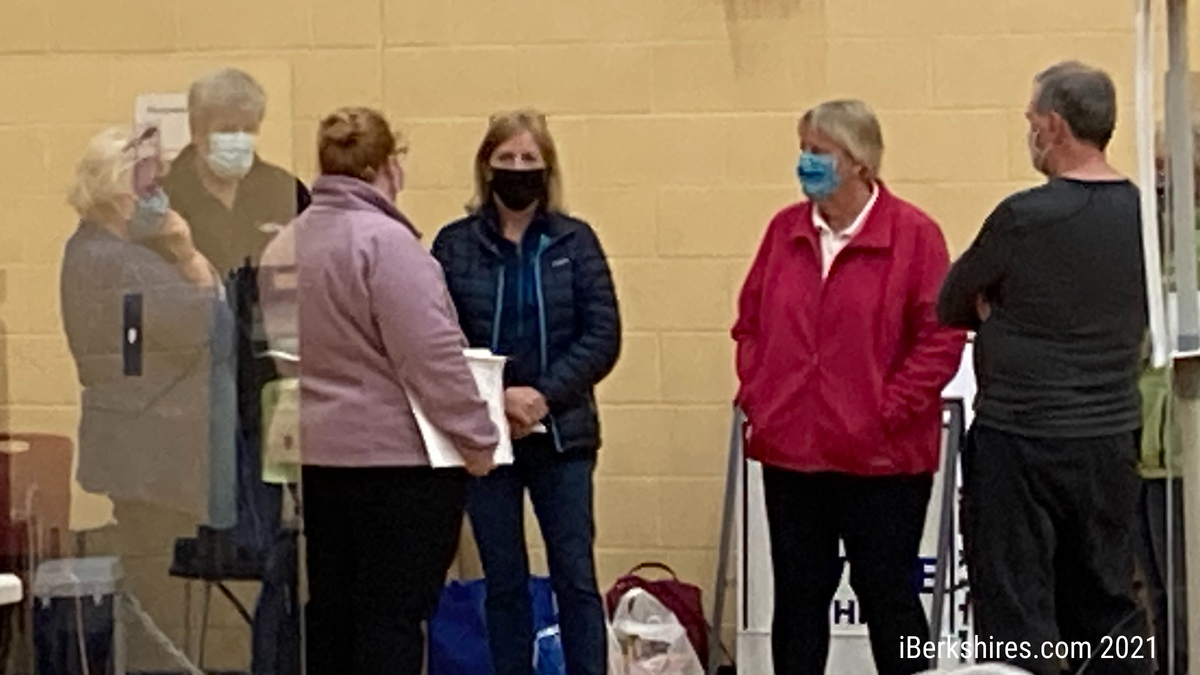
Williamstown Sees Unusually High Turnout in Local Election
WILLIAMSTOWN, Mass. — There were a lot of big winners in Tuesday's town election.
But the biggest of all appears to have been democracy.
On Wednesday morning, Town Clerk Nicole Pedercini announced that the total turnout for the local election was 1,823, or 38 percent of the town's registered voters.
That is modest compared to the 3,600 local ballots cast in last fall's presidential election, but it swamps participation numbers for a typical spring vote.
In fact, turnout Tuesday was nearly double the 10-year average for local elections in town (917).
"We've talked about how some of the loudest voices have been sort of controlling the narrative," newly elected Select Board member Jeffrey Johnson said Tuesday night. "I think the votes now control the narrative."
Johnson's contest against Anthony Boskovich and a second Select Board race that saw Wade Hasty defeat Albert Cummings likely were major contributors to the big turnout numbers.
"Of course turnout depends on the amount of contest, and this was the most contested election I can remember," said Anne Skinner, a former member of the Select Board and a longtime leader in the local chapter of the League of Women Voters.
"A good sign, I think, that people want to participate in town government."
In addition to the two highly-watched Select Board races, there was a "down ballot" race involving a three-way contest for the Planning Board that saw all three contestants draw considerable support.
The first-place finisher in the three-way Planning Board race, Roger Lawrence, received 640 votes. To put that in perspective, Lawrence received more votes than the total number of votes cast for all candidates in the town elections in 2011 (631 votes) or 2012 (538 votes).
Over the last 10 years, just four times before Tuesday did more than 1,000 town residents cast ballots in the May (or, last year, June) election.
The biggest turnout from 2011-2020 came in 2016, when 1,562 votes were cast. That year, there were three candidates vying for two seats on the Select Board, including one open seat; there also was a contentious race for two open seats on the Planning Board and a race for the now defunct Williamstown Elementary School Committee.
The overwhelming majority of votes cast in the election were made on Tuesday at Williamstown Elementary School. Pedercini reported that the town received 197 requests for mail-in ballots and 10 requests for absentee ballots; of those, it received 186 mail-in ballots and nine absentee ballots. So the total votes not cast in-person was 195, or 11 percent of the total balloting.
Editor's note: Updated at 12:24 p.m. to correct who received 640 votes in the Planning Board race,
Tags: election 2021, town elections,