Pittsfield City Council Approves FY22 Tax Rate
.JPG)
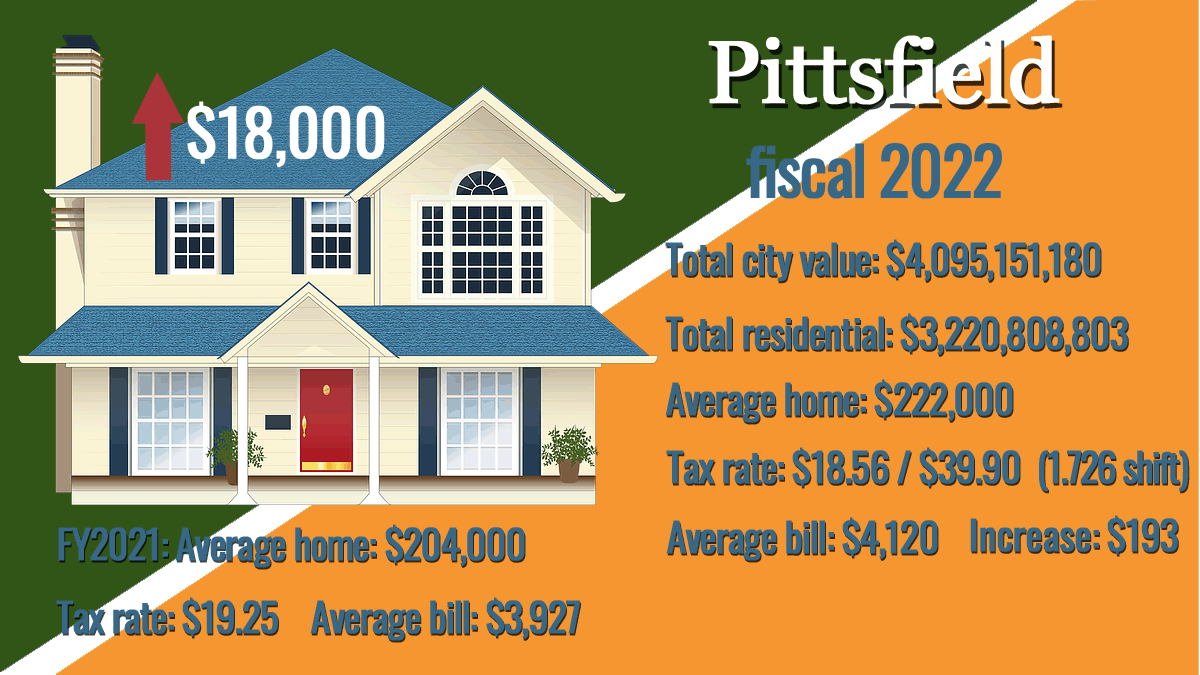
PITTSFIELD, Mass. — On its second night of debate, the City Council approved a residential tax rate of $18.56 per $1,000 of valuation and a commercial, industrial, and personal property tax rate of $39.90.
The tax rate will drop by almost a dollar but average homeowners will see their taxes increase by about $200, or a 5 percent increase, because of rising property values.
There was a $254,625,346 increase in total real and personal property values over fiscal 2021, raising the average family home price to $222,000 from $204,000 last year.
It passed 8-3 with Ward 2 Councilor Kevin Morandi, Ward 4 Councilor Chris Connell, and Ward 7 Councilor Anthony Maffuccio voting against. The opposing councilors wanted to see $1 million of free cash used to reduce the residential rate to $18.36 and the commercial rate to $39.48.
At the last City Council meeting, the panel took a recess to allow for the city to calculate the rate with additional free cash and then decided to continue the vote.
Mayor Linda Tyer on Tuesday cautioned against adding to the subsidiary of $1.5 million dollars in free cash that was approved during budget season.
"If we add another $1 million, the total rises to $2.5 million in free cash, this level of free cash is unsustainable and detrimental to future budgeting," she said.
"So looking ahead, if we use an additional $1 million for a total of $2 1/2 million what happens in the development of the FY 23 budget? We would have three options: continue to add $2 1/2 million of free cash or find cuts in that amount of $2 1/2 million, or set a tax rate that will be significantly higher in FY23 than what we are proposing for FY22."
The additional free cash monies would have represented about 20 percent of the $5.1 million balance and would have only represented a savings of about one percent for the residential rate, or about $44.
Tyer added that growth in home values is a good thing.
"Yes, home values have increased and since homes are most likely a person's most valuable asset growth in value is a good thing for individual homeowners," she said.
"It adds to their available equity, it builds their borrowing power, and it builds personal wealth, for the average single-family home in Pittsfield the increase in value equals $18,172, and I'd suggest that that's a decent value proposition for only $196 in new taxes."
She also touted the city's recent achievement of being free from the constraints of the levy ceiling Proposition 2 1/2 for the first time since fiscal 2015. The rule puts strict limits on the amount of property tax revenue a community can raise through real and personal property taxes to 2.5 percent of the prior year's levy plus new growth.
To address concerns that were voiced about low income, disabled, and senior residents affording the rise in taxes, Tyer distributed a sheet that outlined a number of tax exemptions.
This included a legally blind exception for $500: a 68-plus elderly exception for $1,000: an elderly, widow/widower, minor child of a deceased parent exception for $175: a veteran with service-connected disability exception for $400, and a senior work off exemption for up to $1,000.
Maffuccio stressed the importance of using the free cash, or a "rainy day fund," to assist those who are struggling financially in the city. He, Connell, and Morandi also pointed out the pandemic has caused inflation in many areas.
"We are being asked to raise taxes by 5 percent this year while we are trying so hard, when everybody's trying so hard, to keep up with the cost-of-living increases," he said, highlighting the city's rate of poverty and homelessness as well as it's low income and elderly residents.
Connell called Tyer's presentation a "political show" and said there would not be consequences of using the extra free cash.
"It is not the administration's money, it is not the council's money, is it not the city's money, it's the residents' money," he said.
Some of the councilors felt attacked for their support of Tyer's proposed tax rate.
Ward 1 Councilor Helen Moon felt that some of the opposing testimony suggested that the councilors voting in favor do not care about their constituents.
"It is not appropriate and highly offensive to the entire council to imply that only certain people care about the taxpayers," she said. "And that only certain people care about our residents in Pittsfield."
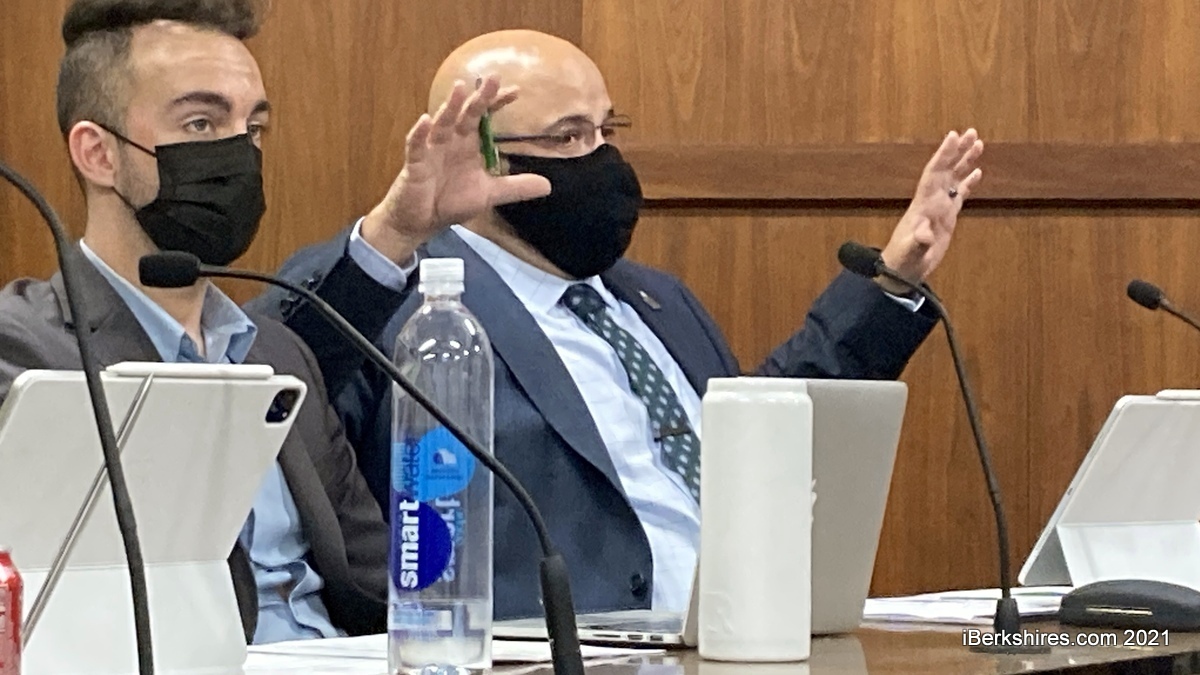
Moon added that she believes that every member of the council is there because they care about the residents, and implying that certain members do not care because of how they vote discounts the people who elected them.
"It's weird to me because I feel like some people think that our employees, the people who are providing the services to our constituents and to our city, should somehow work for free," she said about the city's budget.
"That they should volunteer their services so that the residents of Pittsfield can get all the services that they want because they do want a lot of services, without paying for and providing for the people that do those services."
Councilor at Large Earl Persip III seconded Moon's sentiments about feeling insulted and called the councilors' rally for an additional $1 million in free cash a "political show."
"Want to talk about political shows? That's a political show. A political show is trying to convince us that giving back 1 percent is more beneficial to the city and its residents than giving up 20 percent of its reserves, that's just not financially sound," he said.
"We are elected to make tough decisions, we are elected to make hard choices and the easy choice is to say 'Hey, give a million dollars,' you get a couple of headlines in the paper and we're the saviors of the tax rate, but the smart thing to do is to build our reserves because we have watched our reserves dwindle down each year."
Persip added that the council should be celebrating the average city home's increase of $18,000 in value because it is building equity.
"I know my vote tonight is what's right for the citizens of Pittsfield, and I'll stand by that vote, just like I stand by any vote," he said later in the discussion. "I do what I think is right and I suggest everyone do the same."
Councilor at Large Peter White emphasized the importance of keeping reserves.
"I want to make sure we have money in reserves, and yeah $44 for the year could help a lot of people, but keeping that million in there could help a lot more people in the city by potentially looking at bigger projects," He said.
"We have a lot of ancient buildings, we never know when a boiler is going to go, we could have roofing issues, there's a lot of things that we need those reserves for and it is the people's money and every dime that's spent in the city is spent on things for the citizens of Pittsfield."
Tags: fiscal 2022, tax classification,