Being the First: What it Means to be a First-generation College Student
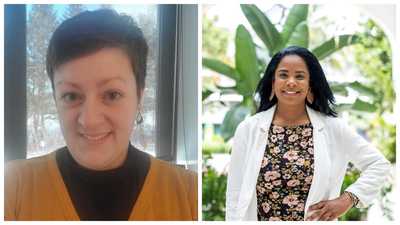 |
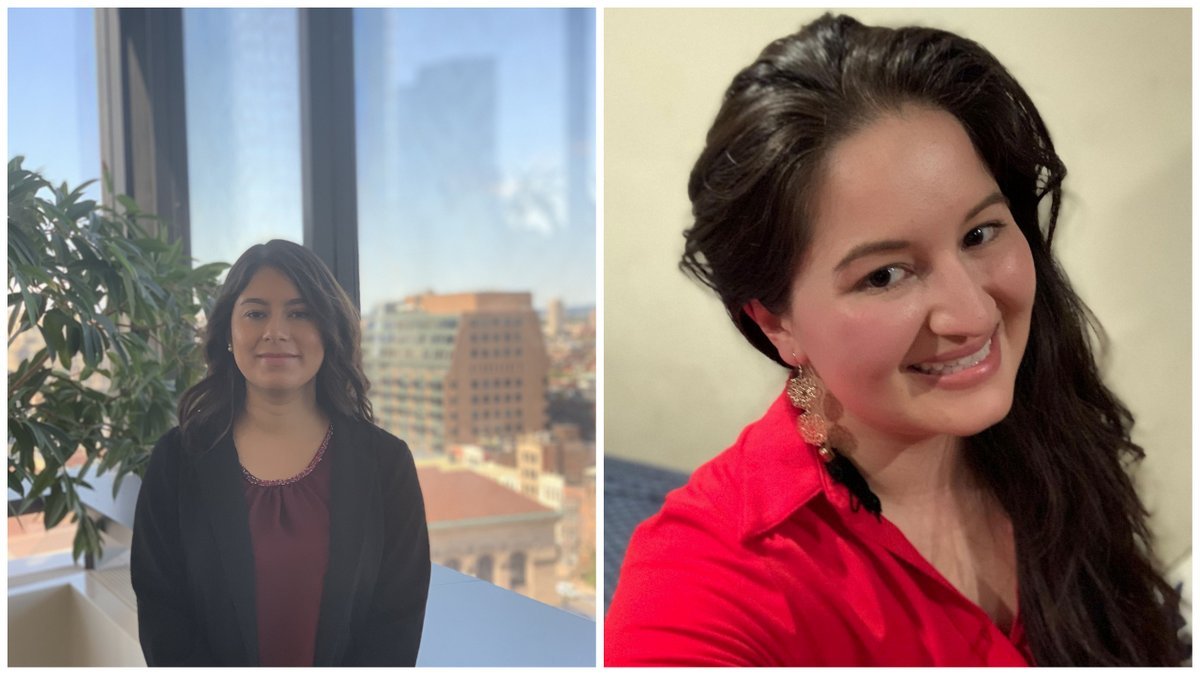
| Sarah Blizzard, coordinator of the new Multicultural Affairs, Diversity and Engagement (MADE) Center at BCC and Alexa Icenia, an academic counselor for the SUCCESS program and MADE Center. |
Being the First: What it Means to be a First-generation College Student
Higher education is changing. As the college-going population in America shifts to include a larger percentage of minority and disadvantaged students, first-generation students — those who are the first in their families to attend or graduate college — represent 56 percent of all undergraduates, according to the Center for First-Generation Student Success. At community colleges, that number is even higher: Sixty-four percent are first-generation students.
But first-gen students face myriad challenges. According to the Clay Center for Young Healthy Minds, such challenges can be psychological, academic, financial and social. First-gen students might feel guilty about having opportunities other family members did not, or feel anxious about not fitting in. They might have difficulty navigating the academic system, finding it overwhelming and complex. They may struggle with financial burdens, contributing to a stressful academic experience. And, because minority groups comprise more than a third of first-gen students, they might face racial disparities and discrimination. All of these factors can contribute to feelings of isolation and anxiety.
Enter community colleges, often the gateway to success for first-generation students, primarily because they are affordable and offer tremendous support services. At Berkshire Community College (BCC), where 34.5 percent of students identify as first-generation in a region in which just 33 percent of adults hold a bachelor's degree, a robust support system is dedicated to providing students the tools they need to graduate and contribute to a better prepared workforce.
"College campuses must be dedicated to supporting diverse (which means all) students, faculty and staff," said Sarah Blizzard, coordinator of the new Multicultural Affairs, Diversity and Engagement (MADE) Center at BCC. "That support, both academic and social, is critical to the success of first-generation students."
Research has consistently shown that first-generation college students struggle to make connections on campus and often have higher drop-out rates than their peers, Blizzard says.
"Often, first-generation students are invisible. They don't carry around signs that indicate their status as a first-generation student, which means faculty and staff might not know how or when to support them," she explains. That's where the MADE Center steps in, creating educational and cocurricular opportunities for support outside the classroom — especially for the traditionally marginalized population, including first-generation students.
Funded by a SUCCESS (Supporting Urgent Community College Equity through Student Services) grant, BCC's MADE Center is a place where first-generation students can connect with academic coaches and other resources, attend workshops and programs geared towards academic success and meet other first-gen students with similar goals. "The MADE Center fosters an environment that validates and respects cultural identities, which is so important for our first-generation students," Blizzard says.
Alexa Icenia, an academic counselor for the SUCCESS program and MADE Center, highlights the importance of making connections for first-gen students. "From personal experience as a first-generation student, unique institutional spaces such as the MADE Center can feel like the door of opportunity in embracing authenticity, welcoming social innovation, and becoming catalysts for inclusive change," she says. "Support systems like this are also a chance to start using education as a tool in dismantling self-limitations when we start to create academic legacy."
Kimberly Figueroa, who immigrated to the United States from Guatemala, knows first-hand how important it is to receive support while attending school. "When I arrived in America in 2011, I did not know any English, so language was my first obstacle. After six months in the United States, I went to BCC to start my first class in a program called Project Link," she says. "I didn't understand half of what the instructor was saying. I remember going home and translating from a dictionary every single word I did not understand."
Figueroa recalls, "I thought about quitting school many times, but with the help of my friends and family — and the great resources BCC provided — I was able to overcome that obstacle. BCC provided an accessible path to higher education."
Figueroa says she found particular value in the Tutoring Center, the Multicultural Student Services Organization (MSSO) and TRIO, a set of federally funded college programs specifically designed to motivate and support students from disadvantaged backgrounds, including first-gen students.
Now a senior staff accountant at Adelson & Company in Pittsfield, Figueroa earned her associate degree in business administration from BCC in 2015 and went on to earn her bachelor's and master's degrees in accounting from UMass Amherst.
"Being a first-generation student gives me a lot of pride for my family and myself, because education is very important. I want to provide that mentality to the future generations," says Figueroa, who describes her dream job as owning her own business in the health and beauty industry.
In the fall of 2020, BCC launched its inaugural First-Generation College Celebration Week. Now an annual event, the program includes daily panels, speakers and a student support resources fair. Students submit written stories, six-word stories, a picture or a video celebrating their achievements as first-generation learners.
Alessandra Carranza, a first-generation immigrant from Peru, wrote in her poignant story, "I did not believe that I, a Hispanic woman who was barely making ends meet working long hours at minimum wage, would ever be able to achieve the goals I had growing up. Fast forward 10 years — I am 26 years old and am finally able to attend college by being awarded the Pell grant and foundation scholarship …. Describing the gratitude I have for this opportunity is not something I can put into words."
Gratitude is a common thread among first-generation students like Catheryn Chacon, who graduated from BCC in 2012 with an associate degree in business administration, followed by bachelor's and master's degrees in accounting from UMass Amherst. Sixteen years ago, Chacon immigrated to the United States from Colombia with her parents and sister. It was a whole new world, full of opportunity but also full of obstacles and challenges.
"BCC made it possible for me as an undocumented immigrant to pursue my academic and professional dreams. Without BCC, it would have been very hard for me to be where I am right now," says Chacon, who has been working with the accounting firm Ernst & Young for five years.
"The biggest obstacle I faced was the limited options and opportunities you have as an undocumented student," Chacon says. "Financially, I couldn't apply for most scholarships, couldn't get a student loan, and had to pay the out-of-state tuition." She was able to take evening classes at BCC at the in-state rate, allowing her to save more than half of her tuition, but the challenges were just beginning.
"Logistically, I had no idea of what I was doing, and no one in my close circle knew how college worked. I had to knock on many doors, do lots of research and talk to many people to understand the system," Chacon says.
Eventually, doors began to open. One of Chacon's first experiences at BCC was with a program called Making Education Our Purpose (MEOP), created for first-generation English Language Learners (ELLs) from Central and South America, Africa and Asia. She met students in situations similar to her own, and they worked together to reinforce their math and English skills, as well as get help with questions about the college process.
Another pivotal moment Chacon recalls is a visit from BCC Senior Admissions Counselor Eleanore Velez, who came to Lee High School to speak to students about career possibilities.
"As we were talking, she started drawing a staircase with the steps of becoming a professional," Chacon says. "At the time, it seemed so impossible for me to even graduate with an associate degree. But when I look back to that moment now, I see all the support and encouragement from so many people, including my family, teachers, mentors, and friends. They helped me
achieve everything I have done so far."
Having family support has been invaluable to Chacon and her sister Jennyfer, who earned an associate degree in engineering from BCC, a bachelor's degree from UMass Amherst and now works as an equipment engineer at Global Foundries in Malta, NY. But the path has not always been easy. "Being a first-generation student carries a lot of responsibility and challenges," she says. "My sister and I are very lucky to have parents that have been very supportive of our academic journey, but unfortunately, they couldn't guide us in the process of going to college, especially moving from a different country."
Regardless of the obstacles they faced, Chacon's parents instilled in their daughters the notion that education is the key to success. "As a family, we worked towards that dream. This is why we both started our careers at BCC and found our way to complete our degrees at UMass,"
Chacon says.
For all the hard work that went into being a first-generation student, Chacon has no doubt it was worth it. "For me, going to college meant setting an example for my sister and future generations. It meant opening doors for others, and, in some part, it meant representing the Latinx community," she says. "It has become obvious to me that a college degree helps you get a seat at the table — and it gives you the voice and the tools necessary to advocate for others."

Tags: BCC,