Field Farm Sculptures 'Witnesses' to Land's History
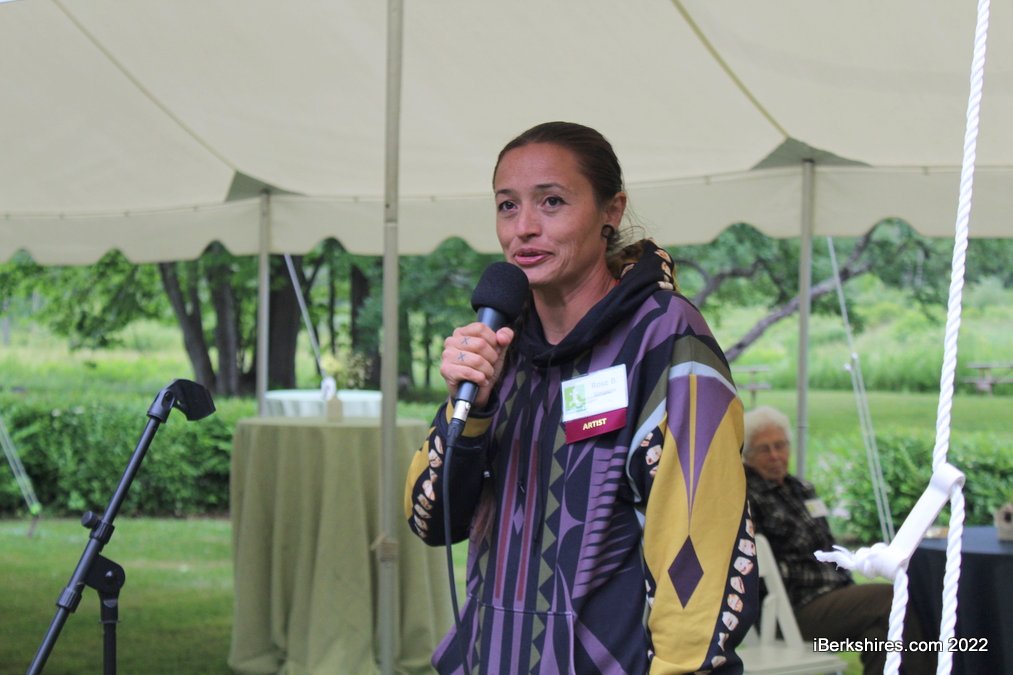
Artist Rose B. Simpson says her is about questioning histories and perceptions and finding connections.
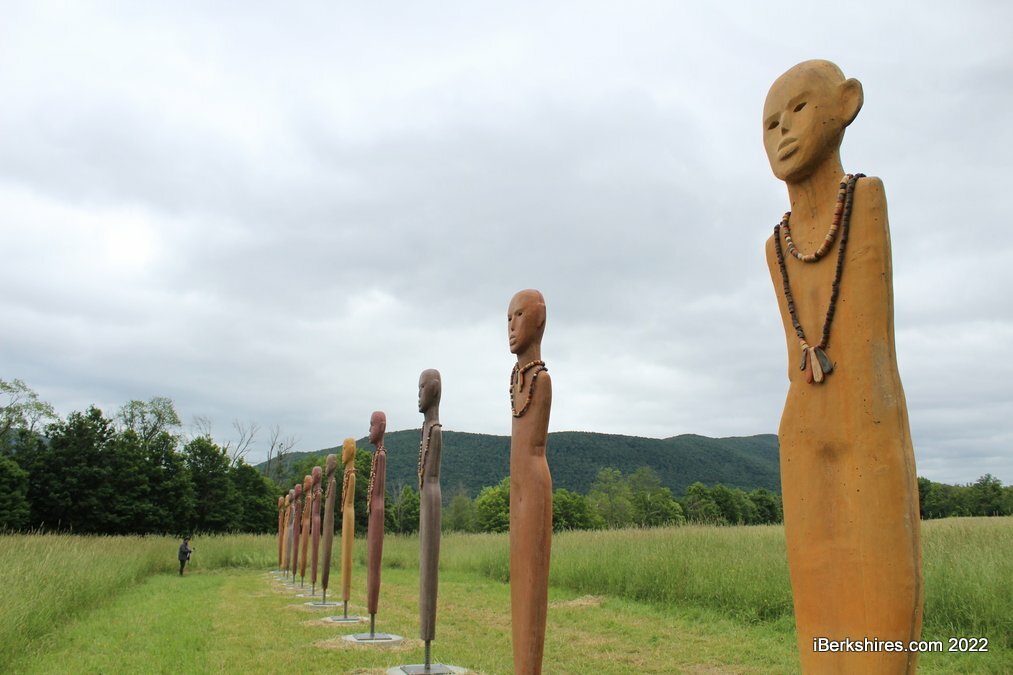
Artist Rose B. Simpson said the statues act as witnesses and a reminder of the land's history. The hollow eyes are watching everything from the air, wind, and sky.
"We're out there up on the ladder, I could see the wind go through, in the dust coming out of the eye and it made me realize the wind is actually whistling through the eye and there's so many layers of what's watching you that we generally forget we're being held accountable or responsible by forces that we forget have any power over," Simpson said.
The responsibility that these figures expect is self-awareness without judgment and noticing these connections with the land, history, and the figures.
"That we're not just being judgmental to the world around us, but we're also being seriously self-aware and in that it's not to be self-deprecating," Simpson said.
"It's about noticing our connection of things and and and stepping into a role of responsibility and nurturing. And as a parent to our life story as the author of this existence."
The act of witnessing this history and hearing these voices acts as a catalyst to learn and question the things that we are certain about. Simpson said a lot of her work is about teaching herself "to slow down and question every moment."
"Question the things I think I'm certain about. Questioning those things that I'm told. Questioning those histories and the perspectives and then also look deeper at any situation, we're in," she said.
"As I work to find that inside myself, I'm hoping that the things I make in that investigation into my own personal evolution, and growth become opportunities for other people to see that in themselves."
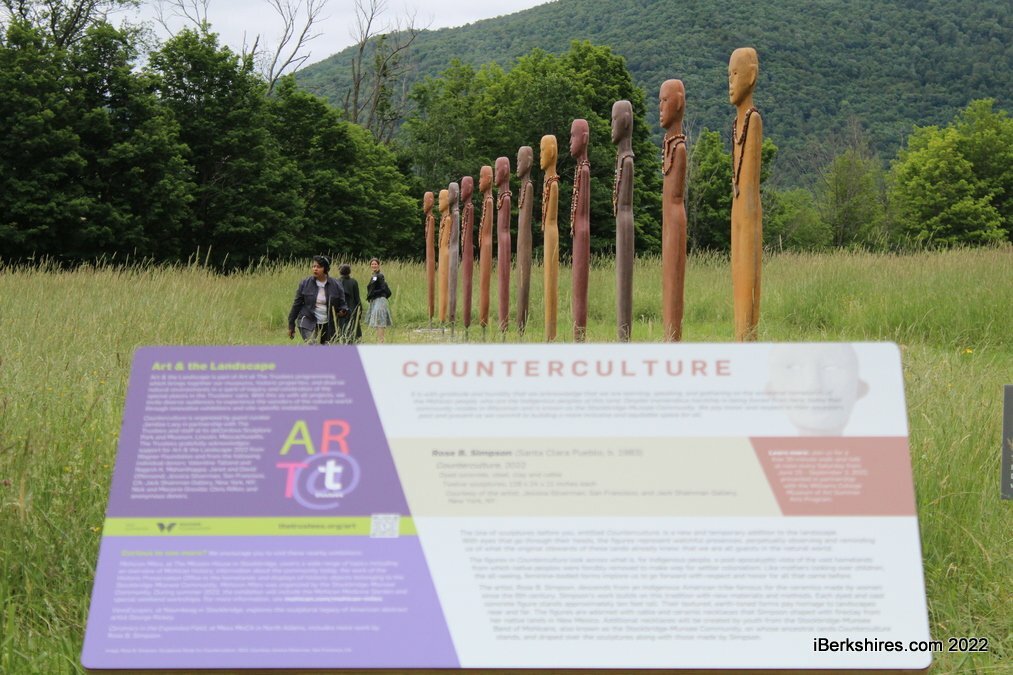
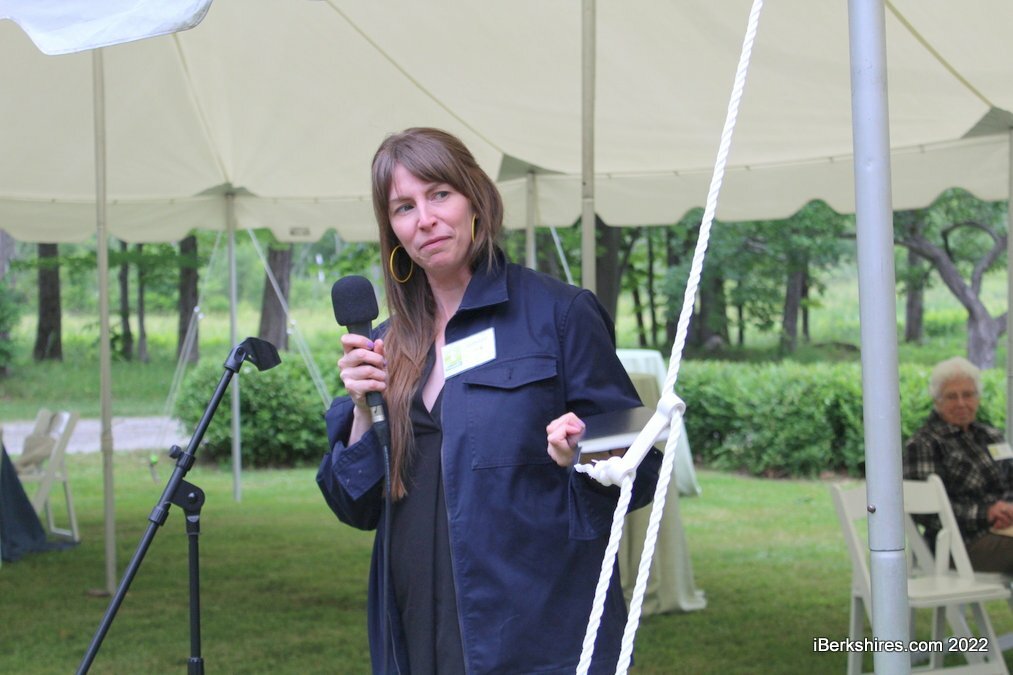
Jamilee Lacy, guest curator of the Trustees of Reservations' 2022 Art & Landscape Program, said they thought very carefully about where on the Trustees' sites these works, titled "Counterculture," would have the most impact. They needed to find a place that would collaborate well with these inanimate beings, which is such a big part of the research that goes into Simpson's work.
"This site is so special because you have these amazing vistas, you have the ecological preservation of the site. And so for these figures to get to preside and/or, reside with the natural environment that is here, seemed like the perfect opportunity," Lacy said.
"And also, I think what's so meaningful and unique about Rose's work is that it's not a spectacle. It's a really important meditation on the landscape, the environment, the people who have inhabited those lands. So it really is one big collaboration."
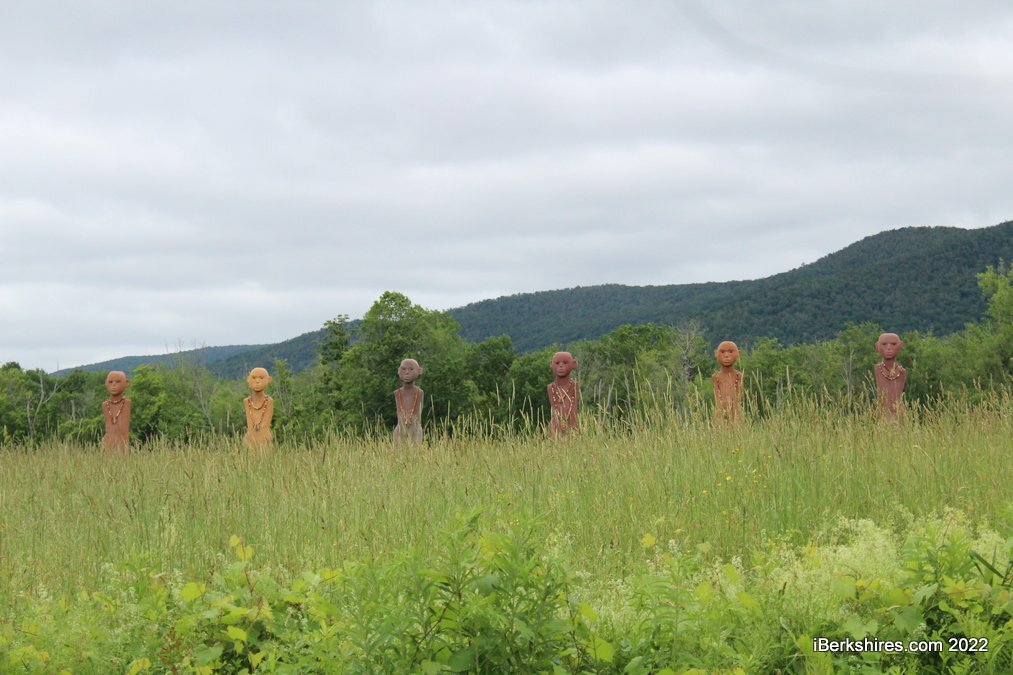
Lacy also noted that this land was a great place because it provides the figures the privacy, so to speak, to rest. The figures seem to emerge out of the meadow as the visitor drives up.
"So I think that's why we thought this was a really great site because there's also a little bit of privacy for these figures. They get a little time to rest, they're not for consumption per say, they're here to commune and convene with other people and then take little break under the stars," Lacy said.
When casting the figures, the sculpture house asked Simpson if she wanted to clean up the casting lines and bubbles that formed but she said no because she wanted to see the process and show off the markings that add to the figures' individuality and beauty.
This temporary installation, running through Nov. 30, will be going to other places that have different characteristics and Simpson said she hopes to be able to reach out to tribal communities. She said that after spending time with this land and building a relationship with it, that it is now a part of her forever.
"I keep thinking what an honor to be here more than any building, any piece of architecture I could possibly imagine. That this field is the biggest honor I could imagine. And that these pieces get to last the seasons and watch this place so deeply and so long, Simpson said.
"They get to be sat on by birds. They get to watch the stars, go through the night, they get silence, they get winds, they get to watch the animals creep through the grass. It's so active, it's so full, it's so rich. It's so absolutely incredibly
Simpson, a Santa Clara Pueblo, said she thinks about the people who were taken from this land and how heartbreaking it is to have to commune with their ancestors from miles away.
"It's good to start thinking about what we can do to have reparations to bring them home. To not just see it as a interesting but oh as a call to action, as a call to heal, as a call to say 'come home, feel these mountains in your soul, let let the ancestors welcome you.' Their ancestors, are walking here still and what would it be like to be torn from them," Simpson said.
Simpson said she is lucky enough to live in her ancestral homelands where her history rinds deep in the land that her family presides on.
You can pray, that you can commune with your ancestors, that's vital to listen to go and ask for direction and hear what they have to say, instead of calling across states for answers. That distance between that is really hard," Simpson said.
"Start looking at ways that we can return some land to those people and start bringing their presence back because I can tell the land wants that. The land is calling for its people back."
More information here.
Tags: art exhibit, Trustees of Reservations,