image description
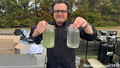
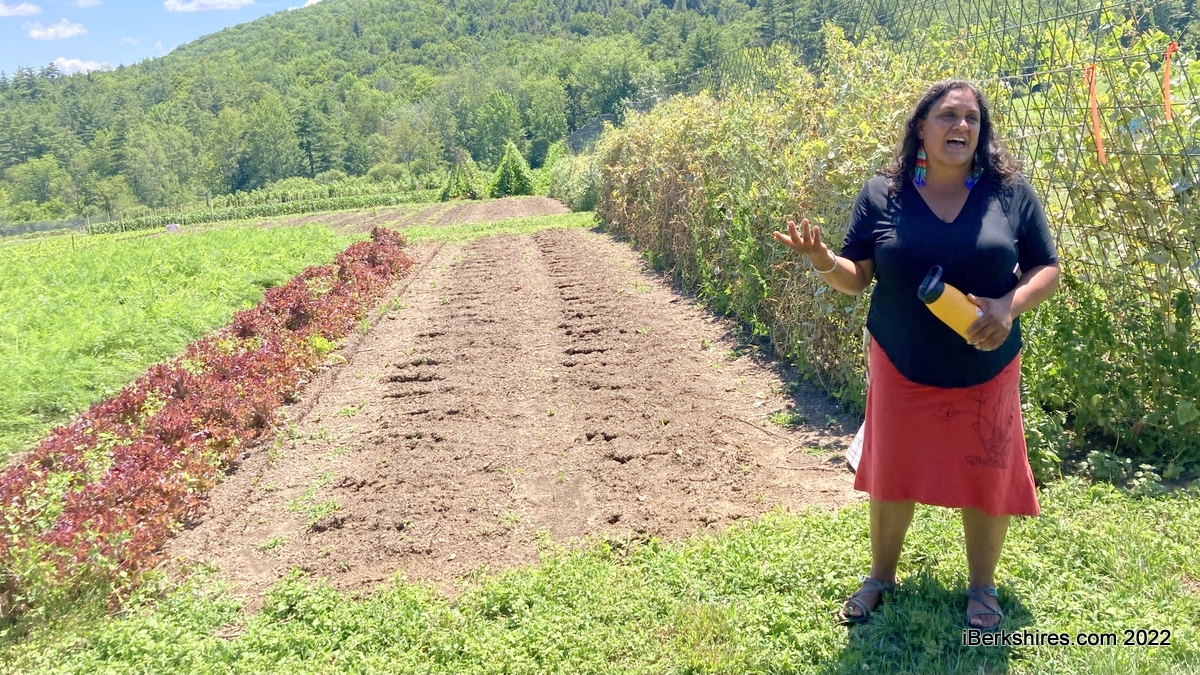
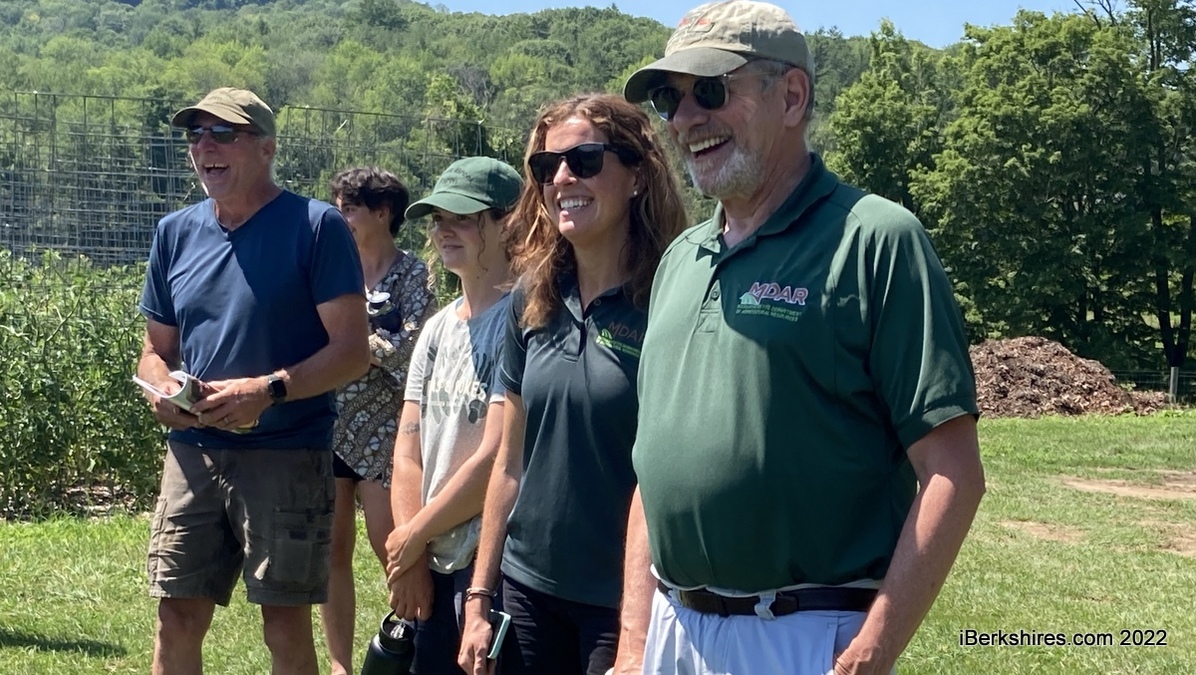
Jen Salinetti, co-founder of Woven Roots Farm in Tyringham, talks about the farm's programs during a visit by Agriculture Commissioner John Lebeaux on Wednesday.
image description
image description
image description
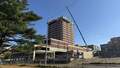
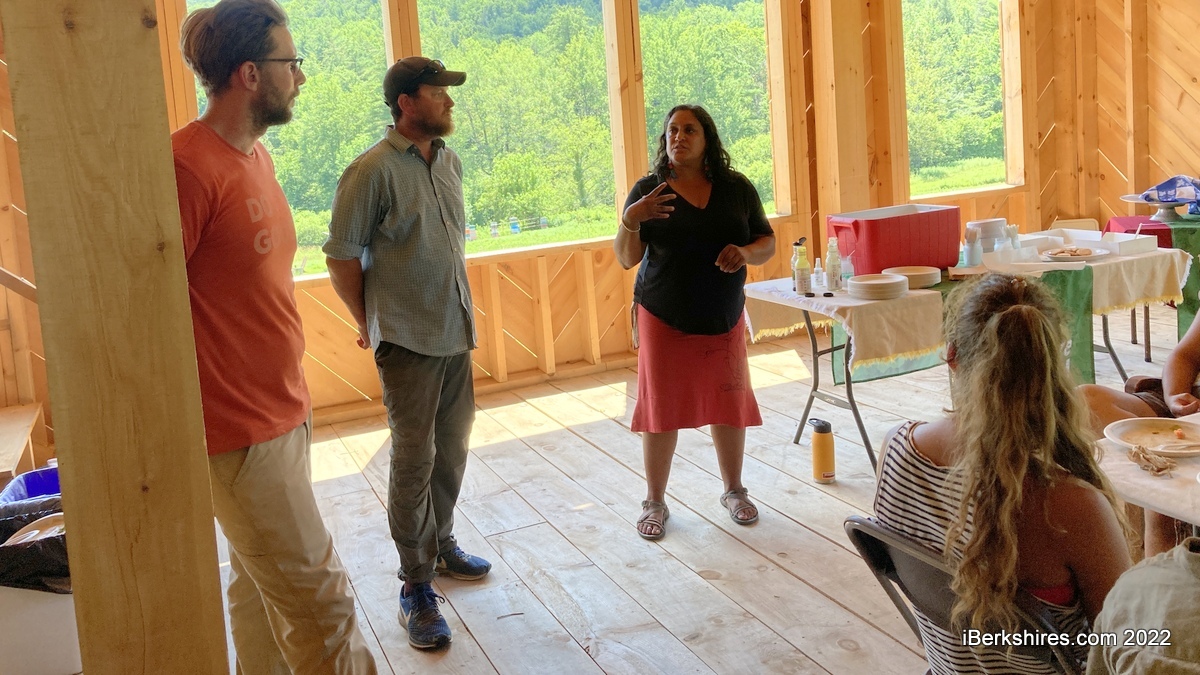
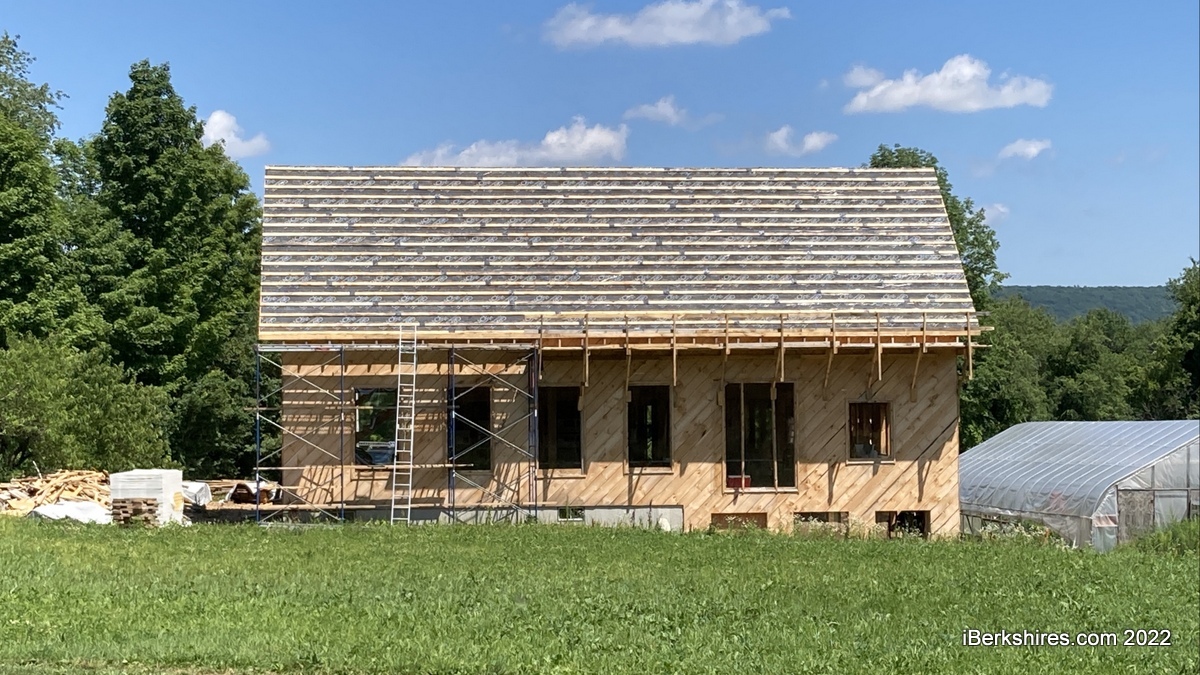
State grants have aided the construction of a 3,300 square-foot, mixed-use barn that will have space for educational programming, community gathering, a farm store, and expanding the farm's CSA.
image description

Agricultural Commissioner Visits Berkshire County Farms
By Brittany PolitoiBerkshires Staff
Print Story | Email Story
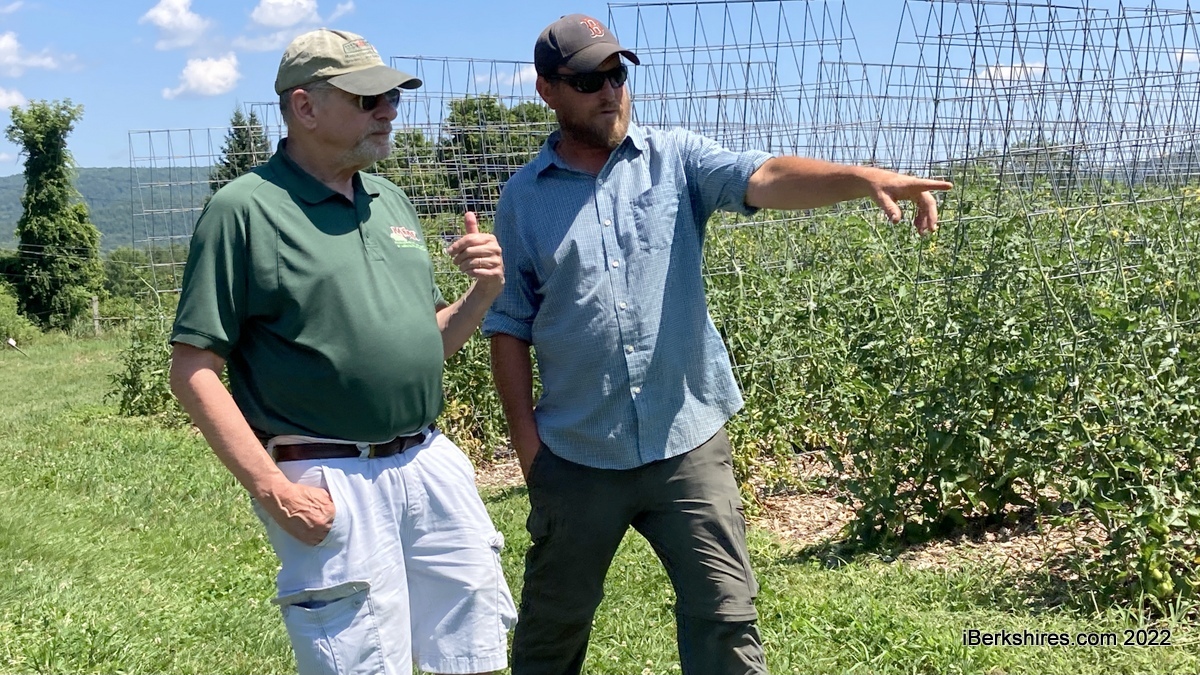
Agriculture Commissioner John Lebeaux visited three Berkshire farms last week.
TYRINGHAM, Mass. — Agricultural Commissioner John Lebeaux visited three Berkshire County farms on Wednesday to learn about their diverse practices.
 
The tour began at Holiday Brook Farm in Dalton, then went to Robinson Farm in Becket, and ended at Woven Roots Farm in Tyringham.
 
"We're always impressed with the diversity of [agriculture] in Berkshire County," Lebeaux said.
 
Nonprofit Berkshire Grown organizes the farm tour each year with the commissioner. Executive Director Margaret Moulton feels that it is crucial to help state government get a clear understanding of the challenges that Berkshire farmers face.
 
Lebeaux recognized that the farmers work hard and take great pride in what they do. He also said his office looks forward to this trip every year.
 
"I learned a lot today," he said. "We go back and we think about how we might be able to incorporate some of the things we've heard today into some of the programs that we do."
 
One of the main things Lebeaux heard throughout the day was validation for the Food Security Infrastructure Grant program that is through the Executive Office of Energy and Environmental Affairs. The state Department of Agricultural Resources (MDAR) also works closely on the program.
 
iBerkshires joined the tour of Woven Roots Farm, a vegetable, herb and flower farm situated on 10 acres of land in Tyringham. In March, it was awarded about $253,000 from the Food Security Infrastructure Grant program.
 
Co-founders Jen and Pete Salinetti have been farming for more than 20 years and have been on the land for about a decade.  
 
Located on unceded Mohican land, its team of seven farmers uses sustainable practices that are derived from indigenous farming. Woven Roots also offers a seasonal Community Supported Agriculture program, educational intensives and workshops, and participates in a variety of community partnerships.
 
"Woven Roots Farm recognizes that agriculture itself is rooted in the long-standing cultural practices within communities of Indigenous people, people of color, and immigrants," its website reads.
 
"We acknowledge that the U.S. was built on stolen land and that all U.S. systems are built on the stolen labor of Black, Indigenous, Latinx, Asian and other people of color."
 
The farm is currently working on a 3,300 square-foot, mixed-use barn that will have space for educational programming, community gathering, a farm store, and expanding its CSA. It will also allow for the farmers to have an office that is not located on their kitchen table.
 
Jen Salinetti described it as a place where "more collaboration can happen, more community can grow, and more direct access to food can happen."
 
"It's a dream come true," she said about the barn after hosting lunch in its community room.
 
The farm received a $50,000 grant from MDAR's Farm Viability Enhancement Program to help support laying the barn's foundation. It also received $18,000 from the department's Climate Smart Agricultural Program for a comprehensive cooler system.
 
The $253,000 from the Food Security Infrastructure Grant program was awarded for certain aspects of the barn.
 
Woven Roots contributes to solidarity share programs that provide CSA shares to vulnerable community members through the Vegetable Prescription Program at Community Health Programs and Seeding Solidarity, which is a collective initiative with Finca Luna Búho in the Northern Berkshires.
 
Finca Luna Búho is a land-based project that is centered on BIPOC, queer, poor, immigrant, and disabled voices.
 
The two farms are launching a collaborative fundraiser titled "Rooted & Rising" that aims to raise $1.7 million by the end of 2023 to fund various initiatives, one being the Woven Roots barn. They have so far raised about $1 million.
 
The first leg of the tour Holiday Brook Farm was on 1,300 acres has that has been run by four generations of the well-known Crane family. The farm uses sustainable, natural practices for its crops, livestock, and fields and supplies produce to two food pantries in its area.
 
Robinson Farm, the second stop on the tour, is on more than 160 acres and has been in owner David Robsinson's family since the early 1900s.  Robinson, one of the county's few Black farm owners and a former rodeo rider, breeds a cross between buffalo (bison) and beef cattle, known as a beefalo, for meat production.

Tags: agriculture,   state officials,   
If you would like to contribute information on this article, contact us at info@iberkshires.com.

Becket Looks to Wind Power for Energy Savings

By Breanna SteeleiBerkshires Staff

The single turbine is a low maintenance and has a 50-year life. The town went with wind power after finding a solar installation would be too difficult. 

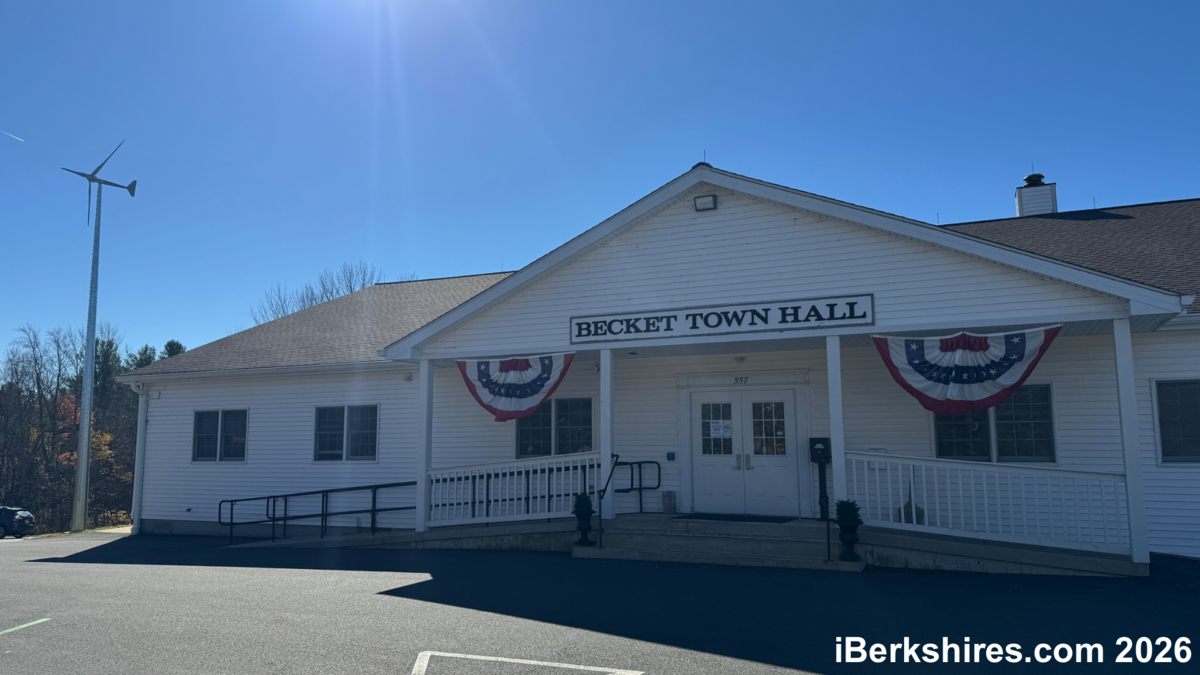
BECKET, Mass. — The town unveiled a wind turbine Monday that will reduce electricity costs and show the benefits of renewable energy produced by wind.

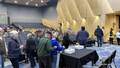
Residents, town and state officials gathered outside the Town Hall for the ribbon cutting on a project first conceived nearly a dozen years ago.

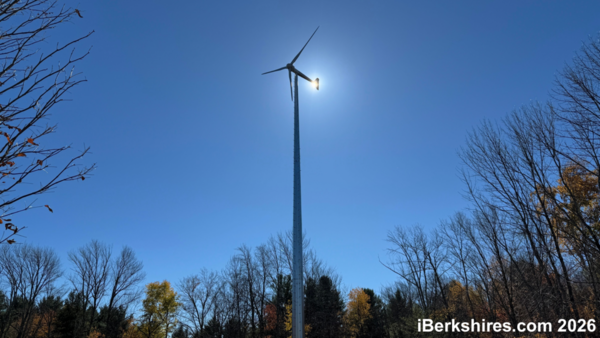
The wind turbine stands 100-feet tall next to Town Hall and is from Oklahoma manufacturer Bergey Wind Power. It has a 50-year life and is a direct-drive permanent-magnet design, meaning it has no gearbox, making it low maintenance.

According to Garth Klimchuk, chair of the Becket Energy Committee, the town started discussions about a wind turbine in 2014. The turbine is expected to generate about 36,000 kilowatt-hours. Klimchuk said Town Hall uses about 24,000 kilowatt-hours, with excess power expected to go to the Highway Department. This is expected to save $9,000 annually from the electricity cost.

"This turbine is just going to be such a good thing for the town. It is really incredible. Zero-cost electricity. Zero cost to the town. Carbon free. Just a huge, huge milestone for us," he said.

The town received a grant from the state Department of Energy Resources totaling $139,500. The remaining funding for the project will come from a direct-pay investment tax credit under the federal Inflation Reduction Act. If the town does not receive the funding, voters at the annual town allocated $100,000 just in case, but Klimchuk said the town will only need about $60,000 to $70,000 if necessary.

"It's going to help the community. Hopefully, it'll lower our tax bills. And as we look at everything going around around the world right now, energy volatility has been with us for a long time. It's going to stay with us for a long time," said state Sen. Paul Mark. "So any move we can make as a community, whether as Becket specifically, as Berkshire County as a whole, but anything we can do to bring some of the reliability into our own hands, to produce a bit on our own, and just guarantee that in a renewable, safe way moving into the future, I think is going to pay off dividends."

The town has spent more than a decade reducing municipal energy consumption in a variety of ways including HVAC upgrades and LED street light conversions, bringing it to a Level 2 Green Community status.

While solar had been considered, interconnection constraints and limited grant opportunities made it harder to achieve. But the high elevation of Town Hall and a Small Wind Site evaluation done in 2023 and 2024 found the site was perfect for a turbine with favorably high winds.

State Rep. Leigh Davis praised the project as an example of a small town addressing a larger energy challenge through persistence and collaboration. She stressed that the single turbine represents a practical step toward reducing reliance on fossil fuels and said Becket's effort could serve as a model for communities across the commonwealth. 

"You hear about all these kind of big wind farms and solar farms and all these ways that we're gonna you know create green energy, but at the same time what we're not being sensitive to the landscape, and what I appreciate about this is that this is it's a single turbine, but it represents so much more," she said. "You're right. It's really adding to the ability for this town to contribute to green energy and to bringing our reliance on gasoline fuels back down to solving big problems."

Mark Rabinsky, deputy director of DOER's Green Communities Division, said the state supports municipalities with technical assistance and grants, and that reducing municipal energy costs can leave more resources for other local priorities. He presented the turbine as an example of state support working alongside local knowledge and decision-making. 

"I think that this is a really a great example of what green communities can do," he said. "I'm obviously a really big fan of the green communities program, but I think that connection between the state, what we're doing at the state, and that local level, and relying on the local knowledge here with Becket is a true testament to what we're doing."

Select Board Chair William Elovirta thanked everyone for being here and shared his memories of first coming tp Becket in 1946 before utility electricity arrived. His family and neighbors used small 32-volt generating plants and batteries. He recalled utility workers installing poles and wires by hand around 1947.  

View Full Story

More South Berkshire Stories