Hot Plate Brewery Coming to Pittsfield this Winter
PITTSFIELD, Mass. — Hot Plate Brewery will make its debut in Downtown Pittsfield this winter.
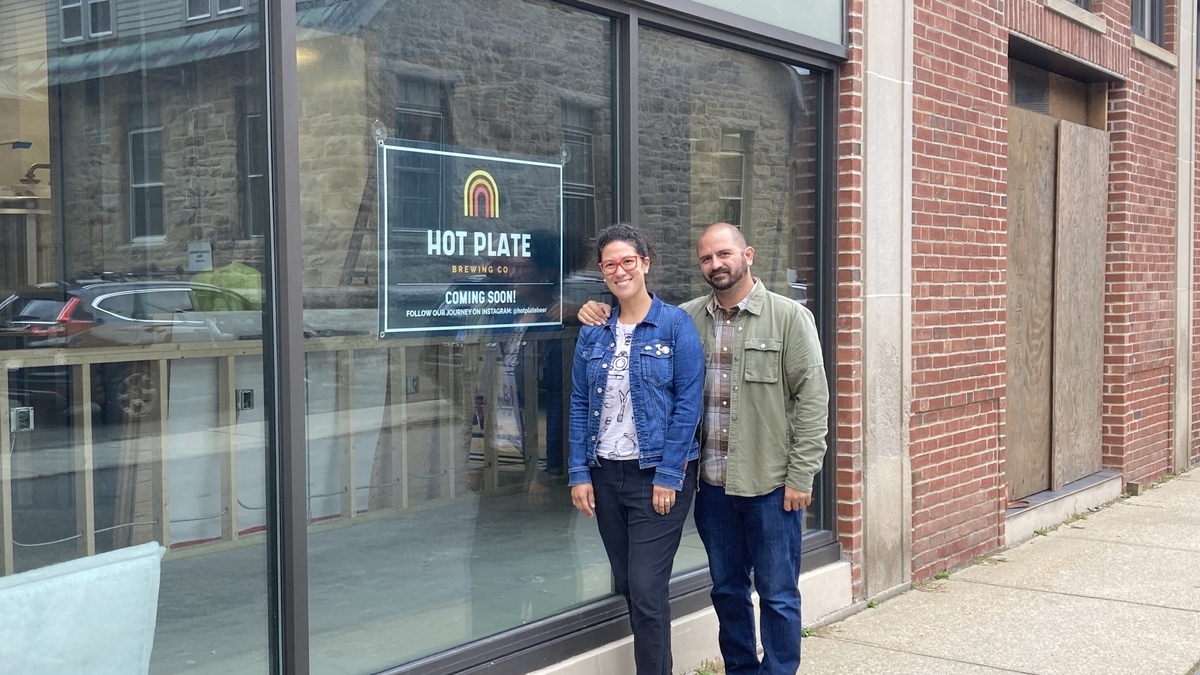
Brooklyn, N.Y., transplants Mike Dell'Aquila and Sarah Real are planning a soft opening in December and a grand opening in early 2023.
"One of the things we believe in craft beer is that it brings people together, and we wanted to build a brewery that could really take that to the fullest extent of the idea," Dell'Aquila said.
"So what we like about coming here is that there are so many nonprofits we can support, there are so many small businesses that we can help cross-promote and there was just this real, I think, energy that we found from a lot of people trying to revitalize Downtown Pittsfield, and we thought that we could very much kind of join that cause."
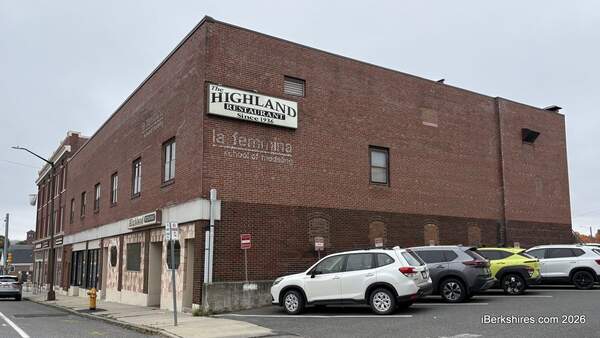
Located on the ground floor of the Onota Building on School Street, the brewery is being built out and plans to start producing in November.
Dell'Aquila and Real first looked into opening their business in the Berkshires two years ago after finding that the region is underserved from a craft beer perspective. Both have marketing backgrounds and channeled those skills into this venture.
"When you look at the population, and you look at the demographics of who the core craft beer consumer was, a lot of them live up here," Dell'Aquila said.
"And so we were surprised that there were only five breweries or so in the area."
The couple contacted 1Berkshire with their idea and eventually presented to —and were welcomed by— Mayor Linda Tyer's Red Carpet Team, which develops strategies for attracting and expanding business opportunities in the city.
To support the acquisition of equipment, the city provided them with a $140,000 allocation of economic development funds last year.
Hot Plate is described as a microbrewery, characterized by producing 15,000 barrels or less per year, and will utilize local raw materials for ingredients.
It will have a 12-tap system that includes traditional beers, popular beers such as New England IPAs, and more experimental brews such as a chamomile blonde ale and a jalapeno pale ale.
One of the taps will feature a community line that gives the proceeds from that beer to a local nonprofit.
"We're not going to be married to one style, just because I don't drink just one style," Real said, adding that they are pursuing a pub brewers license to pour wine and cider so there is something for everyone.
Real, who is the Head Brewer, has been making beer at home for almost a decade. As a Latina woman, she represents a small percentage of ownership in the craft beer world.
"Only 2.2 percent of all breweries in the United States are owned by members of the BIPOC community," Dell'Aquila explained.
"So Sarah, both being a woman and a member of that community, is a pretty big story in terms of just the craft beer world and not just the brewery in general."
Real has loved craft beer since her first sip but didn't know that it could be her career. She joined the Pink Boots Society, which is a nonprofit that supports women working in the brewing profession, and realized that she could make space for herself in that industry.
"I didn't see myself reflected back in it," she said. "It was just a lot of white men, like in many careers."
In 2021, Real was awarded a scholarship from the Pink Boots Society to attend an immersion trip in Yakima Valley, Wash, which is one of the world's largest hops-growing regions. This year, she was the first-place winner for Casita Brewing Company's Increasing Visibility campaign and scaled up her Best Bitter recipe for commercial production.
Dell'Aquila explained that they have been met with some sexism in the process.
"Some people just like automatically assumed that I'm the brewer, I look a little bit more like a traditional craft beer guy," he said.
"Then there are other people that are slightly even more aggressive about it where I'll say she's the brewer and then they'll continue to ask me questions and look at me and so we have experienced some level- not specifically here, just in general."
He added that their story includes a challenge of representation and a lack of diversity, but it also includes a personal, unconventional journey that shaped their experience.
The name "Hot Plate" was inspired by the equipment that was used to brew beer when the couple lost their heat and hot water for three years after their gas was shut off because of a code violation at their Brooklyn condo.
"It was intense, but part of what we liked was having these beers to make and share with our friends because each batch is like, a case or two cases of beer. And so in pre-COVID times we'd have people over and we found that just working on this and making the beer to share with people helped take our minds off of our personal problems," Dell'Aquila explained.
"And then COVID hit before the condo ended up getting fixed so two things happened there: One is we lost that kind of like access to our friends and to this activity that was kind of helping take our mind off of it, and then secondly, we were stuck in this apartment that had no hot water."
This was the couple's sign the make a move, which led them to Pittsfield.
The duo want Hot Plate to be an accessible community gathering place. There will be a mix of high and low tops, a bar, and couches and tables. It will be set up to accommodate groups ranging from larger parties to dates and people coming in to enjoy time by themselves.
As of right now, Hot Plate will not have a full food plan. They will have some snacks and will encourage people to bring in food from other eateries.
Dell'Aquila said that the response has been overwhelmingly positive.
"When we came here we were like, 'Oh my God, there's so much potential in downtown Pittsfield,'" he said.
"And I think for people coming from out of the area that's really true."
Tags: new business, beer, brewery,