North Adams Finance Committee Goes to Bat for Business
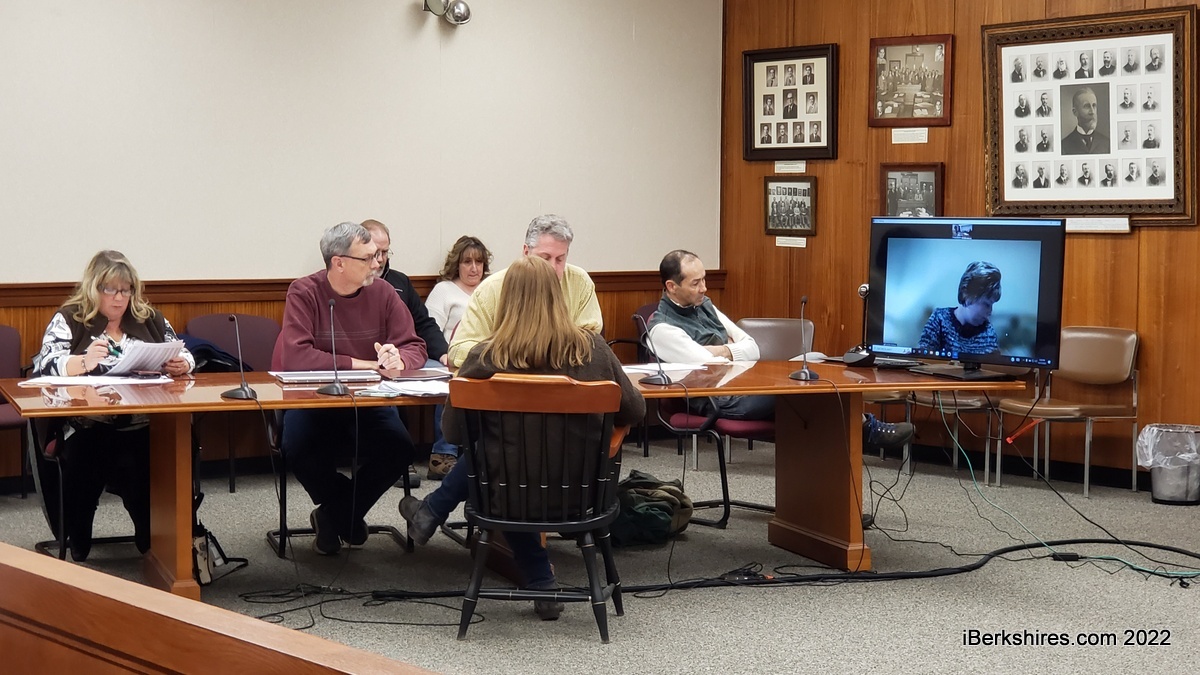
NORTH ADAMS, Mass. — The Finance Committee on Thursday voted to recommend a property tax split of 1.715, bucking the mayor's request to go to the maximum on the commercial side.
Mayor Jennifer Macksey and Assessor Jessica Lincourt had advised a shift of 1.75 at last week's tax classification hearing, saying this would be an opportune year to relieve some of the burden on residents.
The City Council, however, wasn't convinced this was the right move especially after years of trying to reduce the "absurdly high" gap between residential and commercial rates.
The proposed residential rate would be $17.46 and the commercial rate $38.35 per $1,000 valuation, both down about $1 from last year. The average homeowner would see a tax bill of $3,400 and the average business, $16,649. The shift would jump from 1.68 to 1.75, back to what it was in 2012.
"My main argument against this is that our commercial tax rate is already, to me, absurdly high compared to our residential rates," said committee Chair Keith Bona. "So ... saying that the commercial rate or the commercial bill will drop, it's sort of like saying when gas was $3 and went up to $6, it's gone down to $5.75 and you should be happy."
More than a dozen people attended the committee meeting, including several small-business owners who agreed with committee members' argument that a high commercial rate was a burden on small business.
"We're the third highest in the state and I think that's embarrassing and I think it sends a really negative message about our willingness to support small businesses and to encourage new small businesses," said Rye Howard, owner of the Bear and Bee Bookstore on Holden Street.
The expected drop in the commercial bills looks good but hides the fact the rate is so high to begin with, they said. "There are scenarios in which I could buy [the building the store is in] and I would pay more in taxes than I would pay the mortgage. ... It just feels bad."
North Adams has had the third highest commercial rate in the state after Pittsfield and Holyoke the past two years. In contrast, it has among the lowest residential tax bills in the state — it was 15th lowest last year and 12th the year before.
Lincourt provided data on two local businesses — one large and one small — showing that they would see a decrease in their tax bills of between $30 and $200 even at the higher shift.
Macksey described the proposed rates as a win-win.
"We were trying to minimize the amount of impact on residents. With that being said, we also felt that this was a good time for the commercial property and personal property portion of our portfolio to also see a reduction in the tax rate," she said.
Committee members countered that businesses pay more in terms of utilities, rent, loans, staffing, inventory and equipment, etc. And that the flat growth in business was because of the pandemic, depreciations, lack of investment and commercial properties moving into nonprofit status.
Higher tax rates and lower property values aren't conducive to attracting bank funding for startups and expansions, said Bona, and committee member Lisa Blackmer said they had to look at "the big picture."
"I heard the struggles of the businesses that were closed during the pandemic or closed for part of the time, that's part of the reason their values have gone down and why personal property has gone down — because they don't have the money to invest," she said.
The North Adams Chamber of Commerce sent a letter to the mayor and councilors expressing "strong disagreement with such a significant shift in burden, and our deep concern for what this shift represents both materially, and perceptually, to existing and potential businesses in North Adams."
The city is seeing a spike in closings, downsizing and relocations, the chamber's board stated, adding that many businesses hesitate to speak out at the risk of losing customers.
"Unlike communities with a single tax rate, these formulas consistently disadvantage businesses who are already significantly burdened by additional expenses that residents don't face," the board wrote, adding that shifting the tax burden "is simply not effective for the type of robust and thriving business community we all hope to nurture here."
Jessica Sweeney, owner of Savvy Hive on Main Street, said she has residential and commercial property in the city.
"It is really challenging to pay the taxes as they are right now and I'm constantly having to choose between paying people to work in my store or to pay my taxes," she said. "A lot of people come to me about opening businesses and they look at that rate and they say, no, it's not worth it."
Committee member Bryan Sapienza said it was hard to buy anything in North Adams, even clothing.
"We used to have JC Penney, we used to have brands, we used to have other stores in the area," he said. "We want to try to attract businesses and with a high commercial tax rate, you're not going to get those larger stores."
The city also needs specialty shops and mom-and-pop stores as well, he continued. "Those types of stores brought people in and they are as important as the major stores."
Bona said it's hard to attract business — and jobs — when the rates in surrounding communities are so much lower. Adams set a commercial rate this year of $25.65.
"I feel a strong business community is a healthy community all around," Bona said. "I don't want to have to have residents go to Bennington or to Pittsfield for services, I want them here."
There was some back and forth between committee members and the mayor, who was participating remotely from out of state, about the tax levy being predicated by the budget.
"We're not trying to attack businesses that we want to grow our businesses but we're also sensitive to the residential base. And again, this is a year that we could leverage both sides comfortably," said Macksey.
Councilor Wayne Wilkinson, who attended the meeting, said he could not support a shift any higher than 1.72 and preferred 1.68. He also implied that the mayor was courting votes for next year's election, which the mayor strongly refuted.
"I always try to do the best and operate under the best interests of the city, that includes residents and businesses," she said. "At this time, I feel strongly that the 1.75 is best."
Blackmer suggested that the committee split the difference between the 1.68 and 1.75 by recommending 1.715. This was motioned and unanimously approved.
Lincourt will have the new figures for next week's City Council meeting. The residential rate will be around $17.67 and the commercial about $37.59.