Williamstown Planners Hones Manufactured Home, Frontage, Multi-Family Bylaws
WILLIAMSTOWN, Mass. — The Planning Board this month reached a consensus in principle on three bylaw amendments it wants to start promoting this winter.
But the board still needs advice from town counsel before moving forward on one of the three.
A couple of the proposals have ties to a series of warrant articles that were referred back to the Planning Board by last year's annual town meeting. All three share a common objective: increasing housing opportunity.
The board is on track to propose three amendments that members hope will be more easily understood by town meeting members at the May 2023 assembly.
One would increase the number of units allowed in a primary residence to four per home. Another would reduce the frontage requirements for a residential lot in the General Residence district from 100 feet to 66 feet. A third would allow manufactured housing anywhere in town that a "stick-built" residence currently is permitted.
The first two echo Articles 40 and 44 from the 2022 annual town meeting, although the latter would have reduced other dimensional requirements for a lot in addition to frontage.
The manufactured home proposal would update the town's current bylaw by removing barriers to what were known as mobile homes when local zoning was enacted in the 1950s.
The Planning Board this year has looked into the current state of the manufactured home industry, and the members have agreed there is no reason to continue a decades-old prohibition against the housing type outside of the town's one "mobile home" park, Pines Lodge.
"[Mobile homes] use to have a bad reputation," Planning Board Chair Stephanie Boyd said in the panel's Nov. 15 meeting. "The federal Housing and Urban Development Department now regulates these homes. … They're safer homes than they used to be."
And, of significance to the Planning Board, manufactured homes can cost up to 75 percent less than homes built on a housing site.
"In the whole state of Vermont you can have a manufactured home anywhere you can have a stick-built home," Boyd said. "There has been a lot of stigma attached to manufactured homes. It is time for us to start removing that stigma."
Peter Beck noted at last Tuesday's meeting that the town already allows modular homes on residential lots, and the components of those homes often are built in the same factories as complete manufactured homes. The only difference is that the manufactured homes are delivered fully assembled on a chassis at the end site.
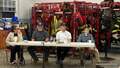
Boyd clarified at the meeting, viewable on the town's community access television station, WilliNet, that a change in terms in the bylaw from "mobile home" to "manufactured home" would leave the same regulations in place that apply to the overlay district at Pines Lodge Park and any other manufactured home communities that may be proposed in town in the future.
Roger Lawrence argued that while he is in favor of opening opportunities for manufactured homes, he believes the bylaw should include a requirement that such homes be attached to a permanent foundation.
That led to a discussion about whether the town can make such a requirement – or any requirement that supersedes the rules set out in the commonwealth's building code.
Community Development Director Andrew Groff told the board he would get clarification on that point from the town counsel before the board's December meeting.
Beck, who was one of the members who helped lead the process on a manufactured home bylaw proposal, told his colleagues they should consider between now and Dec. 13 whether they want to take the step of writing a requirement on foundations into the bylaw if the town is allowed to have any say in that matter.
Beck said that he was willing to entertain the idea of requiring a foundation but that if no such provision can be included in the bylaw, he did not see its absence as a "deal breaker" to stand in the way of the larger objective of allowing manufactured homes.
The board at its December meeting hopes to discuss a strategy for engaging with residents about the zoning bylaw amendments this winter in hopes avoiding two common stumbling blocks the board has encountered in years past: people who do not become engaged on the issues until bylaw amendments are in their final form and people who do not feel they have enough time to be prepared to make an up or down vote at the town meeting.
To the first point, the board hopes to have draft bylaws nearly ready for publication by January but not set in stone with the language that will go on the town meeting warrant.
For example, at Tuesday's meeting, board members discussed whether the multi-family residence proposal should allow up to three-unit or four-unit homes. Ken Kuttner argued that a change from the current allowance of duplex to three-unit residences would be more incremental and therefore more palatable to people voting at town meeting.
The board members agreed they should get more feedback from residents about their preferences on that question before advancing the final language that will go on the warrant. They talked about possibly having two warrant articles – one that would allow three-unit residences and one that would up the number to four – so that members of the town meeting have the final say.
That said, the article itself, like the other two initiatives on the table, will be a mostly fully formed idea that board members hope will catch the interest of residents in ways past proposals have not until the "last minute." Likewise, residents who have questions will have weeks or months to ask those questions and, board members hope, come to May's annual town meeting better prepared to vote.
Tags: housing, planning,