image description
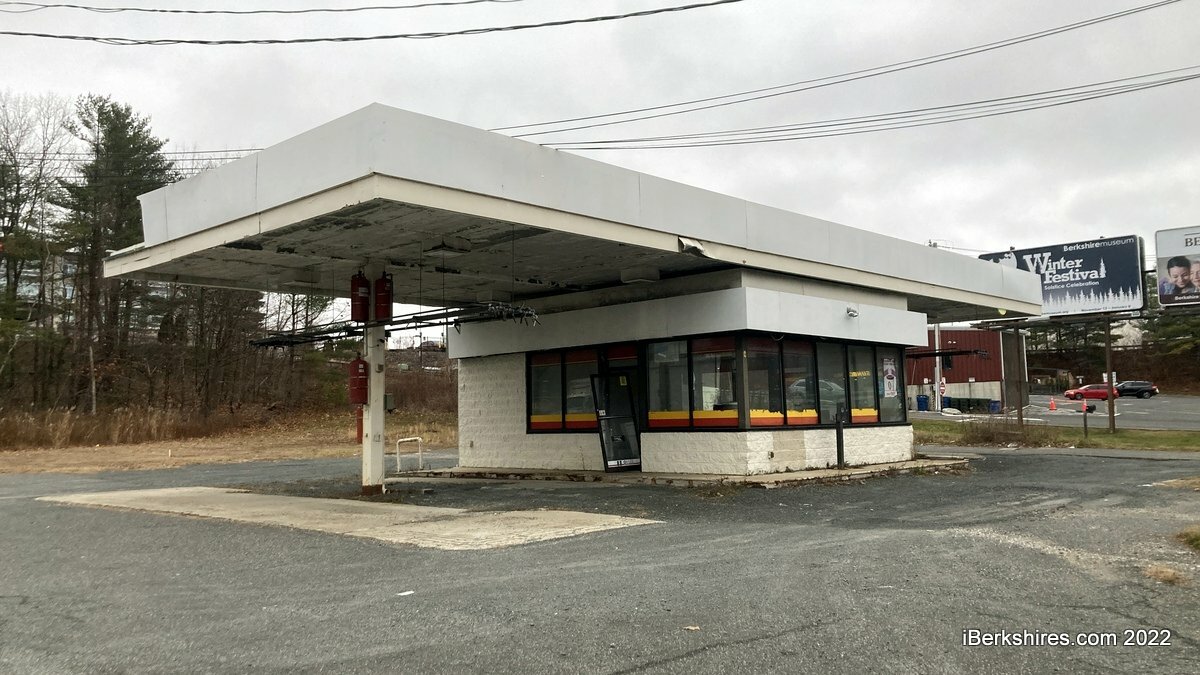
A former gas station will become a Starbucks location on Route 7 after the City Council signed off on revised plans Tuesday.

City Council OKs Starbucks on South Street
By Brittany PolitoiBerkshires Staff
Print Story | Email Story
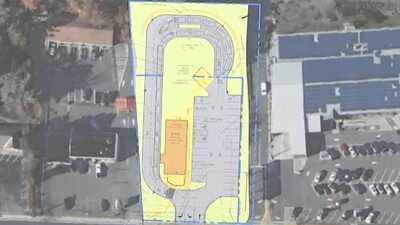
The new plans show the entrance and exit located in the center of the property's frontage and away from existing curb cuts.

PITTSFIELD, Mass. — A proposal for a Starbucks on Route 7 was given the green light after reworking its curb cut to address traffic concerns.

The City Council approved on Tuesday a special permit for the coffee shop and drive-through at 1030 South St. after being continued in October.  

Councilors were concerned about the planned entrance and exit being close to the curb cut for Guido's Fresh Marketplace and the Hilton Garden Inn and urged the applicant to "be a good neighbor" and reconfigure it after hearing from abutters.

Since then, the entrance was moved to the center of the property.

"What we've landed on here is a driveway in the center and we've also added a separate right turn lane and left turn lane," civil engineer Timothy Power explained.

The applicants did look at pushing the curb cut farther away from the concerned businesses but ran into constraints with an existing utility pole and fire hydrant. They also looked into sharing neighbor Jiffy Lube's exit but found that they did not enough legal rights to do so.

Power said the new plan puts the curb cut as far away from the abutting existing lanes as possible and that it provides enough space for traffic flow.

"I think the conflict that we're all really concerned about is someone taking a right, obviously, out of the grocery store and maybe someone taking a left from South Street into the store," he explained.

"I think this gives enough time to see that and react and stop if that's happening for someone leaving the grocery store so we're comfortable with this design, we hope the council sees the benefit of it, and that's where we've landed."

It was passed with three conditions imposed by the Community Development Board: requiring a tracking pad to be installed at the entrance of the project to deter soil migrating offsite during construction, all lighting to be downward cast, and the applicant being subject to all other federal, state, and local laws.

Guido's owner Matthew Masiero reiterated that he is for this project but still has concerns with the revised plan.  


"I would be remiss if I didn't bring this up for the safety of my staff, my customers, their customers," he said.

While Masiero appreciates the new design, he said it only gives 60 feet of distance between the curb cuts and that the speed of the road is a problem.

"It's posted at 45 miles per hour, people travel at 55 or even faster," he explained.

Power thinks that the road, which sees 20,000 to 30,00 trips per day, is the problem and not the proposed Starbucks.

Councilors supported adding a new business to the city but agreed that speeding in that corridor needs to be addressed. 

Because it is a state-owned road, the city does not have control over it but suggested increased patrols and advocacy for larger traffic-calming measures.

"It seems like the main concern is people not driving well," Councilor at Large Peter White said. "I drive down there occasionally and I see way too much speeding."

Ward 3 Councilor Kevin Sherman would not have supported the original proposal but feels this one is better.

He recognized that the whole drag can be a "free for all NASCAR pit stop."

"We've got work to do and it's not just that corridor," Sherman said. "And I would say 90 percent of my calls are about speeding or reckless driving throughout the city of Pittsfield."


Tags: coffeeshop,   special permit,   
If you would like to contribute information on this article, contact us at info@iberkshires.com.

Berkshire Towns Can Tap State Seasonal Communities Resources

BOSTON — Governor Maura Healey announced that 18 additional municipalities across Massachusetts have been designated as Seasonal Communities, opening up new tools, support and grant funding to help them manage seasonal housing pressures. 
 
Created as part of the historic Affordable Homes Act signed into law by Governor Healey in 2024, the Seasonal Communities designation was designed to recognize Massachusetts communities that experience substantial variation in seasonal employment and to create distinctive tools to address their unique housing needs. The law also established the Seasonal Communities Advisory Council (SCAC).  
 
The Affordable Homes Act identified several communities to automatically receive the designation, including:   
  • All municipalities in the counties of Dukes and Nantucket;   
  • All municipalities with over 35 percent seasonal housing units in Barnstable County; and   
  • All municipalities with more than 40 percent seasonal housing units in Berkshire County. 
  •  
To identify additional communities, the Executive Office of Housing and Livable Communities (HLC) reviewed available data, specifically focusing on cities and towns with high levels of short-term rentals and a high share of second- or vacation homes.
 
In Berkshire County, Egremont, Great Barrington, Lee, Lenox, New Marlborough, Richmond, Sandisfield, Sheffield, West Stockbridge and Williamstown have been designated. 
 
"Our seasonal communities are a vital part of Massachusetts' cultural and economic fabric, but they're also home to essential workers, families, seniors, and longtime residents who deserve a place to live year-round," said Governor Healey. "That's why we're committed to supporting these communities with innovative solutions like the Seasonal Communities designation to meet their unique needs, and I'm thrilled that we're offering this opportunity to 18 additional communities across the state. Everyone who calls these places home should be able to live, work and grow here, no matter the season." 
 
As with the statutorily identified communities, acceptance of the designation for municipalities is voluntary and requires a local legislative vote. HLC will open an application for newly eligible communities that haven't accepted the Seasonal Communities designation to request consideration. 
 
The Affordable Homes Act created several new tools for communities who accept the Seasonal Communities designation to be able to:  
  • Acquire deed restrictions to create or preserve year-round housing 
  • Develop housing with a preference for municipal workers, so that our public safety personnel, teachers, public works and town hall workers have a place to live 
  • Establish a Year-Round Housing Trust Fund to create and preserve affordable and attainable housing for year-round residents 
  • Create year-round housing for artists 
  • Allow seasonal communities to develop a comprehensive housing needs assessment 
  • Permit tiny homes to be built and used as year-round housing 
  • Permit year-round, attainable residential development on undersized lots 
  • Increase the property tax exemption for homes that are the owners' primary residence 
 
View Full Story

More Pittsfield Stories