Pittsfield School Committee Split on Future of Chromebooks
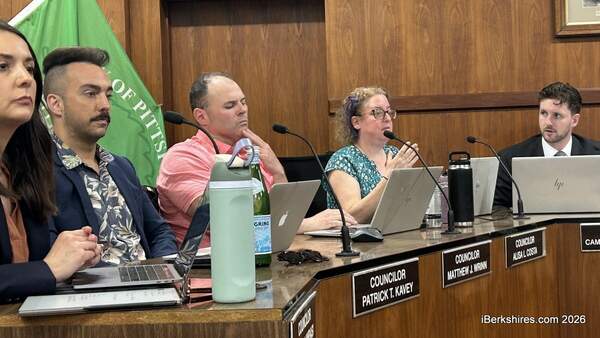
PITTSFIELD, Mass. — The School Committee is split on whether to continue to supply students Chromebooks after taking a $1 million hit in lost devices.

Superintendent Joseph Curtis wants the discussion sooner rather than later because the district will need $500,000 to continue the one-to-one program.
The school district purchased 2,500 Chromebooks in 2020 as schools shifted to online learning during the pandemic. The laptops were purchased with federal and state grants that have now ended.
Curtis reported the cost of the lost and damaged devices last month. This school year, the district has already replaced 1,785 Chromebooks, not counting new students.
The district surveyed faculty, families and students about allowing the Chromebooks to be taken home; 480 educators and administrators and 1,062 students and families responded. Teachers overwhelmingly preferred returning to in-school computer carts, a majority of students wanted the program to continue and parents were split, with those with high school students slightly more in favor.
The survey had an option for the participants to leave comments to explain their point of view further. See comments from elementary schools here; middle schools here; and high schools here.
"I would argue that the comments are almost more important than the pie charts you will see," Curtis told the School Committee last week. "You will see that in this discussion is much more than the ultimate dollar figure will cost to support. It's about equity. It's about access. It's about instruction."
Equity and access were brought up in many of the comments. Some students said they use the computers every day and others that the Chromebook is the only computer device in the home.
"You'll see that some of the feedback within the comments really talks about equity and access, not just for school related items, but just in general. You will see some families talk about how this is their only device they have in the home," Curtis said.
The loss rate for both elementary and middle schools is 35 percent; high schools 27.5 percent, and the Pittsfield Virtual Academy only 2.5 percent loss.
Committee member Sara Hathaway asked whether the district should consider conducting a study into what the virtual schools are doing differently that has a substantially lower damage rate.
One reason could be that the PVA computers are the students' only tool to access education, Curtis said. "When that is your window on education, one might be more apt to take better care of it."
Curtis said a list of reasons for damage provided by guardians range from accidental to battery malfunction to deliberate damage. The district has since ensured that every laptop had a case, which he thinks has helped.
"They're not incredibly delicate machines. My son has had his the entire time but there is certainly breakage," Curtis said. "There are batteries that no longer charge, there are charging cords. That's all acceptable replacement issues that will continue no matter what we do, but that wasn't unfortunately the majority."
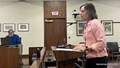
Hathaway said she is not decided on the topic but she is heavily leaning toward the return of Chromebooks in a classroom setting. Other committee members were conflicted, seeing the devices as a helpful tool in being able to provide teaching methods for different types of learners.
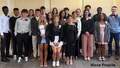
All three student representatives on the committee, speaking at member Vicki Smith's urging, said the Chromebooks were vital to their educational needs, especially being able to contact teachers during the "off" weeks at Taconic High.
A computer at home is can be necessary, such as a student being home sick, or needing help with an assignment and doesn’t have the resources to stay after school, said student representative Bhumi Patel.
"I feel like we rely a lot on technology and if we were to make this gigantic transition that it might be hard for a lot of the students, especially at the high school level, because in my personal experience, at least all of my classes require a Chromebook," she said. "We do pretty much everything based off of Canvas."
The committee juggled around a few potential solutions, including a checkout system and adding a class to teach students how to repair Chromebooks. Smith said the idea of a class came up during an informal conversation with Director of Information Technology Richard White.
White said he came across a Maine public schools program for repairs, which were nothing "terribly complicated" but greatly helped the technology department.
"It was really cool. So it's kind of a multifaceted program that helped the students not only learn how to repair Chromebooks, but also helped them learn how to publish something on the internet, videos and other things," White said. "So it's really kind of a neat program. I'd love to get something like that started in Pittsfield."
Pittsfield had been involved with the Berkshire Wireless Learning Initiative more than a decade ago that put Apple iBooks in the hands of middle school students in the city and in North Adams, as well as the former St. Mark's and St. Joseph's schools.
It seems history is repeating itself because the district decided to leave the pilot program due to the cost of the machines, and the loss rate from damage.
"At that time, we really thought that although the use of technology and teaching would grow to increase, that the idea of a one-to-one student deployment was just too cost prohibitive," Curtis said. "If you fast forward a number of years, as technology use began to increase, particularly web based, which in those days it was not prevalent at all. Teachers began to embrace more and more web based technology tools."
https://www.iberkshires.com/story/26223/Wireless-Initiative-Reaches-1M-Goal.html?ss_id=1728
Comments from Elementary School Teachers, Administrators, Families, and Students here.
Comments from Middle School School Teachers, Administrators, Families, and Students here.
Comments from High School School Teachers, Administrators, Families, and Students here.
Tags: laptops,