Pittsfield Officials Convene on Opioid Crisis in PCTV Forum
PITTSFIELD, Mass. — Mayor Linda Tyer says it was a "sad statistic" that brought the federal HEALing Communities initiative to the city.
Now, officials are working to understand the opioid epidemic and reduce its impact on the community.
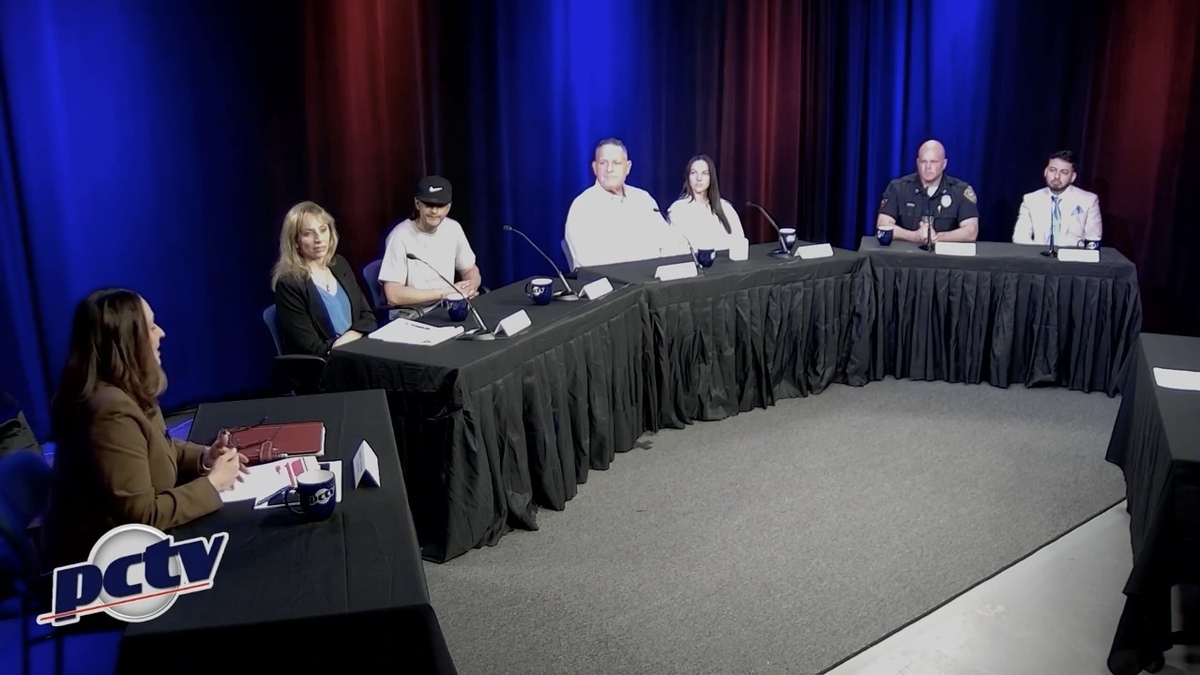
This past week, a panel discussion hosted by Pittsfield Community Television covered addiction, recovery and treatment, harm reduction, reducing stigma, and Pittsfield's efforts to save lives from overdose deaths.
"We are a community that has a very high rate of overdose and fatalities related to overdose and so the HEALing Communities Initiative wanted to identify those communities that were experiencing those high rates of overdose, substance use disorders, and fatalities related to substance use disorder," Tyer said.
"So it is a sad statistic that brought us to this point and now we have this incredible initiative, bringing all of us together, including the city of Pittsfield, to try to bring as much care and health and well-being to the people of our city."
Panelists included County Ambulance President Brian Andrews, Director of Public Health Andy Cambi, Berkshire Harm Reduction Program Manager Sarah DeJesus, Police Officer Darren Derby, Pittsfield resident with lived experience Raymond Hernandez, and the Brien Center's Medical Director Dr. Jennifer Michaels.
The study aims to reduce opioid overdose deaths by 40 percent over three years in the participating communities.
"It's really more than just a study," Andrews explained. "It's a study and implementing a whole number of initiatives to hopefully come up with evidence-based processes that work to lower the use of opiates in communities and to lower overdose deaths."
Pittsfield is in its first year of the program and he said it has been very successful so far. Currently, the city is initiating processes and gathering data.
In the last year, a community health worker and social worker have been added to the Health Department, a HUB program has been established to assist people in crisis and connect them with services, and efforts are underway to make naloxone, a medication that can immediately reverse an overdose, readily available to anyone in the community.
Public boxes containing the brand Narcan are also in the process of being added to city streets. Narcan is administered nasally and blocks opiate receptors in the nervous system.
"Our next step is really the widespread Narcan distribution in the community," Andrews explained. "To just flood the community with it so everybody has the opportunity to carry it with them."
It was highlighted that Narcan will only address an opioid overdose and will not have an adverse effect on a person if they are not overdosing on opioids.
Tyer was glad to have this clarified to the general public.
"We can still administer Narcan without fear that we are going to cause harm if it's an overdose from some other substance," she said.
"That's a really powerful message for people in the community who might have some trepidation about providing care when they're not trained."
Andrews reported that the number of reversals they see with the medication is "astounding."
"I feel like everybody should carry Narcan," DeJesus said. "And it's very easily accessible."
Michaels said the opioid epidemic has been a 25-year battle that began with Purdue Pharma touting OxyContin, its brand name for painkiller oxycodone, a narcotic, as safe and non-addictive.
"A lot of people don't know this, but it takes about two weeks to become addicted to an opioid. It's a very short time, even less than two weeks of regular taking of a pill," she said.
"Your brain changes, your body changes so that if you stopped taking that pill or heroin or whatever you're taking, you go through excruciating withdrawal. You go through sweating, insomnia, body aches throughout your whole system. You can't concentrate, you can't think straight and so you know that the only thing to alleviate the symptoms is taking an opioid."
Fentanyl, a potent synthetic opioid drug, began to infiltrate the drug supply in the mid-2010s and skyrocketed overdose deaths.
"Actually in the last 25 years, overdose deaths have increased 800 percent," Michaels said.
"So why is this a crucial discussion? We just see that over time, it seems to become more and more severe, the drugs that are available, and more and more lethal and we need to respond appropriately."
She later added that fentanyl is also being found in the cocaine supply.
Hernandez explained that his addiction started when he was 16 and that he eventually accepted help from the Brien Center. He detoxed from the substances cold turkey, or abruptly, and felt a great deal of support from Michaels and the center as they believed in him along the way.
"Thank you, guys. Thank you. I'm here right now I'm able to share some of my story," Hernandez said.
"So a lot of the families who think that there's no way out or it's the end of the world, it's really not. There's people out there. Reach out to people, talk about it. I'm not proud of it. Right now, I'm a little ashamed of it, but you know what, my shame might help somebody else move forward."
His sobriety was inspired by the drive to be a father to his children, who had been taken into the foster care system. Hernandez was one of the parents who were celebrated on Berkshire County Reunification Day at 18 Degrees last year.
Cambi said the Health Department wants to expand its services to join and support local agencies.
"We want to be that bridge for our residents, to empower them, to follow up with them to make sure that they're getting the resources that are available," he said.
The new social worker has been going to locations such as the Christian Center and the Berkshire Athenaeum to engage with community members. The department has also been hosting public health wellness clinics and educating staff members on housing resources.
"There's a lot of social factors that have contributed to the struggle that we're all in and we need to own that struggle and we need to help find solutions and help empower our residents to get the assistance that they need," Cambi said.
"So it's a new initiative and I'm very happy for the support that we have from everybody, from our residents, from our administration from our Board of Health."
Derby explained that most of what the Police Department does is dictated by law and local policy. Around a decade ago, police could charge people for having drugs for personal use when responding to an overdose.
This was changed, as it was stopping people from calling 911.
"That's really I think when we started to see the change, finally, after 20 plus years of dealing with this epidemic and it's to me it's been slow, especially on the law enforcement side when it comes to our responses to the epidemic, when it comes to the overdoses and the drug use," Derby said.
"And the things that I think we struggle with in law enforcement is we just don't have that direction. There's not enough, there's still too much gray area in the law but with all these local organizations and committees and programs, we are now sitting on the boards, we are now participating in these discussions weekly if not monthly, to find out that, hey, when we go to a call, here is what your options now are."
In the last year, the department added co-responder positions to add support on mental health calls.
"Training in law enforcement, it happens every day but never to this amount have we had training when it comes to mental health and addiction and how to respond," Derby explained.
"And obviously we're thankful for that because it's making our job easier, especially when we have the co-responders. So instead of us just showing up at a scene and trying to explain to the family, now you have the ambulance service who has the aftercare, who can follow up with them."
Tags: addiction recovery, drug abuse, Opioid abuse,