Williamstown Group Seeking to Install 'Ancestors' at Field Park
WILLIAMSTOWN, Mass. — A group of residents wants to find a home for a public art installation honoring the first people to call the region home.
And they think one of the highest profile parts of town is just the place.
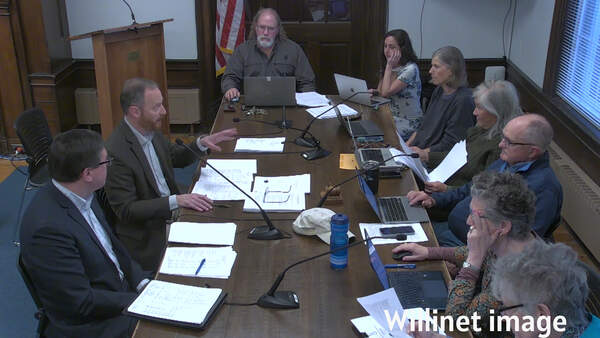
Bette Craig and Polly Macpherson met with the Diversity, Inclusion and Racial Equity Committee this week to talk about their goal of installing sculptures from Rose B. Simpson's "Counterculture" at Field Park.
"We just think that since Field Park is kind of our public square, it's where we show up when we want to protest or raise an issue, it would be a wonderful place to have this sort of public art," Craig told the committee.
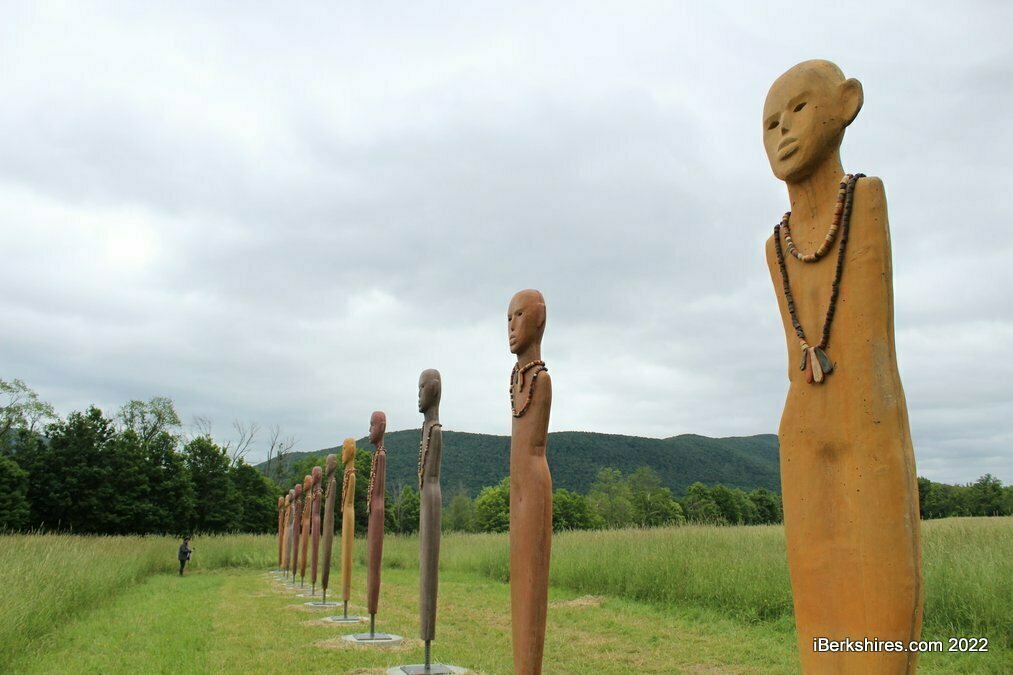
If Craig, Macpherson and their collaborators are successful, it will mark the second residency for the 10-foot high, concrete sculptures in Williamstown. Last summer, they debuted at Field Farm in South Williamstown on land owned by the Trustees of Reservations.
Simpson, a Native American artist from New Mexico, has incorporated the tradition of the Stockbridge-Munsee Band of Mohican Indians and other indigenous people into her art.
"Wherever they go, I'll be connecting with the people whose ancestral homeland is there to build a sort of relationship," Simpson told The New York Times last year. "Many tribes have been relocated, displaced from their own lands. So I wanted the opportunity to put their clay back in their hands."
Craig said the symbolism in Simpson's work can create a powerful message in the heart of Williamstown, which has spent the last few years starting to come to terms with the displacement of the Mohican people from the land where the town now sits.
"Our thought was, right now we have the 1753 House in the center of Field Park, and it would be wonderful to have kind of a conversation between the colonial settlers' commemoration the 1753 House represents and the people who were here, actually first, before the settlers came," Craig said.
Macpherson read to the DIRE Committee part of the text on the Trustees' website explaining the 2022 installation near Sloan Road.
"Simpson's most ambitious work to date, 'Counterculture,' honors generations of marginalized people and cultures whose voices have been too often silenced by colonization," the text reads. "The figures look across a post-apocalyptic vista, the vast homelands from which native peoples were forcibly removed. The artist imagines the figures as watchful presences, reminders that history and the natural world perpetually observe humanity."
"Counterculture" included 12 larger-than-life sculptures when it debuted on Field Farm last year. Those pieces then were displayed separately at sites around the country. Macpherson told the committee that some are in Wisconsin; some will be displayed at New York City's Whitney Museum of American Art in October.
The local group, which includes the Stockbridge-Munsee's tribal historic preservation manager, wants to bring two of the sculptures to Field Park — ideally for permanent display, Craig said.
She said the group has been in touch with the Jack Shainman Gallery, which represents Simpson, about acquiring the sculptures. In a happy coincidence, Shainman, who operates a gallery based in the Chelsea neighborhood of New York City, grew up in Williamstown.
Macpherson explained that the group originally talked about creating a large public art display in the center of the planned traffic circle at the historic Five Corners intersection in South Williamstown.
Discussions with the Massachusetts Department of Transportation revealed that a large "structure" in the island would not conform with MassDOT regulations, but the agency's landscape engineer is working with the group to create some representation of traditional Stockbridge-Munsee imagery in the roundabout project.
In the meantime, the chance to acquire pieces from "Counterculture," "landed in our laps," Macpherson said.
"The exciting thing for us about art is its potential to engage people in larger conversations," she told the committee. "I was a docent at the Clark [Art Institute] and have been trained, if you will, in the Clark's methodology of engaging people with art."
Craig and Macpherson said the group working on the project is in its beginning stages and has a lot of work to do figuring out the logistics, including fundraising, determining who will be responsible for maintaining the sculptures once installed and, of course, determining a location. That said, the group understands that the Shainman Gallery cannot hold the pieces in reserve forever.
"Rose Simpson is a very, very up-and-coming artist," Macpherson said. "The Ancestors [as the sculptures are known] are very important to her. So should someone else come along and say, 'I'd like to have them come and live in my town … ' We don't want that to happen. But it could."
Craig and Macpherson came to the DIRE Committee in hopes that it would support the idea of a public placement at Field Park.
Committee members were immediately enthusiastic about the prospect.
"It's hard to imagine how to have community conversations about history in a way that doesn't involve some sort of artistic display," Andrew Art said. "Because it is a town space, and there is a memorial there now. It would be hard to provide enough context for a conversation other than through art.
"I just think this is a terrific idea."
Art said the committee could draft a resolution of support for the public art initiative. Randal Fippinger suggested that the Williams College Museum of Art, which is planning a new museum across the street from Field Park on the former site of the Williams Inn, could get involved in the acquisition process for the "Counterculture" sculptures.
In other business on Monday, the DIRE Committee heard a presentation from Select Board member Stephanie Boyd about her suggestion that the town consider instituting a residential tax exemption to make property taxes less regressive, and it discussed how it can deliver a draft of a strategic plan requested by the Select Board by the board's Sept. 25 meeting.
Tags: art installation, field park, Native American,