Planners Present Possible Solutions for Pittsfield Public Schools Restructuring
PITTSFIELD, Mass. — A decline in Pittsfield's population has planners reviewing the size and number of the city's elementary schools, their grade configurations and the curricular offerings of the middle and high schools.
Tuesday's update to the School Building Needs Commission from DRA architects on the restructuring study included information about demographics and enrollment; zoning and environmental mapping; Massachusetts School Building Authority guidelines; and grade span and alignment options.
"It's a lot to think about," committee member Kathy Amuso said.
An online survey on the school's physical and educational needs garnered more than 650 responses from students, staff, parents and guardians, and the wider community.
The planners would like to have 1,000 survey responses and are planning another in-person meeting so that community members can voice their thoughts on the restructuring project.
Demographics show that Pittsfield's population will continue to decline unless more young families begin moving to the city. The school system is expected to see an enrollment decline over the next five years but then a gradual increase to levels slightly below the present day in the following five years.
The elementary schools are expected to see an increase of 215 students in the next 10 years while middle schools are expected to see a 23-student decrease and high schools a 199-student decrease.
Districtwide prekindergarten is included in the elementary projections.
"The entry point of preK seems to be a really important decision because that could drive even the grade configuration or the facilities itself," Superintendent Joseph Curtis said.
"And although we have wait lists on each one of our preK sites, we also have to discuss staffing them too, which is always a concern that if we do make the investment in the physical structure, can we staff additional preKs?"
One of the goals is to better align enrollments across facilities, as some enrollments are too small to be educationally and fiscally effective. Within that is also the consideration of equity socioeconomic factors.
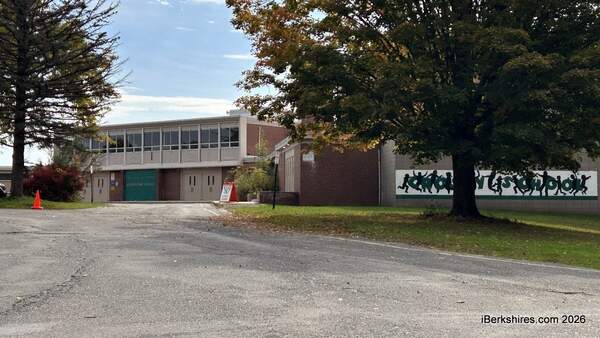
The often recommended range for elementary schools is between 300 and 500 students. Capeless Elementary School has less than 200 kids.
"Two hundred kids across six grades — you're down to essentially running one class for each grade level and it's either one class that has too many kids or two classes that have too few kids in it," Greg Smolley of DRA said.
An enrollment of 400 is considered the number at which teachers can develop a professional relationship with students to ensure each performs at a high level.
"We've talked about different possibilities as far as enrollment size and 350 to 400, around there I'm hoping could be attractive to our community because they are used to some very small enrollments and then the schools that surround us in the county also have very small enrollments," Curtis said, adding that there were more than 550 students at Morningside Community School when he was principal.
Five possible alignment options were presented for preK through 12th grade that included the current three-school model, four different school progressions, and five different school progressions.
DRA's Carl Franceschi explained that some research shows that having so many building transitions is negative to the learning experience because it may allow for a kid to fall through the gaps and families to not be as involved.
Other considerations are magnet schools, which are public schools with specialized courses or curricula; and modeling the Princeton Plan, which eliminates the use of geographic district lines to assign students to schools and instead puts all same-age kids together. Both of these options would include considerable commutes for students who are on the opposite side of the city from the school.
Mapping of the city also showed that there is not much opportunity to build a new school on land that is not already occupied by a school.
School Building Needs Commi... by Brittany Polito
Tags: needs assessment, Pittsfield Public Schools,